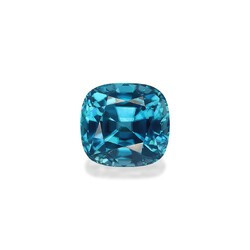
Natural Zircon Gemstones — Cambodia & Sri Lanka Origin, Certified, Direct from Source
Before anything else: natural zircon and cubic zirconia are not the same stone. They share three letters in the name and nothing else. One is a natural mineral formed billions of years ago deep in the Earth's crust. The other is a synthetic compound manufactured in a factory in the 1970s as a diamond simulant. A GIA certificate on a natural zircon says "zircon." A GIA certificate on cubic zirconia says "cubic zirconia." They are different species, different chemistry, different price categories — separated by a factor of several hundred to one.
If you already knew that, skip ahead. If you didn't, it's the most important thing to understand before reading further.
What You'll Actually Pay — Zircon by Color and Size
Zircon pricing follows two axes more sharply than most colored stones: color saturation and carat weight. Large clean zircons are genuinely rare — the price per carat rises steeply above 10 carats because the crystal formation that produces gem-quality material rarely yields large clean rough.
| Color | Carat Range | Price Range (USD/ct) | Treatment | Certificate |
|---|---|---|---|---|
| Blue — sky / mint | 4–8 ct | $120–300 | Heated | Optional |
| Blue — cobalt | 4–8 ct | $250–500 | Heated | Recommended |
| Blue — cobalt | 10–20 ct | $500–1,100 | Heated | GIA recommended |
| Blue — top cobalt | 20+ ct | $800–1,800 | Heated | GIA required |
| Yellow / golden | 5–15 ct | $80–200 | Heated or natural | Optional |
| Red (Hyacinth) | 2–5 ct | $300–800 | Unheated | GIA recommended |
| Green | 3–8 ct | $100–300 | Natural | Optional |
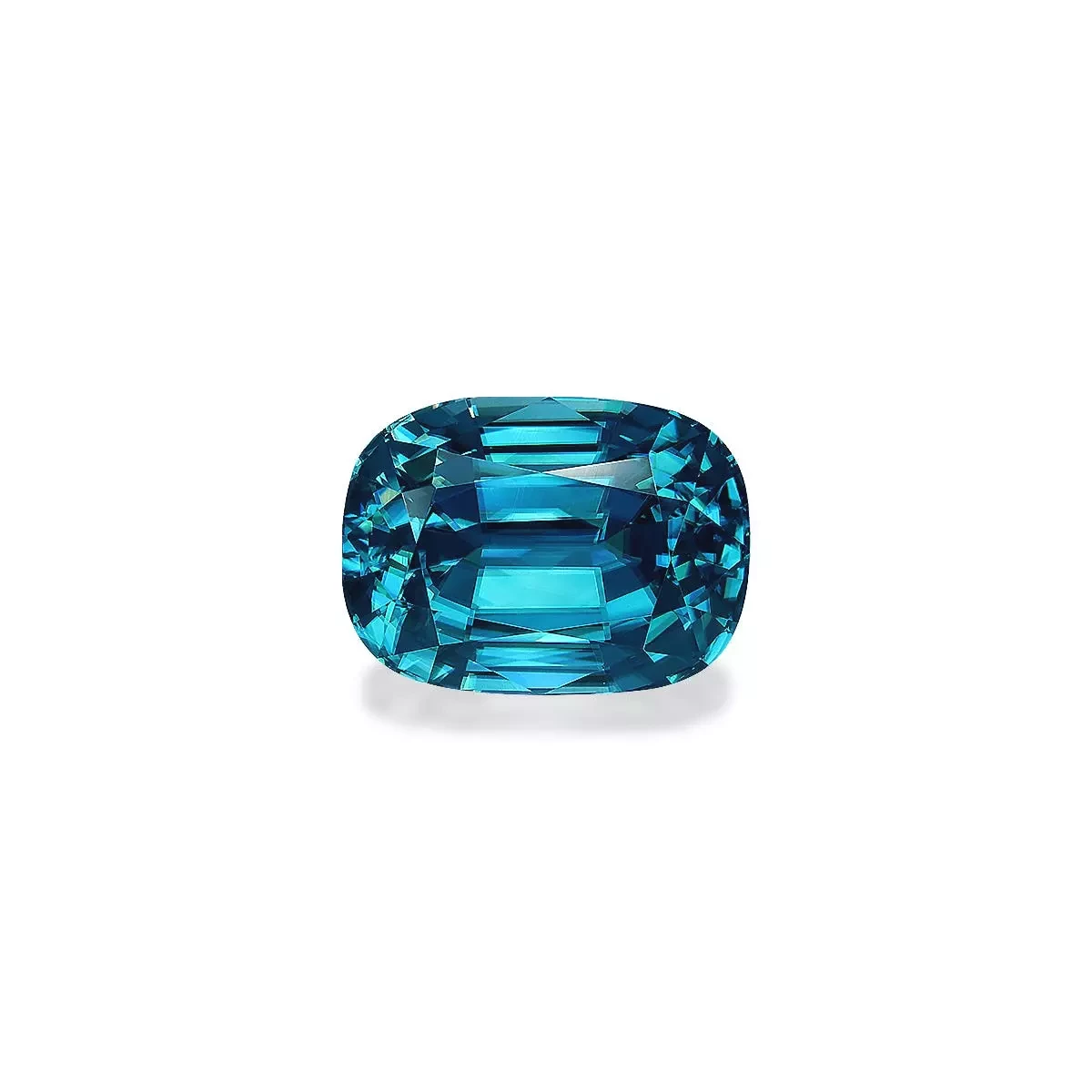
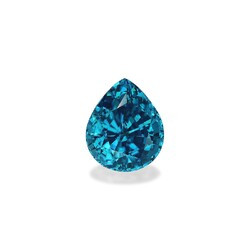
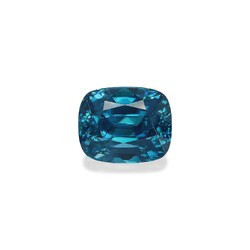
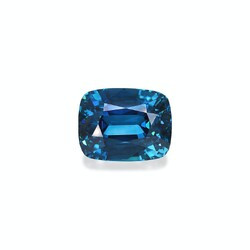
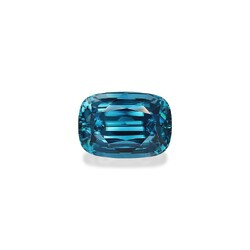
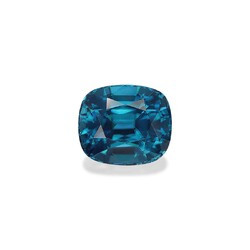
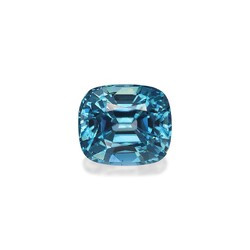
Most blue zircon in the market is heated — this is standard trade practice, not a defect. Unheated red and green zircon exists naturally and commands a moderate premium. The catalog at VividCarat is predominantly Cambodia-origin blue, heated, in sizes from 4 to 83 carats.
The Oldest Stone You Can Buy
Zircon crystals found in sedimentary formations in Western Australia have been dated to 4.4 billion years old. That is older than the oceans. Older than the continents in any form we would recognize. Older than any fossil record of any living thing. The Earth itself is estimated at 4.5 billion years old — meaning some zircon crystals formed within the first hundred million years of the planet's existence.
This is not a geological footnote. It is the most unusual thing about this stone as a purchase.
Every colored gemstone has an age story. Rubies and sapphires form over tens of millions of years. Emeralds over hundreds of millions. Zircon operates on a different timescale entirely. The crystal in your hand may have been sitting in the ground since before multicellular life existed — since before anything on Earth had eyes to see color.
The gem-quality blue zircon in the catalog formed more recently than the oldest specimens, but still on a geological timescale that makes the word "ancient" feel inadequate. Cambodia's Ratanakiri province — the main source of commercial blue zircon — sits on basaltic geology that brought these crystals up from depth over the last tens of millions of years. The same volcanic activity that spread through Southeast Asia also concentrated gem material in the river gravels and basalt fields where miners work today.
Cambodia — Where Blue Zircon Actually Comes From
Ratanakiri is a highland province in northeastern Cambodia, on the border with Vietnam and Laos. The gem trade has worked this area since the late 19th century. The geology is basalt — dark volcanic rock that pushed through older formations and, in cooling, concentrated zircon crystals in pockets and alluvial deposits that rivers later spread across the landscape.
Miners work the basalt gravels with hand tools, washing material through wooden sluices in the same motion used across Southeast Asia for colored stone recovery. What comes up is predominantly brown to reddish rough — heat treatment converts this to the blue that the market knows.
From Ratanakiri the material moves to Phnom Penh, then through Bangkok trading networks where it meets cutters and the laboratories that issue certificates. We source through Bangkok contacts who handle Cambodia material regularly. The path from mine to certificate to Beruwala to buyer involves fewer steps than Cambodia material reaching a US retail store — and the price reflects that arithmetic.
Sri Lanka also produces zircon, primarily from the same gem gravels that yield sapphires in the Ratnapura district. Ceylon zircon is less abundant commercially but occasionally available. Being physically based in Beruwala — two minutes from China Fort market, two hours from Ratnapura — means we see Sri Lanka material before it reaches any other market.
Why Blue Zircon Is Heated — and What That Means
Natural zircon from Cambodia comes out of the ground predominantly brown to reddish-brown. Heat treatment between 700–900°C in a controlled oxidizing or reducing atmosphere converts this material to the blue, colorless, or golden colors that trade commercially. The process has been standard in the gem trade for over a century.
What heating does not do: add foreign material, change the chemical composition, or create a coating. The stone is the same mineral before and after. The heat reorganizes trace element interactions within the crystal structure to shift the color absorption spectrum.
What this means on a certificate: GIA and other labs report heated zircon as "indications of heat treatment" or similar language. This is disclosure, not a penalty. Heated blue zircon is not a lesser product — it is the standard commercial form of the material, the same way heated blue sapphire is standard in that market.
Unheated natural zircon exists in red, green, and occasionally yellow colors. These command a modest premium for collectors who prioritize unheated status. For blue specifically, unheated natural blue is extremely rare and commands significant premiums — most "unheated blue zircon" claims without GIA documentation should be treated with skepticism.
Zircon vs Cubic Zirconia — The Complete Breakdown
This deserves a thorough treatment because the confusion costs buyers real money in both directions: either they avoid natural zircon because they think it's cheap synthetic material, or they pay natural zircon prices for something that is not natural zircon.
Origin: Natural zircon is a mineral (zirconium silicate, ZrSiO₄) that forms in the Earth's crust over geological time. Cubic zirconia is a synthetic compound (zirconium oxide, ZrO₂) first produced in a laboratory in 1977 and manufactured commercially as a diamond simulant.
Chemistry: Different compounds entirely. Zircon contains silicon; cubic zirconia does not. A basic spectroscopic test distinguishes them immediately.
Optical properties: Natural zircon is doubly refractive — light splits into two rays as it passes through the stone, creating a characteristic doubling of back facet edges visible under magnification. Cubic zirconia is singly refractive, like glass. Any gemologist with a loupe can confirm natural zircon in thirty seconds.
Price: Natural zircon in fine quality: $120–1,800/ct depending on color, size, and saturation. Cubic zirconia: $5–20 for a large stone in finished jewelry. The price difference is not a matter of degree — it is a different category of product entirely.
On a certificate: GIA writes "zircon" for natural zircon. GIA writes "cubic zirconia" for CZ. These words do not appear on the same certificate. If a seller shows you a certificate that says "cubic zirconia" and calls it a natural gemstone, that is not a naming confusion — it is a misrepresentation.
Why the names sound similar: The word "zircon" predates cubic zirconia by centuries — the mineral was named from the Arabic "zarqun" meaning vermilion or gold colored, recorded in medieval trade routes. When synthetic zirconium oxide was developed as a diamond simulant, it was named for its chemical relationship to zirconium — not for any connection to the natural gemstone. The similarity is a naming accident that the synthetic material's marketing has benefited from.
What Makes Blue Zircon Visually Distinctive
Two properties that separate fine blue zircon from most other blue stones:
Dispersion. Zircon has one of the highest dispersion values of any natural gemstone — higher than diamond. Dispersion is what creates the "fire," the flashes of spectral color that appear as a stone moves in light. A well-cut blue zircon shows more fire than a blue sapphire of equivalent size. This is not a treatment effect — it is an intrinsic optical property of the mineral.
Double refraction. The same property that lets a gemologist identify zircon in thirty seconds also creates a visual depth in the stone that singly refractive stones cannot produce. When you look through a zircon, the back facets appear doubled — this gives the stone a layered visual complexity that photographs poorly and looks remarkable in person.
These two properties together explain why large blue zircon — 10, 20, 30 carats — commands attention in a way that a stone of equivalent price in another category might not. The optical performance scales with size. A 20-carat cobalt blue zircon in good cut produces a visual experience that costs significantly more in sapphire or aquamarine.
Why the Catalog Runs Large
Most colored stone catalogs feature predominantly small stones — 1 to 3 carats. The zircon catalog at VividCarat runs from 4 carats to over 80. This is not arbitrary.
Zircon's optical properties — particularly dispersion and double refraction — become most apparent in larger sizes. A 5-carat blue zircon shows fire that a 1-carat stone cannot. The market understands this, which is why fine large zircon trades at meaningful premiums per carat over small material.
Cambodia rough yields naturally large crystals more often than most gem sources. The basalt geology produces individual crystals that, after cutting, result in finished stones in the 5–30 carat range with regularity. This is a geological accident that benefits the buyer: you can purchase a visually impressive stone in a size range that would cost multiples more in sapphire or spinel.
The price per carat in the catalog rises with size — a 10-carat cobalt blue at $500/ct versus a 40-carat at $900/ct. This reflects genuine rarity of large clean material, not arbitrary markup.
What to Look for on a Zircon Certificate
Three fields matter:
Species: Should say "zircon" — not "cubic zirconia," not "synthetic zircon," not "simulated zircon." Just "zircon."
Treatment: "Indications of heat treatment" is standard and expected for blue. "No indications of heat treatment" for red or green unheated material. Either is honest — the disclosure is what matters.
Origin: GIA reports origin when determinable. Cambodia is the standard for commercial blue. Sri Lanka occasionally. Origin is less commercially significant for zircon than for ruby or sapphire — there is no Burma-equivalent premium in this category — but it confirms the stone's provenance chain.
GIA certificates verify at gia.edu. Enter the report number before finalizing any purchase above $500.
How to Order
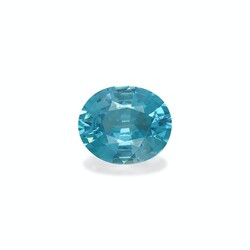
The zircon catalog runs 43 stones, almost entirely Cambodia-origin blue in sizes from 7 to 83 carats. Color ranges from sky blue and mint through cobalt to deep ocean blue. All heated, all treatment-disclosed.
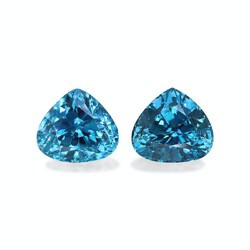
For specific requests — Sri Lanka material, unheated red hyacinth, matched pairs for earrings, specific size windows — contact us through WhatsApp or Telegram before the consultation call. Zircon sourcing through Bangkok moves quickly; matched pairs especially require active sourcing rather than waiting for catalog inventory.
The call is 20–30 minutes on Zoom. Stone on screen in natural light, certificate open, dispersion and fire visible on camera. No deposit, no commitment until you decide.
Common Questions
"Is this the same as cubic zirconia?" No. Natural zircon is a mineral that formed in the Earth billions of years ago. Cubic zirconia is a synthetic compound manufactured since 1977. Different chemistry, different optical properties, different price by a factor of several hundred. A GIA certificate states which is which unambiguously — "zircon" or "cubic zirconia." They do not appear on the same certificate.
"Why are all the stones in the catalog so large?" Because zircon's optical properties — particularly fire and double refraction — become meaningful at larger sizes. The Cambodia geology produces large crystals naturally. And large clean zircon is genuinely rare, which means the value proposition is strongest in the 10–30 carat range where you get visual performance that costs significantly more in other stones.
"Is zircon fragile?" It has a Mohs hardness of 7.5 — durable enough for most jewelry use. The caution is brittleness: zircon cleaves more easily than sapphire under sharp impact, particularly along crystal planes. For rings worn daily, a bezel or halo setting that protects the edges is preferable to a prong setting that leaves the girdle exposed. For pendants, earrings, and occasional-wear rings, standard settings are fine.
"Why is blue zircon always heated?" Natural Cambodia rough is brown to reddish-brown. Heating converts it to blue — this is a century-old trade practice that is fully disclosed on certificates and fully accepted in the market. The heat reorganizes trace element interactions in the crystal without adding external material. Calling heated blue zircon "treated" in a negative sense is like calling heated blue sapphire treated — technically accurate, commercially standard, and not a quality defect.
"Can I return it if it doesn't look like the photos?" Yes — 14 days from delivery, full refund on unmodified stones. Contact us first for an RMA number. Zircon specifically: we show fire and dispersion on the Zoom call in multiple light conditions because this stone performs differently under different lighting than most gems. What you see on the call is what arrives. Refunds process within 5–7 business days of receiving and approving the return.
"What's the minimum order?" Single stones from the catalog. The smallest currently in stock is 7.65 carats at $8,415 total. If you need smaller sizes — 3–5 carat range — contact us directly; this material exists in the Bangkok sourcing network but is not always in catalog inventory.
Browse current zircon inventory above — 43 stones, Cambodia origin, 7 to 83 carats. Or contact us directly if you need something outside the catalog range.