_72x72_bd5_72x72_bd5.jpg)
_72x72_bd5.jpg)


Demantoid garnet has a fascinating history that is relatively short compared to other colored gemstones. Its late discovery, royal connections, and use by world-famous jewelers have made it one of the most valuable and sought-after green gemstones today.
Discovery and Early History
In 1868, the first demantoid garnets were discovered in the Ural Mountains of Russia, near the Bobrovka River. These stones were originally confused with common green and radite garnets, but they were later identified as a distinct variety. The name "demantoid" comes from the Dutch word for "diamond," which refers to the stone's exceptional brilliance.
Royal Connections
In the mid to late 1800s, word of the vibrant green demantoid gemstone reached Russian royalty. Tsar Nicholas I was known to purchase demantoid jewelry as gifts for his family. Russian nobles and aristocrats also purchased pieces. Initially, supply was very limited, with only a few Russian jewelers having exclusive access to the stone.
Growth in Popularity
The popularity of demantoid grew significantly during the Belle Époque period, which further increased interest among wealthy individuals. Carl Fabergé, an iconic Russian jeweler, introduced demantoids to other high-end jewelers in Europe in the 1880s. By the early 1900s, larger discoveries led to a significant expansion in supply, further fueling the popularity of this gemstone.
|
Decade |
Key Demantoid Events |
|
1860s |
Initial discovery and confusion with andradite |
|
1870s |
Tsar Nicholas I acquires first demantoid jewelry |
|
1880s |
Fabergé begins using demantoid gems |
|
1890s |
Fabergé popularizes demantoid in exclusive jewelry |
|
1900s |
Major new demantoid sources found in Russia |
Demantoid is one of the most prized green garnets even today. Its rarity and spectacular fire ensure demantoid will always be a blue dream of gemstone lovers.
A Spectrum of Greens: Demantoid Color Varieties
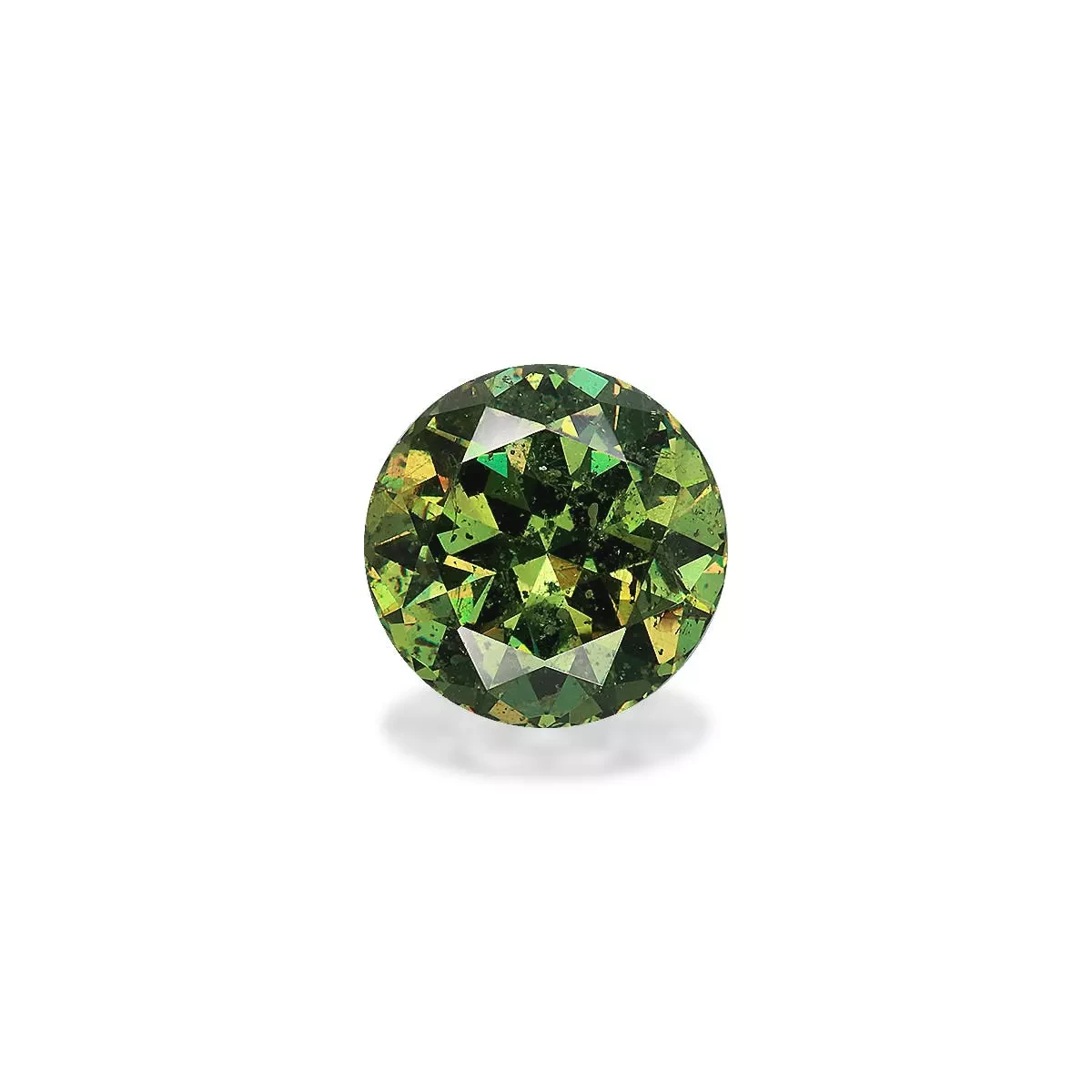
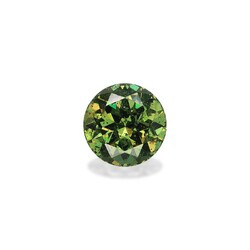
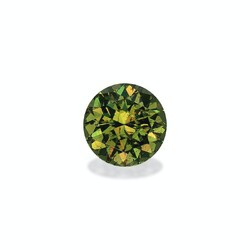
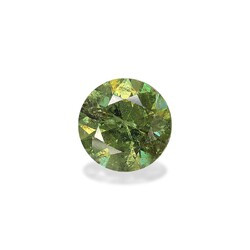
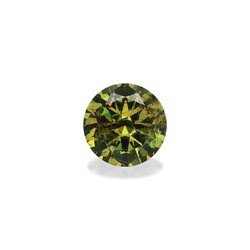
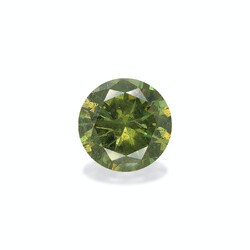
Demantoid garnet has a wide variety of rich green hues unmatched by any other gemstone. Its color is derived from trace amounts of chromium and iron. However, slight changes in chemical composition lead to distinctive shades covering the entire green color spectrum.
Vibrant Greens
- Pure green- Most sought-after color, medium to slightly yellowish-green tone reminiscent of a fine emerald. This hue is very popular among the customers of our jewelry store in New York City.
- Bluish-green- This hue appears because of increased iron. Bluish-green demantoids resemble lush green grass with a touch of blue
- Yellowish-green- Higher chromium and lower iron cause vibrant yellowish cast
Moderate Greens
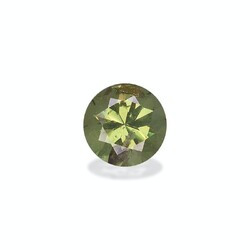
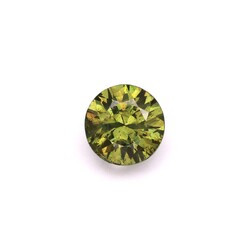
- Olive green- More subdued yellowish-green resembles an olive fruit
- Greenish-yellow- Noticeable yellow overtakes green
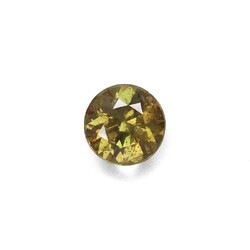
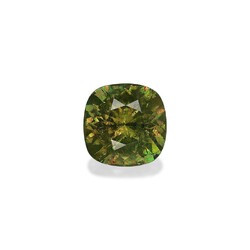
- Brownish-green- Increased iron oxide quenches brilliance
Light Greens
- Pastel green- Lower chromium yields softer green, sometimes with yellow flashes
- Green-yellow- More iron than chromium; vibrant yet delicate color
While a bright pure green is most prized, demantoid connoisseurs appreciate the entire spectrum. Stones with lower saturation can exhibit a delightful delicacy.
|
Color Variety |
Description |
|
Pure Green |
Vivid green hue, highly transparent |
|
Bluish-Green |
A hint of blue, resembles green grass |
|
Olive Green |
Subdued yellow-green, similar to olive fruit |
|
Greenish-Yellow |
More yellow than green, still lively |
|
Brownish-Green |
Duller hue, iron diminishes vibrance |
From exotic emerald-like greens to softer spring bud tints, demantoids encompass nature's entire verdant palette. Discerning collectors can choose tones that suit their tastes. Our jewelry store vividcarat.com located in New York City offers a wide range of garnets including demantoids, as well as other garnets (hessonites, Malawi garnets, tsavorites etc.)
Valuation and Rarity: Demantoid Price Per Carat
The exquisite green fire of demantoid garnet, combined with its scarcity in sizes over 1 carat, make it one of the most precious gemstones per-carat. Prices range widely depending on quality factors but top demantoids can rival fine emeralds and diamonds in value.
What Pushes Prices Up in New York City
- Color- Vivid green commands the highest value; blue and yellow greens are less desirable
- Clarity- Eye-clean stones over 1 carat are extremely rare and costly
- Origin- Russian demantoid is the most prized, especially loose gemstones from the Ural Mountains
- Size- Larger stones are exponentially more valuable; 2-3 carats are very rare
- Horsetail inclusions- Radiating wispy horsetails increase value for collectors
|
Size Range |
Price per Carat |
|
0.50 carats |
$200-500 |
|
1.00 carat |
$1,000-2,000 |
|
2.00 carats |
$5,000-10,000 |
|
3.00 carats |
$10,000-20,000+ |
Gemstone Rarity
Found in limited areas of Russia and Namibia, gemstones are a rare find. The lack of large deposits makes mining them difficult. This also means that there is a lack of rough material, which restricts the production of cut stones over one carat in size. Based on estimates, less than 5% of the demantoid gemstone production is over two carats in size.
For an exceptionally rare and highly valuable Russian gemstone that exhibits vivid green fire and exceptional light performance, the demantoid garnet is in a class of its own, both visually and on the market. Supplies of high-quality material over 1 carat are extremely limited, making demantoid one of the most precious gems available.
Global Origins and Deposits
Demantoid traces back to a single original Russian source, but additional deposits found worldwide add diversity and supply. Demantoid connoisseurs appreciate the unique properties offered by each location.
Three main occurrences are Russia, Namibia and Italy.
Russia
The deposits in the Ural Mountains were discovered in. Garnets from there are considered the most precious for their vivid color and horsetail inclusions
The Poldnevskoy is the second Russian deposit. Here are mined larger stones with intense green colors and extreme scintillation.
Namibia
Namibia was discovered in 1996 and is the main alternative source of this type of mineral. It does not contain horsetail inclusions, but it exhibits vibrant colors that tend to be yellowish-green.
Italy
In Valmalenco demantoids were discovered in 1885, concurrently with Russia. The level of output is low, but garnets from there can boast exceptional clarity.
Other Countries
- In 1958 demantoids were discovered In Iran. Iranian demantoids have horsetail inclusions present
- Madagascarian gemstones are also extremely good as they offer excellent transparency and light performance
- Afghanistanhas scarce mining deposits of demantoids compared to other countries.
|
Origin |
Key Characteristics |
|
Ural Mountains, Russia |
Vivid greens, horsetail inclusions |
|
Plodovskaya, Russia |
Intensely saturated color |
|
Namibia |
Absence of horsetails, yellow-greens |
|
Valmalenco, Italy |
Very high clarity |
|
Iran |
Horsetail inclusions |
|
Madagascar |
Bright transparency, light play |
While demantoid originated in Russia, alternative global sources allow for a broader diversity of stones. Buyers can select their favored demantoid characteristics based on personalized tastes and appreciation of the deposit differences.
On our website vividcarat.com you can see the range of all demantoids available in stock.
Chemical Properties, Treatments, and Certification
Understanding the scientific composition of demantoid garnet, as well as information about any treatments it may have undergone, is essential for buyer confidence and investment value.
Certificates from respected gem labs provide critical verification in an area with potential treatment issues.
Composition and Structure
- The chemical formula of a demantoid is Ca3Fe2(SiO4)3
- This gem belongs to the andradite garnet species
- Demantoids get their green color from chromium (Cr3+) and yellow from iron (Fe3+)
- Crystal system of a stone is cubic
Treatments
Heating is the most effective and safe way to boost demantoid qualities: Heating to 1800-2000°F removes brown tints. Low-temperature heat enhances color if initial green is too dark
As for diffusion treatment, this intervention plummets the characteristics.
Treated stones are less valuable but still can be a great gift in jewelry or just like a loose stone.
Certification Matters
Labs confirm the natural origin and detection of treatment, protect against treatment non-disclosure, and provide critical specifications – weight, measurements, clarity, and origin
Top labs include GIA, AGS, Gübelin/
|
Laboratory |
Best For |
|
GIA |
Research, detection of treatments |
|
AGS |
Overall analysis and grading |
|
Gübelin |
Geographic origin confirmation |
Given potential manipulation, having a qualified gem lab certificate adds an extra layer of protection for the demantoid investor. Responsible disclosure and confirmation of the authenticity of this rare garnet allow for a more accurate appreciation of its value. Choose official dealers to purchase certified gemstones. Our store in New York City provides all the
Investment Considerations and Jewelry Care
Demantoid garnet's stunning color, dispersion, and scarcity in larger sizes make it a worthwhile investment for gem collectors.
Purchasing Guidelines
- Focus on quality over size if budget is limited
- Vivid green and horsetail inclusions increase value
- Buy certified stones from reputable dealers
- Demantoid price projection is moderately increasing. Russian demantoid have the highest prices per carat.
Tips for Jewelry Care
- Avoid exposure to heat or direct sunlight to prevent fading.
- Store in a soft cloth away from other gemstones.
- Clean with mild soap and water using a soft brush.
- Avoid ultrasonic or steam cleaning as it can be risky for fragile gems.
- Take your jewelry to a professional jeweler for regular inspections and polishing.
Following these guidelines when buying and caring for demantoid garnet maximizes the enjoyment of this mesmerizing stone – nature's finest green garnet with a rising value. Its captivating fire and spectrum of greens possess an air of exoticism rivaling even the emerald.