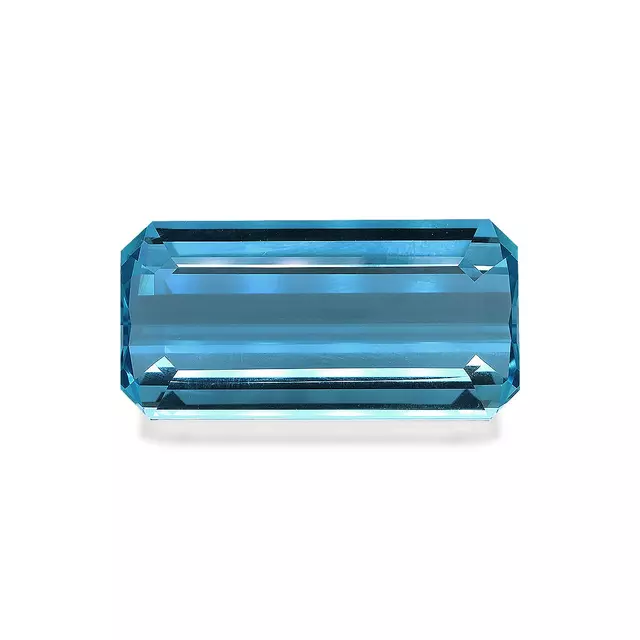
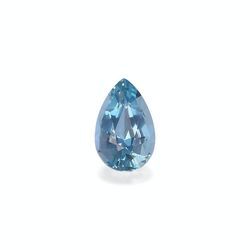
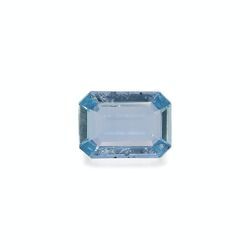
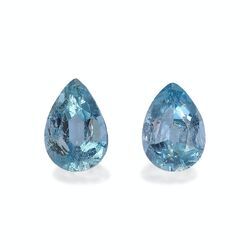
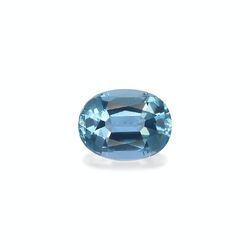
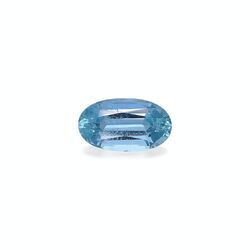
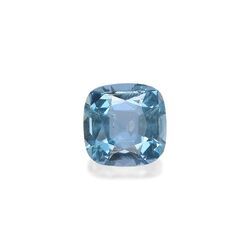
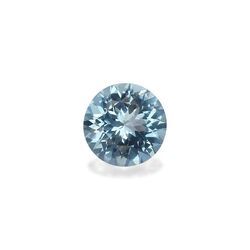
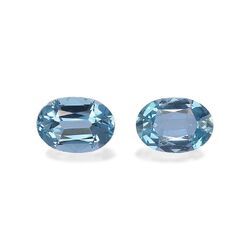
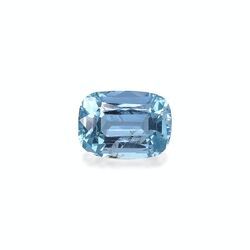
Natural Aquamarine — Santa Maria, Treatment Disclosed, Direct from Source
If you've looked through the catalog before reading this page, you've already seen "Santa Maria" in most of the listing names. That term deserves an explanation before anything else.
Santa Maria is a trade name for aquamarine of a specific color quality, originating from the Santa Maria de Itabira mine in Minas Gerais, Brazil, where exceptionally saturated blue aquamarine — without green overtones — was found in the 1950s. The mine eventually depleted. The name stayed in the trade as an informal color benchmark, the way "cornflower blue" functions for sapphires: a useful quality descriptor, not a GIA or GRS certification category.
Today "Santa Maria" is applied to stones from Madagascar, Mozambique, and other African sources that reach equivalent color quality. The term describes saturation and hue purity — deep blue with minimal green component — not a specific origin.
What this means practically: two stones both labeled "Santa Maria aquamarine" can look different. What matters is the specific color of the specific stone you see, and the treatment status on the certificate. We apply Santa Maria as an internal color threshold in the catalog — origin is listed separately in every product description.
What You'll Actually Pay
Aquamarine is one of the few stones where large size does not automatically mean dramatic price per carat premium. Beryl grows in large crystals — a 30-carat aquamarine is commercially normal, not the rarity that a 30-carat ruby represents. The primary price driver is color saturation, not weight.
| Color Class | Carat | Treatment | Price Range (USD/ct) | Certificate |
|---|---|---|---|---|
| Pale / Ice Blue | 1–5 ct | Unheated | $50–150 | Optional |
| Pale / Ice Blue | 5–20 ct | Unheated | $80–200 | Optional |
| Medium blue | 5–15 ct | Heated | $120–300 | Optional |
| Santa Maria quality | 5–15 ct | Heated | $200–500 | Recommended |
| Santa Maria quality | 15–40 ct | Heated | $300–700 | GIA recommended |
| Deep vivid blue | 10–30 ct | Heated | $500–1,500 | GIA required |
| Museum-grade | 50+ ct | Any | $800–2,500+ | GIA or equivalent |
The 106.56 ct Gemologist's Pick is priced at museum-specimen level — it's shown as an example of what direct sourcing accesses at the top end, not as a typical buyer target.
Santa Maria — What the Term Actually Means
The original Santa Maria de Itabira mine in Minas Gerais, Brazil produced aquamarine with a deep, saturated blue that the trade hadn't seen consistently before. The color had almost no green modifier — pure blue, high saturation. When that mine's output declined, dealers began using "Santa Maria" as shorthand for this color quality regardless of where the stone came from.
African material — primarily from Madagascar and Mozambique — that reaches the same color level is often sold as "Santa Maria Africana" to distinguish it from the original Brazilian source. Both are honest uses of the term when applied accurately.
The problem: "Santa Maria" costs nothing to type in a listing title. A seller applying it to pale, greenish material is misusing a trade descriptor. There is no regulatory body enforcing the standard.
What to do: ask which country the stone is from, and ask what the certificate says about color. A GIA report on aquamarine will describe color as "medium light greenish blue," "strong blue," "vivid blue" — these terms have commercial significance. "Vivid blue" with minimal green modifier is what Santa Maria quality means. If the certificate says "medium greenish blue," the Santa Maria label is overstated regardless of what the listing says.
Maxixe — The Stone That Fades in Sunlight
There is a subcategory in the catalog menu called Maxixe Aquamarine. This is not simply a different shade — it is a fundamentally different product with a critical limitation that most sellers do not explain clearly.
Maxixe refers to deep blue aquamarine from the Maxixe deposit in Minas Gerais whose intense color is produced by irradiation. The problem is stability: the color is not permanent. Exposure to sunlight and UV sources causes the stone to fade — from deep saturated blue to pale blue or near-colorless, depending on irradiation intensity and cumulative light exposure.
Practical consequences:
- Maxixe should not be worn outdoors regularly
- Should not be stored in a lit display case
- Even sustained photographic flash can accelerate fading over time
Maxixe in the catalog is sold with full treatment disclosure — irradiated material with unstable color. It suits collectors who store stones in closed cases. It does not suit everyday jewelry worn in sunlight.
If you see "deep blue aquamarine" priced significantly below medium blue — ask whether it is Maxixe. This is not fraud when disclosed honestly, but it is a different product with a different use case.
Heated vs Unheated — What It Means for Aquamarine Specifically
The catalog filter shows three treatment options: Heated, Unheated, and Not Determined. This is worth understanding before buying.
Heated aquamarine is the commercial standard. Natural aquamarine rough from most deposits comes in blue-green to pale blue-green. Heating at 400–500°C removes the green component and concentrates the blue. The result is stable — the color does not degrade or change over time. Most aquamarine in the retail market, from mass-market to fine jewelry, is heated.
Unheated aquamarine exists naturally from certain deposits — Madagascar and Mozambique regularly produce material with clean blue saturation without heating. This commands a modest premium over heated material of equivalent appearance, but the premium dynamic is different from rubies or sapphires. A pale unheated aquamarine with a green modifier is worth less than a heated stone with clean deep blue — "unheated" does not automatically mean more valuable for this particular stone. Color quality determines the premium, not treatment status alone.
Not Determined in the catalog means the specific stone has not been laboratory-tested for treatment status. This reflects the absence of a certificate on that parameter — not a concealed defect. Stones in this category are sourced from known channels but carry no formal treatment documentation.
Where the Catalog Material Comes From
Three primary sources: Madagascar, Mozambique, Brazil. The filter shows "Africa" (covering Madagascar and Mozambique) and "India."
Madagascar is the primary source of catalog material. Pegmatite zones across the island produce aquamarine in larger crystals with good clarity and consistent saturation. Madagascar material frequently reaches Santa Maria color quality without heating.
Mozambique — Zambezia and Nampula provinces. Good commercial quality, moderate saturation, accessible price. Provides the volume end of the catalog.
Brazil — Minas Gerais, including the original Santa Maria deposit area. Top Brazilian material still commands a premium. Standard commercial Minas Gerais material today is mid-range.
We work from Beruwala, Sri Lanka, through Bangkok trading contacts who handle African and Brazilian material directly. Sri Lanka produces aquamarine in small volumes from the same gem gravels as sapphires in Ratnapura, but it is not a significant commercial source. The pricing advantage for aquamarine — the 40–60% gap below US retail — comes from the same supply chain logic as every other category on this site: one margin above the Bangkok dealer level, not four margins through a US importer.
The 106.56-carat Santa Maria Blue in the Gemologist's Pick is Madagascar material. Museum-scale specimens like this reach the market through Bangkok contacts who hold or broker large high-grade rough parcels. This is what direct sourcing at the top end looks like.
Aquamarine vs Blue Topaz — The Question That Comes Up
Buyers compare aquamarine to blue topaz because the colors look similar and the prices don't. Commercial blue topaz runs $5–20/ct. Aquamarine runs $100–500/ct and up.
The difference: commercial blue topaz is almost universally irradiated and heat-treated colorless topaz. Natural blue topaz exists but is rare and expensive — what fills jewelry store inventories is treated material. Aquamarine is natural blue beryl, some of which is heated to purify the color, but the mineral species and the natural origin of the color are fundamentally different.
This does not make blue topaz a bad purchase — it makes them different products. A buyer who understands the difference chooses deliberately. A buyer who doesn't may feel deceived later when they learn the treatment history of the "aquamarine-colored" stone they bought for $40.
What to Look for on an Aquamarine Certificate
Species. "Aquamarine" or "beryl var. aquamarine" — confirms natural beryl, not synthetic and not topaz.
Treatment. "No indications of heating" for unheated. "Indications of heating" for heated. "Irradiation" for Maxixe — this is the line that distinguishes stable from unstable color. Read it before discussing price.
Color description. GIA describes aquamarine color through hue, tone, and saturation. "Medium light greenish blue" and "vivid blue" are different commercial categories at the same carat weight. The presence of "greenish" as a hue modifier reduces price. A stone described as "strong blue" with no green modifier is Santa Maria territory.
Clarity. Aquamarine is a Type 1 gemstone — high clarity is expected. Eye-clean is the commercial standard. Loupe-clean commands a premium. Stones with visible inclusions to the naked eye are priced significantly lower.
Common Questions
"Is Santa Maria a place or a quality grade?" Originally a place — the Santa Maria de Itabira mine in Brazil. Today it functions as an informal color quality descriptor applied by the trade to aquamarine with deep, pure blue saturation from any origin. It is not a GIA or GRS certification term. When we use it in the catalog, it means the stone meets our internal color threshold for that class — origin is always specified separately.
"What is Maxixe and can I wear it?" Maxixe is irradiated aquamarine with unstable color that fades under UV and sunlight exposure. It is fully disclosed in every Maxixe listing in the catalog. It suits collectors who store stones closed and away from light. It is not suitable for everyday outdoor jewelry.
"Does unheated aquamarine cost more than heated?" Not automatically. A pale unheated stone with a green modifier costs less than a well-heated stone with deep clean blue. Treatment status matters less for aquamarine than color saturation — the premium goes to color quality first. Fine unheated aquamarine with deep natural blue does command a premium, but the category is not as clear-cut as unheated sapphire or unheated ruby.
"Why are so many stones in the catalog large — 20, 30, 50 carats?" Beryl grows in large crystals. A 30-carat aquamarine is commercially normal, not exceptional. The price per carat does not spike as dramatically with size as it does in ruby or alexandrite. This makes large aquamarine one of the best-value options for buyers who want visual presence in a stone at accessible prices.
"Can I return it?" Yes — 14 days from delivery, full refund on unmodified stones. Contact us first for an RMA number before sending anything back. Refunds process within 5–7 business days of receiving and approving the return. Do not have a stone set before deciding to keep it.
How to Order
Tell us: color preference (pale ice blue for silver-toned settings, or Santa Maria deep blue for statement pieces), size range, treatment status importance, and budget. For museum-scale pieces above 50 carats — contact directly before the call, these require a separate conversation.
The call is 20–30 minutes on Zoom. Stone in natural daylight, certificate on screen, no commitment required.
Browse current aquamarine inventory above — 64 stones, 0.93 to 106 carats, Africa and India origin. Or contact us directly for specific color or size requests.