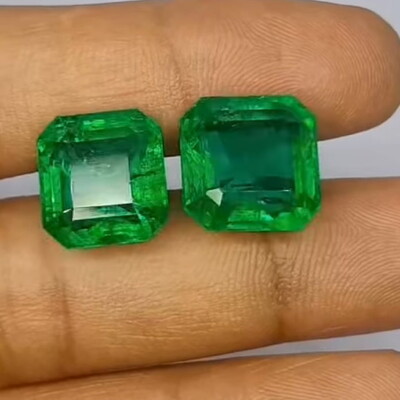
Pakistan holds some of the richest emerald resources in Asia. The Swat Valley in the north became known in 1958 when villagers uncovered veins of green beryl. Those first discoveries set the stage for decades of mining, trading, and gradual modernization.
The stones rival Colombian material in clarity and depth of color. Collectors now watch auctions for rare Swat emeralds, while jewelers in New York, London, and Dubai track private sales. Prices for the finest examples often stand side by side with Colombia, which remains the global benchmark.
Sources of Emerald Mining
Pakistan’s deposits are scattered across several regions: Swat Valley, Gandao, Barang, and Khaltaro. Swat dominates, both historically and commercially. At first, local royalty managed the mines and their exports. Later, the Pakistan Mineral Development Corporation (PMDC) ran operations during the 1970s before private owners stepped in.
Traditional methods shaped the early decades. Miners dug narrow horizontal tunnels, or adits, with nothing but hand tools. Baskets carried ore out through dark passages. The process was slow, exhausting, but surprisingly precise. Damage to crystals remained minimal.
Now, modern equipment is creeping in. Companies invest in mechanized drilling, controlled blasting, and larger-scale open-pit methods. Output rises. Efficiency improves. Yet the risks to the land grow as well.
Environmental Strain and Mining Practices
Old techniques required timber supports, and deforestation followed. Waste rock piled near rivers, clouding the water. Soil loosened, slopes shifted, and landslides scarred villages. Even the less invasive tunnels left scars.
Recent projects attempt rehabilitation. Operators strip topsoil carefully, plant trees afterward, and stabilize slopes. Open-pit mining extracts more stone per day and removes the hazard of collapses. Mechanized blasting speeds up recovery, though it carries heavy ecological costs. Reclamation programs remain uneven—some succeed, others stall once funding dries up.
Geological Formation
Pakistan’s emeralds owe their existence to tectonic violence. The Indus suture zone, where the Indian and Eurasian plates collided, created the right cocktail of heat, pressure, and fluids. Chromium- and beryllium-rich rocks fractured under immense force, while hydrothermal fluids carried elements into open cavities.
There the crystals grew—slowly, unevenly, over millions of years. Chromium dictates the green tone, ranging from pale mint to a dense, bluish green that dealers prize. Beryllium stabilizes the crystal lattice, sharpening the saturation. Pakistani stones often contain both elements, a combination that explains their vivid hue and character.
Color Spectrum and Market Value
Color defines price. Always has. Stones from Pakistan fall into distinct categories:
| Color | Description | Value |
|---|---|---|
| Grass Green | Bright, yellow-green | Moderate |
| Mint Green | Lighter, bluish green | Moderate to High |
| Deep Green | Rich, intense, strongly saturated | High |
| Blue-Green | Green with visible blue undertone | High to Very High |
Deep greens and stones with a blue edge command premiums. Collectors notice. Dealers push per-carat values up quickly when clarity and cut align with strong saturation.
Pricing Benchmarks and Record Sales
At Christie's New York in 2019, a 24.04 ct Swat emerald brought $1.11 mn, or $46,173 per ct. One year earlier, Sotheby’s sold a 15.56 ct Pakistani emerald ring for $393,000, equal to $25,257 per ct.
These records sent a message—Pakistan now stands on the global stage.
Price ranges tell the broader story:
| Source | Price per ct |
|---|---|
| Colombia | $5,000 – $100,000+ |
| Zambia | $3,000 – $30,000 |
| Pakistan | $2,000 – $50,000 |
While Colombian stones still dominate at the very top, Swat material consistently reaches mid to upper brackets.
Chemical Properties and Treatments
Emerald is a beryl variety with formula Be3Al2(SiO3)6. Chromium and vanadium give color. Trace elements—iron, magnesium, sodium—help gemologists determine origin.
Pakistani stones carry typical inclusions: three-phase cavities, liquid-filled tubes, pyrite specks, calcite crystals. These fingerprints anchor identification and separate natural stones from synthetic or glass-filled material.
Treatments remain common.
| Treatment | Description | Market Effect |
|---|---|---|
| Oiling | Fissures filled with clear oil | Minimal, widely accepted |
| Resin Filling | Synthetic resin hardens in cracks | Moderate, less accepted |
| Dyeing | Green dye to intensify color | Severe loss of value |
Collectors tolerate oiling. Resin and dye bring discounts. Disclosure is non-negotiable.
Certification and Investment
Certification drives trust. Without it, the trade falters. Buyers expect lab reports that confirm natural origin, treatments, and geography. Leading labs—GIA, AGL, SSEF, Gübelin—provide this assurance.
For investors, key factors matter: rarity, color intensity, clarity, cut quality, and whether a stone has undergone treatment. Untreated emeralds always attract premiums.
New York remains a strong market hub. Dealers there offer both loose stones and set jewelry. According to our analysts, diversification helps—mixing Pakistani emeralds with Colombian, Zambian, and rubies or sapphires spreads risk and strengthens a collection.
Closing Notes
Pakistani emeralds stand as one of the most intriguing resources in the gemstone world. Their geological story, combined with sharp color and auction results, gives them momentum in global markets. Some stones rival Colombia, others trade at more accessible levels. Either way, Pakistan has carved a place in the conversation.
Vividcarat.com lists Pakistani emeralds alongside rubies, garnets, and diamonds. Inventory shifts often, but every stone carries its own character. Buyers with patience can find remarkable value here, while serious investors track certification and market movement with care.