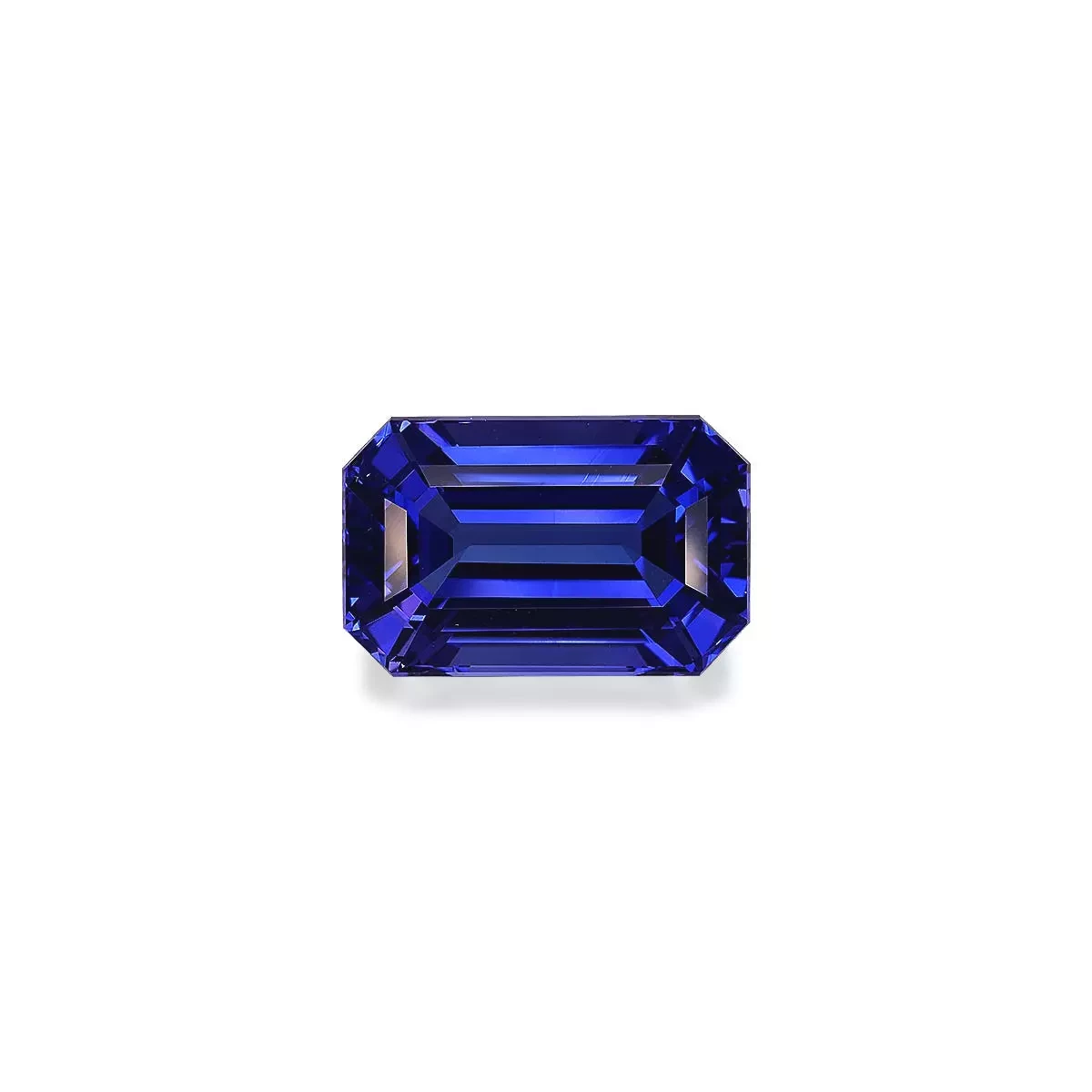

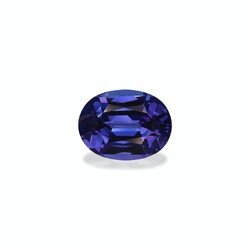
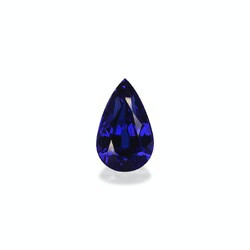
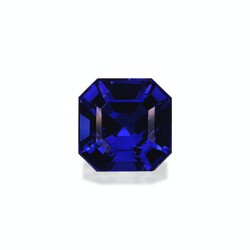
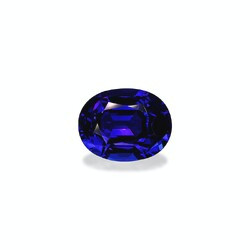
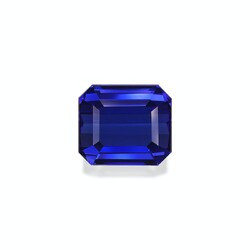
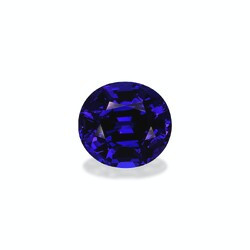
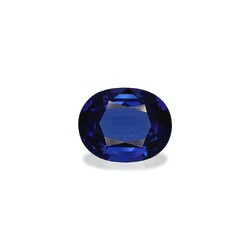
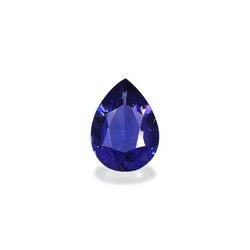
Natural Tanzanite — One Source on Earth, Treatment Disclosed, Certified
By Russell, VividCarat — China Fort Market, Beruwala, Sri Lanka
There is one place on Earth where tanzanite forms. One valley, one geological anomaly, 4 square miles of rock in the foothills of Kilimanjaro. When those mines close — and they will close, the deposit is finite — there will be no other source. No alternative origin, no substitute geology. The stone will exist only in what was already mined.
I think about this every time I handle a piece of tanzanite at the market. Not as a sales argument — as a geological fact that changes what the stone means as a purchase. Every other gemstone on this site has multiple sources. If Mogok slows down, Mozambique picks up the ruby market. If Colombian emerald becomes scarce, Zambia is there. Tanzanite has no backup.
That's the beginning of the story. The rest is about what you're actually buying, what the certificate needs to say, and why the price chart over the last thirty years looks the way it does.
What You'll Actually Pay
Tanzanite pricing follows three variables: color saturation (blue vs violet component), clarity, and carat weight. Size matters more in tanzanite than in most stones — the price per carat rises steeply above 5 carats because large clean tanzanite requires proportionally larger rough, and large clean rough is genuinely scarce.
| Color Grade | Carat | Price Range (USD/ct) | Notes |
|---|---|---|---|
| Commercial blue-violet | 3–5 ct | $80–180 | Heated, moderate saturation |
| Fine blue-violet | 5–10 ct | $200–400 | Heated, strong saturation |
| Fine royal blue | 7–15 ct | $300–600 | Heated, dominant blue |
| Top royal blue | 10–20 ct | $500–900 | Deep saturation, eye-clean |
| Exceptional | 20+ ct | $700–1,500+ | Investment grade |
| Unheated | any | +40–80% premium | Natural brown-blue, rare |
All tanzanite in commercial supply is heated — this is standard practice, not a defect. Unheated tanzanite is a collector category that requires specific documentation. See below.
The One Source — What It Actually Means
The Merelani Hills sit at the base of Mount Kilimanjaro in northern Tanzania, near the town of Arusha. The geological conditions that produced tanzanite — a rare combination of vanadium, heat, and pressure within a specific metamorphic rock formation — occurred once in Earth's history, in this one location.
The deposit is divided into four mining blocks: A, B, C, and D. Every stone in the VividCarat catalog is marked "Block D" in the product name. This is not arbitrary — it tells you who mined it.
Block D is operated by Tanzanite One, the largest mining company in the Merelani Hills, backed by institutional capital and operating under formal export documentation. Blocks A and C are artisanal and small-scale operations. Block B is intermediate. The block designation on a stone traces it to a specific operator with a specific documentation chain — which matters for provenance, for resale, and for export compliance.
When you see "Block-D" in the catalog listing, it means: large-scale formal mining operation, traceable documentation, Tanzania Mining Commission export cleared. Not an artisanal parcel with ambiguous provenance.
The Heat Treatment Question — Why Almost All Tanzanite Is Heated
Natural tanzanite rough from the ground is predominantly brown to brownish-blue. The heat treatment — 400–700°C in a controlled environment — drives oxidation of vanadium within the crystal and produces the blue-violet color that the market knows.
This is not a modern intervention. The Maasai living near Merelani had been finding blue crystals for generations — these were naturally heat-treated stones, heated by bush fires passing over the surface. The first commercial miners noticed that rough brought from depth changed color when heated over an open flame. The practice has been standard in the trade since the 1960s.
What heating does: reveals the color that exists within the crystal structure but is masked by brown iron oxidation states. It does not add external material, does not coat the stone, does not change the mineral species.
What this means on a certificate: GIA and other labs report "indications of heating" for standard tanzanite. This is disclosure, not a penalty. A certificate without this notation either means unheated material (rare, specific category) or the lab didn't test for treatment.
Unheated tanzanite is a distinct collector category. Natural, untreated tanzanite retains a trichroic brownish-blue appearance. It is genuinely rare — most rough is heated at source before it reaches the cutting market. GIA certificate confirming "no indications of heating" on tanzanite commands a 40–80% premium among collectors who want the stone in its natural state. It is not visually superior to heated material — the color is different, not better. The value is in the documentation of natural state.
Block D — What the Catalog Label Means
Every tanzanite in the catalog comes from Block D of the Merelani Hills. This tells you four things:
Source operator. Tanzanite One is the concession holder for Block D. They operate the largest mechanized mining operation in the deposit. Scale means consistent documentation.
Export documentation. Block D material passes through Tanzania's formal gem export channel — Tanzania Mining Commission certificates, export permits, traceable lot numbers. This documentation chain is what allows a buyer in the US or Europe to verify provenance.
Size profile. Block D mining accesses deeper zones of the deposit where larger crystals form. The catalog skews toward 5–30 carat material because that's what the Block D geology produces consistently.
No artisanal ambiguity. Blocks A and C involve hundreds of small-scale operators with varying documentation standards. Block D is a single large operator. Simpler provenance chain, cleaner documentation.
The Finite Supply Argument — Priced In or Not
The "tanzanite is running out" narrative has been in the market for twenty years. It's been used as a sales technique so often that most buyers are skeptical of it. Skepticism is reasonable — the timeline has been extended multiple times as new zones were found at greater depths.
What is documentable: tanzanite production peaked in the early 2000s and has declined. The Merelani Hills deposit has a calculable volume based on geological surveys. New finds at depth have extended the runway but not changed the fundamental geology. There is no other tanzanite deposit anywhere on Earth — this has been confirmed by mineral surveys across the East African Rift Zone.
The investment argument is not "it will run out next year." The argument is that as a finite single-source stone with global recognition and no substitute, the supply curve is structurally declining while demand from Asian collector markets (China, Japan, South Korea) has increased over the past fifteen years. The price chart since 1990 reflects this — with two notable correction periods during global recessions, the long-term trend is upward.
Whether you find this argument compelling depends on your investment horizon. For buyers purchasing for beauty and wearability, it's irrelevant. For buyers thinking about what they'll pass on or sell in twenty years, it's worth understanding.
Pleochroism — Why Tanzanite Looks Different in Different Light
Tanzanite is trichroic — it shows different colors along three crystal axes: blue, violet, and brownish red. When you hold a tanzanite and turn it slowly in natural light, the color shifts. This is not a defect or inconsistency. It is an intrinsic optical property of the mineral.
Cutters work with pleochroism deliberately. The orientation in which the stone is cut determines which color axis faces the table (the flat top facet) and therefore which color dominates when you look at the stone straight on. A cutter who orients the stone to maximize blue gets a stone that reads as royal blue with violet flashes. A cutter who orients differently gets a more violet-dominant stone.
Neither is wrong. They are different aesthetics from the same rough.
What this means for buying on video: I show tanzanite from multiple angles under natural daylight and indoor light specifically because the stone looks different under each. A tanzanite that appears deeply royal blue under daylight may show violet-blue under warm indoor light. Both are what the stone is. What you see on the Zoom call in both conditions is what arrives.
What to Look for on a Tanzanite Certificate
Species confirmation. Should say "tanzanite" or "zoisite var. tanzanite." Not "blue zoisite" without the tanzanite designation — that's technically accurate but misses the commercial identification.
Origin. Should say "Tanzania" — there is no other legitimate origin. If origin is absent or listed as anything other than Tanzania, that is a problem with the documentation, not the stone.
Treatment. "Indications of heat treatment" — standard for commercial material, expected. "No indications of heat treatment" — unheated collector category, commands premium, must be verified by GIA or equivalent.
Color description. GIA uses terms like "strong violetish blue" or "vivid blue" — these have commercial significance. A GIA "vivid blue" tanzanite is a different product tier than "medium violetish blue."
Why Tanzanite vs Blue Sapphire Is the Wrong Comparison
Buyers often ask me to compare tanzanite to blue sapphire. It's the wrong frame.
Blue sapphire is harder (Mohs 9 vs tanzanite's 6.5), more durable for daily wear, has multiple global sources, and has a four-century collector market behind it. Ceylon blue sapphire with GRS documentation is a more liquid asset in the secondary market.
Tanzanite is softer, more fragile under hard impact, and comes from one mine. It is not a sapphire substitute.
What tanzanite has that sapphire doesn't: the specific blue-violet color shift that no other stone produces, the single-source scarcity story, and a price point significantly below equivalent sapphire — typically 60–70% less per carat for comparable visual quality in daylight.
The honest answer: if you want daily-wear durability and investment-grade liquidity, sapphire. If you want the specific tanzanite color at a fraction of sapphire prices, and you're comfortable with the care requirements of a softer stone, tanzanite is a different product worth having on its own terms.
Care — What Most Sellers Don't Say
Tanzanite is Mohs 6.5 — softer than quartz, softer than household dust in some environments. This has practical consequences that most listings don't address directly.
For rings: bezel or halo settings that protect the girdle and table from direct impact. Prong settings leave the stone exposed to knocks. If you wear rings daily and are hard on your hands, tanzanite in a ring is a real risk. Pendants and earrings are lower-risk applications.
Ultrasonic cleaners: avoid entirely. The vibration can stress the crystal along natural cleavage planes.
Steam cleaning: avoid. Sudden thermal shock is a risk for tanzanite.
Chemicals: remove before cleaning products, chlorine pools, perfumes applied directly to the stone.
Everyday wear: tanzanite in a protective setting worn for special occasions rather than daily — this is the honest recommendation. It's not a sapphire in terms of durability.
Common Questions
"Why is all tanzanite in the catalog heated?" Because virtually all commercial tanzanite is heated. Natural rough from the mine is brown to brownish-blue. Heating at 400–700°C reveals the blue-violet color within the crystal. The process has been standard since the 1960s, is fully disclosed on certificates, and is not a quality defect. It is the commercial form of the stone — the same relationship that heated blue sapphire has to the sapphire market.
"What does 'Block D' mean on the product listings?" The Merelani Hills deposit is divided into four mining blocks. Block D is operated by Tanzanite One, the largest formal mining operation at the site, with traceable export documentation through Tanzania's Mining Commission. Block D designation tells you the provenance chain and the operator — it's not a quality grade, it's a source identification.
"Is tanzanite a good investment?" Longer horizon than most colored stones because of single-source geology and documented declining production. Short-term liquidity is lower than sapphire or ruby in the secondary market — the collector base is smaller. For buyers thinking 10–20 years and willing to hold, the supply dynamic is real. For buyers wanting liquidity within 5 years, sapphire or ruby is a more predictable market.
"Can I wear tanzanite every day?" In a protective setting — bezel or halo — it's possible with care. For daily-wear rings in a prong setting, the honest answer is it's a risk. Mohs 6.5 means softer than many materials a ring encounters. Pendants and earrings are lower-risk. I tell clients this upfront rather than let them find out after a chip.
"Can I return it?" Yes — 14 days from delivery, full refund on unmodified stones. Contact us first for an RMA number. One condition: don't have the stone set before deciding to keep it.
How to Order
Tell us: preferred size range, color priority (stronger blue vs more violet), budget, and whether treatment status matters (standard heated vs unheated collector category). For unheated tanzanite specifically — this requires active sourcing, it's not always in catalog inventory.
The call is 20–30 minutes on Zoom. I show the stone in natural daylight and indoor light, turn it to demonstrate the pleochroic shift, and open the certificate on screen. No deposit, no commitment.
Browse current tanzanite inventory above — 58 stones, Block D origin, 3 to 39 carats. Or contact us directly for unheated material or specific size requests.