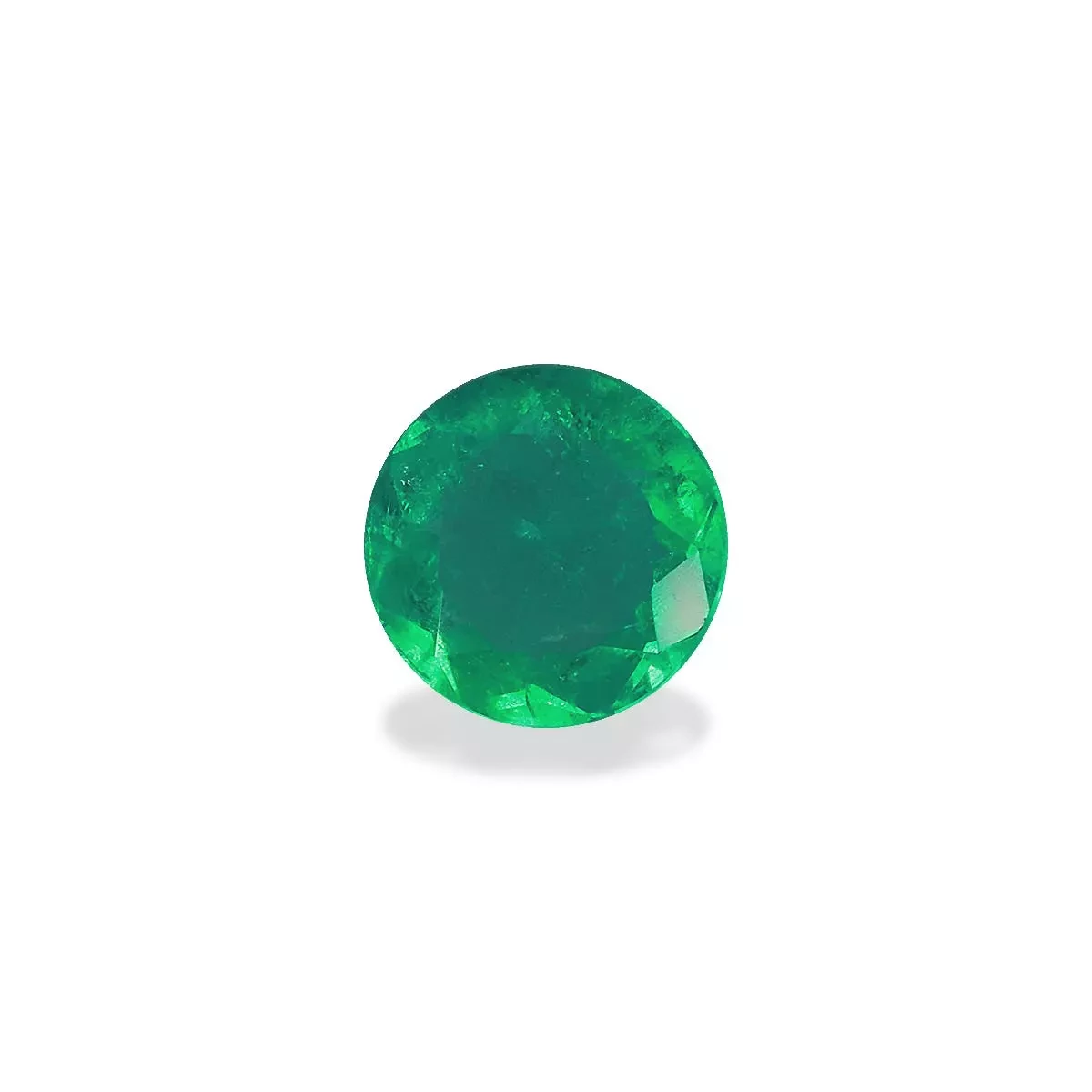
The Color and Chemistry of Muzo
Emeralds from Muzo span the spectrum. Some strike with crisp light greens, others sink into dark forest shades. What drives that spectrum is not mystery but chemistry.
Chromium and vanadium slip into the crystal lattice where aluminum normally rests. Chromium pushes emeralds toward a saturated bluish green, while vanadium overlays an olive tint. Their ratio decides how strong or subtle the hue becomes.
Iron complicates the story. Muzo stones usually carry little of it, so light moves cleanly through the gem, giving that prized transparency. Add more iron and the green deepens, sometimes with bluish undertones, but clarity drops. Commercial miners still sell plenty of those, and the market takes them in bulk.
Gemologists map these effects with spectroscopy. Higher chromium or vanadium deepens absorption around 450 nm and shifts the signature toward darker greens. Iron trims light transmission, especially in the blue range. The table below captures these trends:
| Parameter | Bluish-Green | Pure Green | Yellowish-Green |
|---|---|---|---|
| 450nm Absorption | Higher | Medium | Lower |
| 630nm Transmission | Lower | Medium | Higher |
| Fe Content | Lower | Medium | Higher |
Geological Settings: The Mines of Muzo
Emeralds grow where hydrothermal fluids flood fractured rock and load beryl crystals with chromium and vanadium. The Muzo belt holds several mines, each with its own mineral fingerprint.
-
Coscuez: Carbonaceous schists and pyrite. Stones skew dark green with blue hints, clarity weaker.
-
La Pita: Less iron, more chromium. Bright greens, high transparency, very clean material.
-
Tequendama: Pyrope garnet association. Produces vivid yellow-green tones.
-
Muzo proper: Sedimentary deposits modified by evaporites. Distinctive stones with balanced character.
-
Chivor (not far from Muzo): Emeralds in calcite veins that cut black shale. Distinctly different but often compared.
Together these sites build Colombia’s reputation as the world’s emerald capital, with Muzo still the name most buyers remember.
Historical Trajectory: From Sacred Stone to European Treasure
Before the Spanish, indigenous communities had already been mining Muzo for over two millennia. To them, emeralds linked to fertility gods. Chiefs passed them down as gifts, both sacred and political.
Then came the Conquistadors. In the 16th century they sought gold, but emeralds quickly followed. Natives were enslaved, the mines turned to feed the empire. By the 1700s, Muzo stones appeared on royal chests across Europe.
-
1738: Russian Empress Anna Ivanovna wore a 104-carat Muzo brooch.
-
1739: The 135-carat Patricia Emerald entered Austrian regalia.
-
1805: Napoléon gave Marie-Louise a 40-carat drop pendant from Muzo.
The mine’s reputation stuck. These were not just stones, they became political tokens, signals of wealth and dominance.
Mining Today: Safety and Sustainability
Centuries of violence and chaos scarred the district. Yet Muzo has pivoted. The company running the concessions promotes itself on ethics, worker protection, and community support.
The tunnels are reinforced with bolts and mesh to prevent collapse. Explosives fire through electronic detonators, reducing risk. Jackleg drills push new galleries, and sorting stations run on computer-based systems.
Outside the pits, profits fund aqueducts, schools, and roads. The region now shows infrastructure on par with any advanced mining zone. Colombia markets Muzo emeralds not just as gems, but as ambassadors.
Physical and Optical Traits of Muzo Emeralds
-
Hardness: 7.5–8 Mohs, durable enough for most jewelry.
-
Cleavage: Poor, along prismatic planes, so cutters tread carefully.
-
Refractive Index: 1.57–1.59, giving medium-to-high brilliance.
-
Specific Gravity: 2.67–2.78, heavy enough to sink in water.
Buying Muzo Emeralds in New York City
Investors circle these stones. Muzo emeralds don’t just carry color; they carry a name. That pedigree alone adds a premium.
Prices respond to the usual four Cs: color, clarity, cut, carat. Vivid greens fetch the top dollar. Bigger stones rise exponentially in value. Flawless transparency wins. Precision faceting makes or breaks appeal.
But the pedigree matters just as much. A Muzo emerald, all else equal, will sell above the same stone from Zambia or Brazil.
Over the past 25 years, they’ve averaged annual real gains of 8% per carat. A strong track record, though treatments complicate things. Oil, resins, fracture-fills—these cut value. Buyers must check reports carefully.
Our analysts recommend:
-
Only buy certified stones, signed off by qualified labs.
-
Always weigh the cut, clarity, carat, and color in context.
-
Appraisals and insurance safeguard your capital.
-
Stick with reputable dealers, established in the trade.
In New York, firms like vividcarat.com sell Muzo emeralds across hues, often with full disclosure of treatment. According to our data, that transparency matters more than ever as collectors seek stones they can trust.
Outlook
Muzo emeralds carry both legend and liquidity. They were once sacred gifts, later war booty, then royal adornments. Today they trade in investment portfolios and showcase cabinets.
The mine’s geology still delivers bluish greens, pure greens, yellow-greens. The company still markets them worldwide. The brand remains intact.
And maybe that’s the point. Supply is finite, demand growing, and the stories wrapped around these stones only add weight. For buyers, collectors, and investors—the green road of Muzo keeps unfolding.