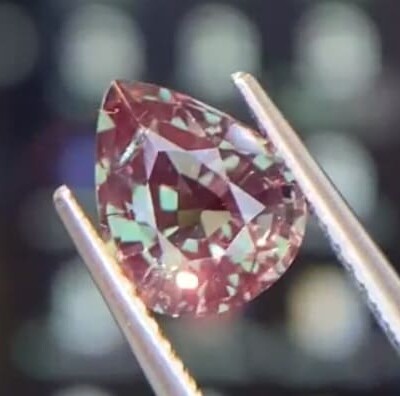
Alexandrite burst onto the gem scene in 1834 when a promising green crystal was unearthed in the emerald mines of Russia’s Ural Mountains. Expecting an emerald, miners were astonished when the stone changed color in candlelight, flaming red with a tinge of purple.
Word spreads quickly of this chameleon crystal to Russia’s imperial capital. There, Count Lev Perovski identified the crystal as an unknown variety of chrysoberyl. Perovski names the stone “alexandrite” in honor of Tsar Alexander II, who had ascended the throne two years prior at the age of 36.
The Tsarevitch Stone Captivates the Romanovs
The stone was considered a good omen for Alexander II's reign and liberal reforms.
For Russian jewelers like Fabergé, alexandrite became a favorite stone to craft into ornate jewelry and objects d'art for the imperial family.
However, Russian alexandrite is scarce and mining challenges arose over time – the Russian mines were depleted. Just decades later, vast alexandrite deposits were uncovered in Madagascar in 1909.
This discovery helps democratize access to the stone in modern times.
Chemical Composition and the Alexandrite Effect
What makes alexandrite captivating among gems is its chameleon-like ability to transform color in different lighting, from emerald green to raspberry red. This phenomenon is known as the “alexandrite effect.”
Chromium to Spice Things Up
Alexandrite's color change comes down to chemistry. Its essential ingredients are:
- Chrysoberyl- The host mineral that gives alexandrite its hardness and crystal structure.
- Chromium- Trace impurities of chromium provide vibrant green and red colors.
In natural light, the chromium absorbs in the green spectrum, producing a vivid green hue. In incandescent light, the chromium absorbs red and reflects green, flipping alexandrite to a reddish-purple.
Quantifying Color Change Before Purchasing Alexandrites
Gem labs use colorimetry to quantify the alexandrite effect across different light sources. The table below shows color values for a 1-carat stone:
|
Light Source |
Hue |
Tone |
|
Daylight |
Yellowish Green |
Vivid |
|
Incandescent |
Purplish Red |
Deep |
The transformation between these color states is definitive proof of an alexandrite's authenticity and value. Top-grade stones display rich hues and a high degree of color change.
The Color Palette of Madagascar Alexandrite
Alexandrite from Madagascar captivates collectors with its wide spectrum of lush, vibrant hues. The island's signature stones exhibit a distinctive chameleon-like shift, from resplendent blue-green in daylight to a dramatic purplish-red under incandescent light.
Vivid Blue and Green Tones
In natural light, Madagascar Alexandrite typically displays:
- Vibrant blue undertones
- Rich emerald green colors
- Occasional yellowish-green hues
The vibrant blue content sets Madagascar Alexandrite apart, producing lively bluish-green tones.
These prized "teal" Alexandrites are considered the finest by connoisseurs.
Intense Reds and Purples
When lit with incandescent bulbs, Madagascar stones shift to:
- Vivid ruby and raspberry red hues
- Radiant purplish-red tones
- Occasional pinkish colors
The dramatic color change, from blue-green to red-purple, is more intense than Alexandrite from the Ural Mountains or other minor localities.
Benchmark for Color Change
The table below compares the color shift of a 1-carat stone across sources:
|
Origin |
Daylight Color |
Incandescent Color |
|
Madagascar |
Vivid Greenish Blue |
Strong Purplish Red |
|
Ural Mountains |
Bright Green |
Moderate Purplish Pink |
Madagascar's Alexandrite stands in a class of its own, treasured for its broad palette of spectacular blues, greens, and reds.
Mining Locations and Extraction Processes in Madagascar
The island nation of Madagascar has become synonymous with rare and coveted alexandrite gemstones. Several regions contain active mines producing Madagascar's signature bluish-green jewels. However, locating deposits and extracting high-quality stones present ongoing challenges.
Prime Mining Regions
The key mining areas in Madagascar include:
- Ambatondrazaka– The inaugural 1909 discovery that revealed the country's alexandrite riches
- Mananjary– A remote southeastern area is a contemporary hotspot, where large crystals can be found.
- Tamatave– An eastern coastal region producing greener varieties
Artisanal Mining Techniques
Unlike large industrial operations, alexandrite mining in Madagascar relies on basic and labor-intensive methods:
- Tunnels dug directly into hillsides along exposed outcrops
- River mining by sifting gravels in search of eroded gem crystals
- Strict visual examination to identify promising rough stones
Advanced tools like optical sorters are rarely used, making it an arduous process.
The Secret Behind Alexandrite Mining
While commercial alexandrite is available, collectors covet flaws-free crystals over 5 carats. Giant, museum-worthy specimens exceeding 100 carats remain the stuff of legend.
Despite Madagascar's vast resources, massive crystals with a fine color and high clarity exist only in small, localized pockets. Their locations are closely guarded secrets, and for now, these nearly mythical giant alexandrites continue to prove highly elusive.
Evaluating the Cost Per Carat of Madagascar Alexandrite
Of all varieties, Madagascar Alexandrite commands the highest prices per carat on the gem market in New York City today. Top-notch stones can reach valuations of over $20,000 per carat.
Key Value Factors When Buying Gemstones
Three attributes primarily govern Madagascar Alexandrite's market value:
- Color Change- The intensity of green to red shift, with vivid bluish-green to purple commanding the highest premiums
- Clarity- The purity and transparency grade; flawless loose alexandrites are exceptionally rare
- Carat Weight- Massive sizes over 5 carats have exponential value
Market Price Trends in New York City
The table below outlines the current retail price per carat ranges:
|
Carat Size |
Price Range |
|
0.5 carat |
$1,000 – $3,000 |
|
1 carat |
$3,000 – $8,000 |
|
3 carat |
$10,000 – $30,000 |
As a highly sought-after gemstone, Madagascar alexandrite continues to maintain strong collector demand. Values are expected to continue rising for top specimens in the coming years.
You can browse a wide range of alexandrite gems available in stock on our website. vividcarat.com works in New York City and offers both natural and synthetic alexandrite stones, as well as other precious gems such as diamonds, spinel, rubies, topazes, and more. We sell either loose gemstones or jewelry with gem-encrusted pieces.