



_72x72_851_72x72_851.webp)
_72x72_851.webp)




Burmese Rubies: The Stone That Won't Be There for My Grandchildren
By Russell, VividCarat — China Fort Market, Beruwala, Sri Lanka
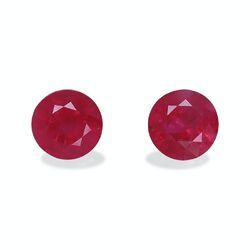
The Burmese ruby is probably the oldest brand in the gemstone market. It existed before I was born. Before my father was born. Before my grandfather was born. My son will still encounter individual finds — rare, expensive, extraordinary. My grandchildren almost certainly won't.
I'm already facing this reality in my daily work. A genuinely fine Burmese ruby — the kind with that specific burning color, the fluorescent red that photographers can't quite capture — I no longer find on mining tables. I find it in safes. In estate collections. In the hands of dealers who acquired it twenty years ago and are selling now because the right buyer appeared.
For about two decades, gem-quality Burmese rubies with jewelry-grade color have been moving from production into storage, not the other way around. Non-gem corundum still comes out of Mogok. But the stones that burn with that specific Burmese fire — they've been accumulating in collections and sitting on the necks and fingers of women who were lucky enough to receive them before the supply thinned.
This is not marketing. It's geology and politics and time.
What Makes the Color Different
The Mogok Valley in central Myanmar sits above marble deposits rich in chromium and low in iron — a geological combination that produces the specific red no other deposit replicates consistently. Chromium creates the red. Chromium also causes fluorescence: Burmese rubies glow under UV light and in certain daylight conditions with an intensity that makes the color appear to come from inside the stone rather than sit on its surface.
The term "pigeon blood" — ko-twe in Burmese — describes the precise hue: vivid pure red with a slight blue undertone, neither too orange nor too pink. GRS was the first major laboratory to codify it as a formal color grade. Today, a GRS or Gübelin certificate stating "Burmese origin, pigeon blood" is the document that unlocks the market's highest prices.
Mong Hsu material, from Shan State, produces rubies with slightly purplish color and more rutile silk inclusions — visually beautiful, but trading at lower levels than Mogok. For investment purposes, Mogok is the only origin that matters.
Treatments and What the Certificate Must Show
Around 95% of rubies on the market have been treated. For Burmese material, the treatment spectrum matters more than for almost any other stone.
No heat (no indications of heating): The rarest category. Natural color achieved without thermal intervention. GRS and Gübelin certificates stating this command the strongest premiums — sometimes double the equivalent heated stone.
Minor heat / low-temperature heating: Color enhanced at lower temperatures. Still considered fine quality in the trade. The ruby's natural characteristics are largely preserved. GRS will note "indications of heating" with no additional qualifiers.
High-temperature heating: Significant color modification, sometimes with flux filling of fractures. This is where disclosure becomes critical. The market discounts these stones substantially.
Fracture filling (glass/lead): A different category entirely. These are not investment-grade stones. Major labs flag this explicitly.
The two certificates that carry maximum credibility for Burmese rubies specifically: GRS and Gübelin. GIA is respected but GRS established the pigeon blood standard and their Burma origin determinations are the benchmark the trade prices against.
What You'll Actually Pay
Current market ranges for certified material:
| Grade | Treatment | Carat | Market Range (USD/ct) |
|---|---|---|---|
| Pigeon blood, Burma, unheated | No heat | 1–2 ct | $30,000–$80,000/ct |
| Pigeon blood, Burma, minor heat | Minor heat | 1–2 ct | $15,000–$40,000/ct |
| Fine red, Burma, minor heat | Minor heat | 0.5–1 ct | $5,000–$15,000/ct |
| Commercial Burma red | Heated | Under 1 ct | $500–$5,000/ct |
| Mozambique pigeon blood, unheated | No heat | 1–3 ct | $8,000–$25,000/ct |
Sources: GemPundit, Sotheby's auction data, current dealer market.
The price gap between heated and unheated at equivalent color has widened every year for fifteen years. It will continue to widen as supply of unheated material does not replenish. Fine Mozambique pigeon blood — a genuine category since the Montepuez deposit became significant around 2009 — represents the accessible entry point for buyers who want pigeon blood color with current documentation without Burmese origin premium.
How I Work With Burmese Ruby Clients
When a client comes to me with a Burmese ruby request, the first thing I do is ask three questions.
Do you genuinely need Burma origin, or do you need the color? If the goal is pigeon blood color for jewelry, Mozambique fine material with GRS certification delivers the visual experience at a fraction of the price. If the goal is Burma origin specifically — for collection, for provenance, for the investment thesis that rests on supply exhaustion — then we proceed differently.
Are you prepared to wait? A real Burmese ruby at fine grade doesn't appear on request. I work my dealer network in Bangkok, Beruwala, and through contacts who access estate material. The right stone can take weeks or months to surface. A client who needs something by next month is not the right fit for this category.
Is a compromise acceptable, or only the best? This is not a retail market with a shelf of options. When a genuinely fine Burma ruby enters the network — the kind that clears every threshold — word travels quickly among serious dealers. If there is a real buyer for such a stone, every gem dealer in the relevant networks tends to know about it.
I give these requests priority time. An exclusive stone requires exclusive attention. When I find the right piece, the client sees it on video with the certificate before any decision is made.
When Burmese Ruby Is Not the Right Choice
If the budget is under $10,000 total, fine Burmese ruby is not available at honest prices with serious documentation. What sells in that range as "Burmese ruby" is either commercial grade, weakly certified, or both. The right purchase at that budget is fine Mozambique material with GIA or GRS documentation — beautiful stone, honest price, credible certificate.
If the timeline is urgent, this category doesn't accommodate urgency well. The stones are not sitting in inventory waiting. They surface when they surface.
If the goal is a large stone — 5 carats or more — at pigeon blood quality and Burma origin, the budget needs to start in the hundreds of thousands. Stones of that combination are not priced, they are negotiated. When they appear at auction, they set records.
FAQ
How can I tell a Burmese ruby from a Mozambique ruby visually? You can't — not reliably. The color ranges overlap. Mozambique fine rubies have a slightly cooler red on average, and typically show stronger iron absorption in spectroscopy, but these are laboratory distinctions. A trained eye can sometimes identify Burmese material by its specific fluorescence character, but this is not reliable identification. Origin determination requires spectroscopic and microscopic analysis by a major laboratory. GRS and Gübelin have the deepest reference databases for Burma origin specifically.
Is Mozambique pigeon blood a legitimate substitute for Burma pigeon blood? For jewelry buyers: yes, in most practical situations. The color experience is comparable, the documentation is equally rigorous, and the price is significantly lower. For collection investors specifically focused on Burma provenance: no. The investment thesis for Burmese rubies rests on supply exhaustion from a specific geological source. Mozambique is a different thesis — strong on its own terms, but not the same argument.
How to Buy From Me
Burmese ruby requests go to the top of my sourcing priority list. Tell me what you're looking for — origin, color grade, carat range, treatment tolerance, budget — and I'll tell you honestly what that combination looks like in today's market and what it would take to find it.
The call is free. The stone is not.
→ Book a Zoom consultation | No deposit, no commitment