






Natural Tourmaline Gemstones — Paraíba, Rubellite, Chrome & More
By Russell, VividCarat — China Fort Market, Beruwala, Sri Lanka
Beruwala is where tourmaline from four continents converges. Congo, Nigeria, Tanzania, Mozambique, Afghanistan, Pakistan — dealers bring rough from all of them, some cut it here, some move it to Bangkok, some sell directly into the retail market. On any given day I'm looking at stones from a dozen different sources without leaving the market floor.
The best Paraíba and Lagoon tourmalines from Afghanistan pass through many hands every day here. But the stones worth buying don't appear on the open floor. When a client requests a fine Paraíba, there's one approach that works: contact a verified dealer who exports directly from Mozambique and maintains direct relationships with Brazilian material. That's a different conversation from browsing trays.
One thing I've learned handling this volume: "sugar Paraíba" — pale, washed-out, large — is what inexperienced buyers take home. My rule is consistent: a smaller stone that's excellent across every parameter beats a large stone with weak color, no play, and indifferent cutting. For the same budget, I'd rather show a client a 0.8ct stone that stops you cold than a 2ct stone that needs explaining. That's a personal position. I stand behind it.
One word. Ten different markets. That's the problem with tourmaline.
"Paraíba tourmaline" at $180 per carat and "Paraíba tourmaline" at $12,000 per carat are both accurately named. Both come with certificates. Both are genuinely natural. The difference is origin — Brazilian versus African — and most listings don't make that distinction visible until you ask the right question.
Tourmaline is the only stone category where the name on the price tag tells you almost nothing useful without reading what's underneath it. This page explains what to read, variety by variety, before you spend anything.
What You'll Actually Pay — by Variety and Treatment
Tourmaline pricing doesn't follow a single axis. Each variety is its own market. Treatment status within each variety is the secondary variable that moves price 20–60%.
| Variety | Treatment | Carat | Price Range (USD/ct) | Certificate |
|---|---|---|---|---|
| Paraíba — Brazilian origin | Unheated | 0.5–2 ct | $3,000–15,000 | GRS or GIA required |
| Paraíba — African origin | Unheated | 1–5 ct | $500–3,000 | GRS or GIA |
| Paraíba — African origin | Heated | 1–5 ct | $200–1,200 | GIA recommended |
| Rubellite | Unheated | 1–3 ct | $800–3,000 | GRS or GIA |
| Chrome tourmaline | Unheated | 0.5–2 ct | $400–2,500 | GRS (chrome designation) |
| Watermelon | Natural bicolor | 1–5 ct | $300–1,500 | GIA (bicolor confirmation) |
| Indicolite (blue) | Heated | 1–3 ct | $200–1,000 | Optional |
| Verdelite (green) | Heated | 1–5 ct | $80–500 | Optional |
| Pink tourmaline | Heated | 1–5 ct | $60–400 | Optional |
Brazilian Paraíba commands a 3–5× premium over African material of identical appearance. Treatment within each variety adds a secondary 20–60% price differential. Both variables must be visible on the certificate — not in the listing description.
The Paraíba Problem — One Name, Two Different Stones
This is the most important thing to understand before buying any tourmaline described as "Paraíba."
In 1987, a miner named Heitor Dimas Barbosa spent years digging in a hill in the state of Paraíba, Brazil, convinced something extraordinary was there. What came out was a copper-bearing tourmaline with a neon blue-green color unlike anything previously in the trade. The deposit was tiny. Total production over decades measured in hundreds of kilograms of rough. The color — electric, almost self-luminous — created a new category in the market.
Then similar stones appeared in Nigeria in the early 2000s, and in Mozambique shortly after. Same copper-bearing chemistry. Same category of color. Different origin entirely.
The trade debated for years what to call African material. GIA eventually settled on "Paraíba-type tourmaline" for all cuprian elbaite regardless of origin. GRS uses different language depending on the lab report generation. The market never fully agreed.
What this means on a certificate:
- GRS reporting "Paraíba tourmaline" with origin "Brazil" — this is the original, maximum premium material
- GRS or GIA reporting "cuprian elbaite" or "Paraíba-type" with origin "Nigeria" or "Mozambique" — fine, honest, legitimate stone, different price tier
- A listing that says "Paraíba tourmaline" with no certificate — this tells you nothing about origin or price justification
The visual difference between a fine Nigerian and a fine Brazilian Paraíba is often invisible to the naked eye. The commercial difference is 300–500%. What you're paying for in Brazilian material is documented rarity of a specific deposit — not superior appearance.
For jewelry buyers: African Paraíba at honest prices is an excellent purchase. For collectors and investment buyers: Brazilian origin with GRS documentation is the only category with a proven resale premium.
Variety by Variety — What Each One Actually Is
Rubellite
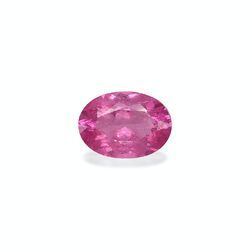
Pink tourmaline that reaches a specific saturation threshold becomes rubellite. The problem: different laboratories apply different thresholds.
GRS defines rubellite by a stricter color standard — stones that qualify under GRS carry a commercial premium. GIA uses a different threshold, and the same stone can receive "rubellite" from GRS and "pink tourmaline" from GIA. This is not an error by either lab — it reflects genuinely different classification systems.
Practical consequence: if you're paying rubellite prices, the certificate must say rubellite. A listing calling a stone rubellite with no certificate, or with a certificate that says "pink tourmaline," is a mismatch between the price and the documentation.
Fine unheated rubellite from Brazil or Mozambique in 2–4 ct range, GRS-certified: $800–3,000/ct. Heated material of comparable appearance: $300–800/ct.
Chrome Tourmaline
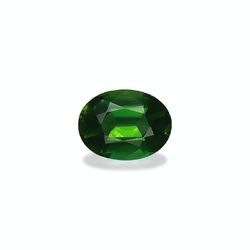
Green tourmaline colored by chromium — the same element that colors ruby and emerald. The chromium signature produces a specific vivid green that differs from iron-colored verdelite, even when the two look similar in photographs.
Source: primarily Tanzania and Kenya. GRS certificates describe it explicitly as "chrome tourmaline" — that designation in the description field is what creates the premium. Without a certificate that uses those words, a green tourmaline is a green tourmaline regardless of what the seller calls it.
Chrome tourmaline is almost always unheated. Fine material in 1–2 ct, GRS chrome designation confirmed: $400–2,500/ct depending on saturation. This is one of the most undervalued categories in the catalog relative to visual quality.
Watermelon Tourmaline
Natural pink-green bicolor in a single crystal, color zones separated by a white band — the cross-section resembles the inside of a watermelon, which is where the name came from.
Most "watermelon tourmaline" in the mass market is not this. It is either: dyed material, assembled doublets with different colored layers bonded together, or green tourmaline with a pink coating. Natural bicolor tourmaline where the zones form during crystal growth is genuinely rare.
What to require: a GIA or GRS certificate that explicitly states "naturally bicolor" or equivalent in the description field. That phrase is the only verification that the color pattern is natural and not manufactured. Without it, there is no way to distinguish genuine from imitation without laboratory testing.
Indicolite
Blue tourmaline. The challenge: pure, deeply saturated blue indicolite is rare. Most material that trades as "blue tourmaline" is blue-green or teal — visually appealing but not the same commercial category as clean blue.
Heating is standard practice and broadly accepted in the trade. A heated indicolite with honest disclosure and good color is a legitimate purchase. The premium goes to unheated material with strong, clean blue saturation and GRS or GIA documentation.
Verdelite
The volume category of green tourmaline. Wide color range — pale mint to deep forest green — and wide price range accordingly. Heating is common and generally disclosed. This is the entry point for green tourmaline buyers and the most accessible variety in the catalog.
Visual quality can be excellent. Commercial ceiling is lower than chrome tourmaline because chromium-colored material is specifically rarer. If two green stones look identical and one is $300/ct and the other is $1,500/ct, the certificate explanation will almost always be "verdelite" versus "chrome tourmaline."
Pink Tourmaline
The broadest and most accessible category. Baby pink to hot fuchsia, mostly heated, certification optional at lower price points. Strong bridal market interest in the past five years has pushed fine pink with good color and eye-clean clarity into the $200–400/ct range for heated material.
The line between "fine pink tourmaline" and "rubellite" is where the certification question becomes commercially important.
Treatment by Variety — What the Certificate Should Show
| Variety | Typical Treatment | Unheated Premium | What to Look For |
|---|---|---|---|
| Paraíba Brazilian | Usually unheated | Baseline — max price | "No indications of heating" + Brazil origin |
| Paraíba African | Heated common | +30–60% for unheated | Origin field: Nigeria or Mozambique |
| Rubellite | Heated common | +20–40% for unheated | "Rubellite" in color description |
| Chrome tourmaline | Usually unheated | Minimal — most is unheated | "Chrome tourmaline" in description |
| Watermelon | Usually unheated | Natural bicolor premium | "Naturally bicolor" in description |
| Indicolite | Heated frequent | Significant for clean blue | Heating disclosure + color description |
| Verdelite | Heated frequent | Moderate | Standard heating disclosure |
| Pink tourmaline | Heated very common | Low | Disclosure expected |
The treatment field on a tourmaline certificate is not always easy to find. On GRS reports: look for "Additional Information" or the "Treatment" field near the bottom. On GIA: check "Comments." The exact language matters — "no indications of heating" versus "indications of heating" is a price-relevant distinction in every variety above verdelite.
Why "Paraíba" on a Listing Means Nothing Without a Certificate
This deserves its own section because it is the most common expensive mistake in tourmaline buying.
A seller writes "Paraíba tourmaline" in the title. This is a marketing description — it costs nothing to type and carries no legal obligation in most jurisdictions. What the certificate says is the only thing that matters commercially and legally.
Three things to verify on any Paraíba certificate before payment:
1. Species description. Should say "cuprian elbaite" or "Paraíba tourmaline" — confirming the copper-bearing chemistry that defines the category.
2. Geographic origin. Should explicitly state Brazil, Nigeria, or Mozambique. If origin is listed as "not determined" or absent, the stone cannot command Brazilian pricing regardless of what the listing says.
3. Treatment status. "No indications of heating" for unheated material. "Indications of heating" for heated. At Paraíba prices, this distinction is worth thousands of dollars per carat.
GIA certificates verify at gia.edu. GRS certificates verify at gemresearch.ch. Enter the report number before finalizing any purchase above $500. This takes two minutes.
What We Carry and How to Order
The tourmaline catalog at VividCarat runs to 409 stones across nine varieties — the widest range of any category on the site. Paraíba from Nigeria and Mozambique — and for Brazilian origin specifically, I work through a verified dealer who exports directly from the source and holds a small number of certified Brazilian specimens. If Brazilian Paraíba is the requirement, tell me on the consultation call. I'll tell you exactly what's available and what finding it will realistically cost
We work out of Beruwala, Sri Lanka, with sourcing contacts in Bangkok covering Brazilian and African material. Every stone in the catalog has been physically evaluated. Treatment is disclosed on every listing that carries a certificate — and for investment-grade material, we don't list without one.
To start: tell us the variety, whether treatment status matters for your use case, and your budget. For Paraíba specifically — tell us whether origin is a priority. That determines whether we're sourcing from Bangkok African supply or hunting for Brazilian material through specific dealer contacts. Different problems, different timelines, honest answer either way.
A client in Switzerland came to me wanting something for his future wife. She loved Tiffany — specifically a Paraíba ring she'd seen. He couldn't justify paying 500% for the brand on top of the stone. Three weeks later I found him a stone that exceeded the Tiffany piece on every measurable parameter — color saturation, clarity, cut precision — at a fraction of the total price.
The question he asked me afterward: would you rather pay a brand for the box, or put that same money entirely into the stone? I don't have a universal answer. But I know which one she'll still be looking at in thirty years.
The call is 20–30 minutes on Zoom. Stones on screen, certificates open, no commitment required.
Common Questions
"Is Nigerian Paraíba worth buying?" Yes — at Nigerian prices with honest documentation. A GIA-certified Nigerian cuprian elbaite with strong neon color, unheated, at $600–1,500/ct is an excellent jewelry stone. The problem is not the stone — it's when Nigerian material is priced or presented as Brazilian without documentation that supports that claim. Ask for the certificate before discussing price.
"What makes chrome tourmaline more expensive than regular green tourmaline?" The chromophore. Chromium as a coloring agent produces a specific spectral signature and a saturation depth that iron-colored verdelite doesn't reach. The GRS "chrome tourmaline" designation on a certificate reflects laboratory confirmation of chromium dominance — not a seller's description. Two visually similar green stones, one confirmed chrome and one confirmed verdelite, will trade at meaningfully different prices with collectors who understand the distinction.
"My stone came with a certificate that says 'pink tourmaline' but I was told it's rubellite. Which is right?" The certificate. "Rubellite" as a trade term is applied by labs at different color thresholds — the stone didn't meet rubellite criteria under whichever lab issued the report. That doesn't mean it's a bad stone; it means the color designation on the certificate is "pink tourmaline" and it should be priced accordingly. If rubellite designation matters to you, the stone needs to be re-submitted to a lab that applies the standard you're buying to — or sourced as confirmed rubellite from the start.
"Can I return a tourmaline if it looks different in person than in photos?" Yes, within 14 days of delivery. Full refund on unmodified stones — contact us first for an RMA number before returning anything. Refunds process within 5–7 business days of approval. One important note specific to tourmaline: pleochroism means some stones genuinely look different under different light sources. We show stones in multiple lighting conditions on the Zoom call specifically to avoid this surprise. If you've seen the stone on video in daylight and indoor light before committing, what arrives will match what you saw.
"Is watermelon tourmaline natural or treated?" Natural watermelon — with "naturally bicolor" on the certificate — is untreated. The pink and green zones form during crystal growth, not through any post-mining process. What's treated, or more accurately faked, is the mass-market version: assembled stones, dyed material, or coated green tourmaline. The certificate is the only distinction that matters. We carry only certified natural bicolor material in the watermelon category.
"What's the minimum order?" None. Single stones from $60. Chrome tourmaline in fine quality starts around $400 total. Paraíba African in 1 ct+ with GIA certification starts around $500–800 total depending on color and treatment.
Browse current tourmaline inventory above — 409 stones across nine varieties. Or book a free Zoom consultation to discuss what's available at your budget and variety preference right now.