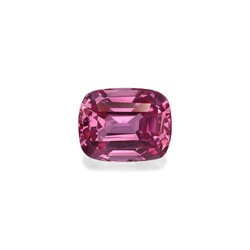
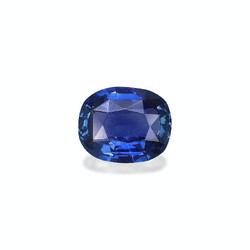
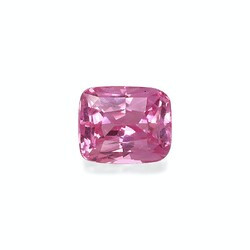
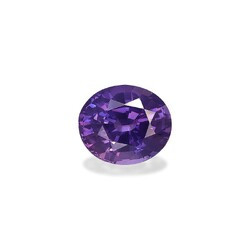
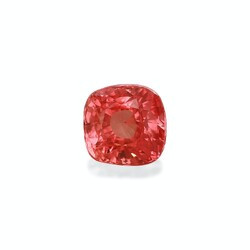
Natural Sapphire Gemstones — Certified, Direct from Sri Lanka
By Russell, VividCarat — China Fort Market, Beruwala, Sri Lanka
The moment you walk into China Fort market, dealers materialise from every direction. "You need blue sapphire?" First thirty seconds, every time. What I've learned: the word "blue" in their heads isn't a colour — it's a mix of genuine product and the human need to feed a family. That makes the work harder.
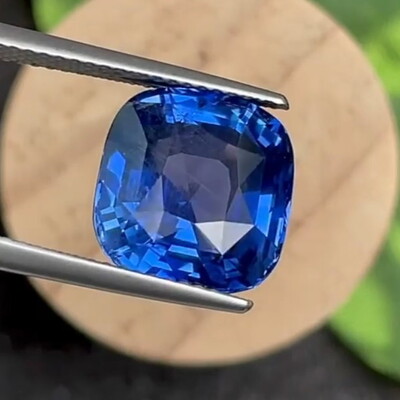
Even among established dealers, two stones can carry identical lab reports — same origin, same treatment, same colour grade — and be completely different objects. One is blue. The other is something the earth spent millions of years getting exactly right. A beam of light hits a facet and the stone ignites. Not reflects. Ignites. Like a torch switched on from inside.
That's what I'm hunting for. Beruwala lets me examine a thousand stones in a day. The sorting has already happened across the supply chain. The prize is there — if you can recognise it.
The Certificate Tells You What. Your Eyes Tell You Whether.
A GRS or AIGS certificate confirms origin, treatment status, colour grade. What it cannot confirm is the specific combination of trace elements and crystal geometry that makes one Royal Blue Ceylon a commodity and another a work of art.
Here's what the certificate doesn't capture: ideal corundum is colourless. Everything we call sapphire is contamination in the crystal lattice — iron and titanium atoms in positions they were never meant to fill. Blue happens specifically when Fe²⁺ and Ti⁴⁺ sit close enough for electrons to jump between them under light. Remove either element and the blue disappears. What a client is buying is the energy of electrons moving between metal atoms inside a crystal. I find that more compelling than "vivid royal blue on the certificate."
I've walked away from certified stones I couldn't justify. I've paid above range for stones that justified themselves the moment I held them under light. The certificate is necessary. It's not sufficient.
The three origins that actually matter
Kashmir is the reference point nobody can touch. Deposits exhausted, what trades now is estate material. The velvet cornflower blue comes from rutile silk scattering light internally and microscopic zircon inclusions creating diffused glow. One diagnostic detail almost nobody mentions: Kashmir sapphires frequently contain tourmaline crystal inclusions. Under magnification, a tourmaline crystal inside a sapphire is near-100% confirmation of Kashmir origin. Under $50,000/ct with a credible certificate — something is wrong with the stone or the paper.
Burma (Mogok) is the closest competitor. Saturated, slightly violet-shifted, strong UV fluorescence — immediately recognisable to trained eyes. GRS "pigeon blood" on a Burmese stone adds 30–50% over an equivalent non-designated stone.
Ceylon is where I spend my days. Range wider than any other origin — pale cornflower at $500/ct to vivid royal blues at $25,000/ct unheated. Advantage: volume and variety. Disadvantage: the name alone doesn't guarantee quality the way Kashmir or Burma does. You need to see the stone.
Madagascar now produces roughly half of global supply. Standard trade narrative: "less premium than Ceylon." At the median, accurate. At the edges, wrong. A subset of Ilakaka and Didy stones carries microscopic milky clouds that scatter light internally — the same mechanism that makes Kashmir legendary. I source these and sell them as "Kashmir-like Madagascar" at 40% below Ceylon prices, full origin disclosure. The window is narrow — too much milk and the stone clouds — but it exists, and I look for it in every Madagascar parcel.
What actually determines the price
Color moves price more than anything else. The Royal Blue trap: stones graded at 90–100% tone look extraordinary under lab lighting and turn to coal at a dinner table. What I look for is Open Tone — saturation 70–80% — where color stays vivid across all light sources. A certificate doesn't go on your finger. The color does.
Heat treatment is the single biggest pricing divide. Unheated stones with lab confirmation trade at 40–100% premiums over heated equivalents. That gap has widened every year for a decade.
How I verify beyond the certificate: I look for silk. Natural blue sapphires contain fine rutile needles crossing at 60 and 120 degrees. When intact, you're looking at a stone never heated — heating above 1,200°C dissolves rutile silk. A perfectly clean sapphire with no silk makes me suspicious, not impressed. Intact silk is a 100% indicator of no heat treatment, and I can show the client exactly what they're paying for.
Second field test: I rotate the stone under directional light. Natural sapphire is doubly refractive and shifts from cornflower to greenish-blue as you change the viewing angle. A stone that looks perfectly uniform blue from every direction is either synthetic or glass. Natural sapphire always resists uniformity. I show this with a dichroscope at every Zoom call — the moment a client sees the same stone flash two different blues simultaneously, the conversation changes completely.
Carat weight produces exponential price jumps at 2ct, 3ct, 5ct thresholds. A 4.9ct and a 5.1ct stone can differ by 30% per carat with everything else equal.
Treatments: what to watch
Standard heating deepens colour and dissolves inclusions. Majority of commercial sapphires are heated — disclosed, accepted, not the same as unheated for serious buyers.
Beryllium diffusion has two forms. Internal diffusion: rutile inclusions dissolve during heating, titanium migrates into the surrounding lattice — enhancement, not fraud. Surface diffusion: titanium introduced from outside; recut the stone and it goes colourless.
My field test: immerse the stone in methylene iodide on a white background and examine facet edges under magnification. Surface-diffused stones show a darker outline at the edges — the colour layer is thicker there. Natural sapphire glows evenly from within. This test doesn't replace EDXRF, but it tells me in two minutes whether I need to send the stone to a lab.
Certification: AIGS vs GIA
Most US buyers know GIA. AIGS — Asian Institute of Gemological Sciences, Bangkok — is built specifically around colored gemstones from the Asian and Sri Lankan trade. AIGS origin determinations for Ceylon and Burmese sapphires are accepted by the international wholesale and auction trade. For a Beruwala-origin Ceylon, AIGS is not a lesser document — it's a more specialized one. GIA report available alongside on request.
How I source for clients — the 5-step process
Step 1 — Brief (Day 1). Colour, origin, carat, treatment requirement, budget. If the brief and the budget don't match what the market is producing, I say so here.
Step 2 — Market assessment (Days 1–5). What's moving through Beruwala and Bangkok contacts right now.
Step 3 — Stone selection (Days 5–21). Candidates examined under consistent lighting. Shortlisted on visual performance, not just certificate grade.
Step 4 — Zoom presentation. You see the stone on video before anything moves. Direct light, diffuse light, multiple angles. No deposit, no commitment until you've decided.
Step 5 — Delivery (1–2 weeks). Fully insured, tracked, original lab documentation. Independent lab re-check available before purchase if needed.
Price ranges — unheated (heated: subtract 20–50%)
| Colour / Origin | Intensity | Clarity | 1 ct | 2 ct | 5 ct |
|---|---|---|---|---|---|
| Blue — Ceylon | Vivid | VVS | $3,000–5,000 | $6,000–10,000 | $15,000–25,000 |
| Blue — Ceylon | Medium | VVS | $1,500–3,000 | $3,000–6,000 | $7,500–15,000 |
| Blue — Burma | Vivid | VVS | $8,000–12,000 | $16,000–24,000 | $40,000–60,000 |
| Blue — Kashmir | Vivid | VVS | $15,000–20,000 | $30,000–40,000 | $75,000–100,000+ |
| Pink | Vivid | VVS | $2,000–3,500 | $4,000–7,000 | $10,000–17,500 |
| Yellow | Vivid | VVS | $1,000–2,000 | $2,000–4,000 | $5,000–10,000 |
| Padparadscha | Vivid | VVS | $7,000–12,000 | $14,000–24,000 | $35,000–60,000 |
| Star Sapphire | Strong | — | $1,000–2,500 | $2,000–5,000 | $5,000–12,500 |
VividCarat direct runs 40–60% below retail. No Bangkok or New York markup.
When NOT to buy sapphire here
Budget under $800/ct — you're looking at heated Madagascar commercial goods, not certified direct-source stones. At that price, blue spinel offers comparable visual quality with no treatment complications.
Need the stone in under two weeks — fine unheated material at specific grades isn't on demand. Tell me upfront.
Expecting liquid returns within 12 months — secondary market for colored stones is thin at speed. Plan 6–18 months for fair value.
Price seems dramatically below market — it isn't an opportunity. The global market for certified fine sapphires is efficient. Underpricing has a reason.
FAQ
What does "unheated" mean on a certificate? No evidence of high-temperature treatment found. "No indications of heating" is the standard GRS/AIGS phrase. Doesn't mean zero geological heat — means no treatment beyond natural formation.
Is Ceylon always better than Madagascar? No. A fine Madagascar with Kashmir-like milky velvety structure can be equally compelling at lower price. I evaluate on what the stone is, not just where it's from.
Minimum budget for fine unheated Ceylon blue? $3,000–5,000 for a clean 1ct with genuine visual performance. Below that: heated material, lower clarity, or pale colour.
Do you source Kashmir? Occasionally, through Bangkok estate contacts. Genuine Kashmir with current GRS or AGL certification is rare and expensive. Tell me if Kashmir is the requirement and I'll tell you what's realistic at your number.
Book a Zoom consultation — 30 minutes, no deposit, no commitment. I show you what the market offers at your price point and we source on video.