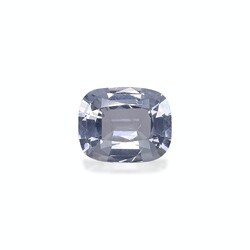
Natural Spinel — Unheated, Certified, Direct from Source
By Russell, VividCarat — China Fort Market, Beruwala, Sri Lanka
There's a stone in the British Imperial State Crown that has been called a ruby for six hundred years. Henry V wore it at Agincourt. It passed through the hands of kings, got set into the most important crown in the English-speaking world, and nobody questioned it — until a Spanish mineralogist looked at it under a microscope in 1783 and wrote, in what must have been a very awkward paper, that this isn't ruby.
It's spinel.
The Black Prince's Ruby. 170 carats. Still in the Tower of London. Still officially part of the Crown Jewels. The label never changed.
I've handled Mogok spinel at the same market where that stone's ancestors came from. Every time a dealer tips crystals out of a cloth pouch onto a square of folded cloth, I think about that mineralogist in 1783 and the six centuries of kings who never knew.
What You're Actually Buying — Price by Color and Origin
Spinel has no treatment variable. Every stone is exactly what the ground made it. The only axes that drive price are color and origin — and color dominates.
| Color | Origin | Carat | Price Range (USD/ct) |
|---|---|---|---|
| Scarlet / Blood Red | Burma (Mogok) | 1–3 ct | $600–3,500 |
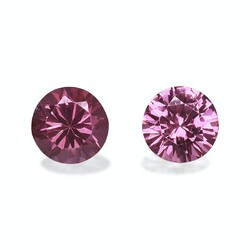
| Hot Pink / Fuchsia | Burma (Mogok) | 1–2 ct | $400–2,000 |
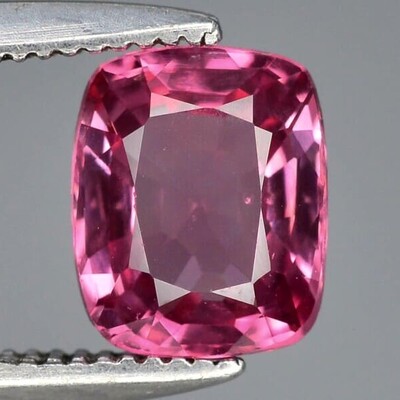
| Mahenge Electric Pink | Tanzania | 0.5–2 ct | $1,200–6,000 |
| Coral Pink | Burma / Ceylon | 1–3 ct | $300–1,200 |
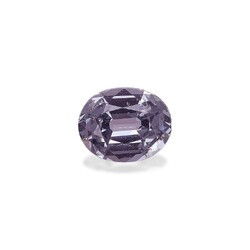
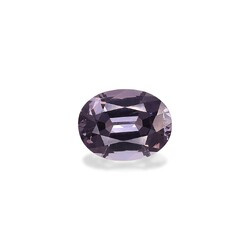
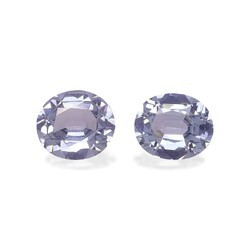
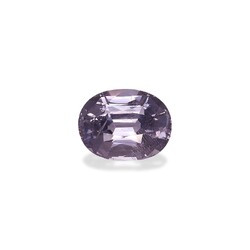
| Lavender / Mauve | Ceylon | 0.5–2 ct | $200–700 |
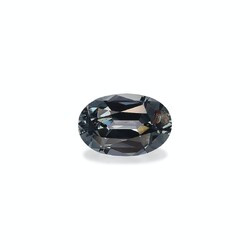
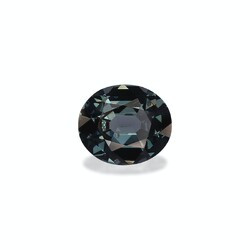
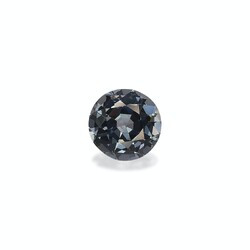
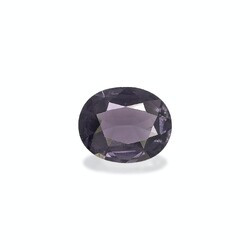
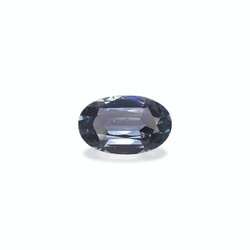
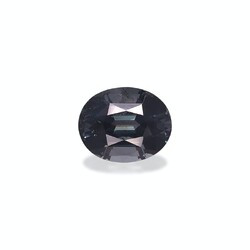
| Metallic Gray | Ceylon | 1–4 ct | $350–600 |
| Purple | Burma / Ceylon | 1–2 ct | $350–1,500 |
All spinel in this catalog is unheated. No exceptions. Price spread within each range reflects color saturation and clarity — fine quality sits at the top of the range, commercial at the bottom.
What "No Treatment" Actually Means When You're Buying
Nearly every sapphire on the market has been heated. Most emeralds carry some degree of oil. Spinel is never treated — not because there's no technology to do it, but because there's no need. The crystal structure delivers saturation directly, without thermal assistance. The color in the stone is the color the geology made.
The practical consequence: a spinel certificate contains no treatment disclosure because there is nothing to disclose. When a GRS or GIA report arrives with the stone, there is no line about heating, no qualifier about clarity enhancement, no footnote. The stone is what it is. What you see in the video is what will arrive.
This matters more than it sounds. A buyer comparing a heated Burmese sapphire to a Mogok spinel of similar color and price is comparing two fundamentally different products — one whose appearance was partially engineered, one whose appearance was not. Neither is wrong. But they are not equivalent, and most retail settings don't make that distinction visible.
In a market where treatment disclosure requires reading certificate fine print carefully, spinel is the stone where you don't have to.
Mogok
I came to Mogok the first time for rubies. The valley pulled me back for spinel.
Both stones come from the same marble geology, often from the same pits. A miner pulls up a bucket and sorts — ruby here, spinel there, garnet in a third pile. The physical resemblance is close enough that for most of recorded history the trade didn't distinguish them. They called everything red and valuable a ruby. They weren't wrong about the valuable part.
On my second visit I asked a dealer I'd worked with before to show me what he had in spinel. He reached into a different pocket — not the ruby pocket, a separate one — and put three stones on the cloth. Two were the neon red Mogok is known for, more orange-shifted than ruby, almost aggressive under direct light. The third was pink with a faint lilac undertone that moved toward clean pink when I angled it to the window.
I bought the pink one. Carried it back to the guesthouse and held it up to the last hour of afternoon light coming through the shutters. Phone out of battery. No camera. Just the stone. I sat with it for twenty minutes.
The two red ones I sold to a collector in Germany who had asked me months earlier for something he'd never seen in a dealer's tray. I sent him a shaky video from the guesthouse that evening, connection dropping every thirty seconds. He replied at two in the morning his time. Two words: ship it.
Mahenge
Getting to Mahenge from Dar es Salaam takes most of a day. I stayed with a local contact whose family has been mining the area for two generations.
The mine is modest — hand tools, short shafts, wooden props. The geology is different from Mogok: metamorphic rock rather than marble, spinel forming in pockets and veins. The miner doing the sorting had been doing it for twenty years. He moved fast, no hesitation, each stone dropped into its category without a second look. I asked him which piece in the tin was the best. He picked one up immediately, didn't think about it, held it toward the open sky.
It glowed. That's the only word.
A collector I work with in London — someone who has handled most of what the colored stone market produces — calls Mahenge pink "the color that argues with you." I asked him once what he meant. He said: you think you know what pink looks like, and then you see this, and you realize you didn't.
I bought four pieces from that trip. One went to a jeweler in Dubai who needed a center stone for a commission — a ring for a collector's wife who had asked for something no one else would have. Three went to a collector in the United States who had been building a position in spinel for five years and understood exactly what the Mahenge deposit represents: a limited source, production declining year on year, a color that exists nowhere else. He bought without negotiating. That tells you something.
Beruwala
Back at China Fort Market, spinel shows up differently. Not as the main event — as a presence in the trays of dealers who work Sri Lanka's sapphire gravels, pulling out what comes up alongside the corundum.
Ceylon spinel is quieter than Mogok or Mahenge. Lavender, dusty rose, a pale blue-gray that some dealers here call cobalt and almost never is. The stones are smaller on average. The prices don't carry the origin premium that Burma and Tanzania command.
I buy it when the color earns it — specifically the lavender, and occasionally a gray-blue that has no good category name and trades below what it's worth because it doesn't fit standard color expectations. Those are the ones I pay attention to. The buyers who understand them are buying something the market hasn't fully priced yet.
Three Sources, Three Different Purchases
The same word — spinel — covers stones that are not interchangeable. Origin is not a prestige ranking. It's a description of what you're actually looking at.
| Burma (Mogok) | Mahenge (Tanzania) | Ceylon (Sri Lanka) | |
|---|---|---|---|
| Color signature | Neon red, orange-red, hot pink | Electric pink — higher saturation than anything else | Lavender, dusty rose, metallic gray |
| Typical clarity | Good, occasional inclusions | High — typically clean | Variable, smaller stones |
| Available sizes | Up to 5+ ct fine quality | Rarely above 3 ct in fine pink | Usually under 2 ct |
| Production trend | Stable, established | Declining year on year | Stable, low volume |
| Investment case | Strong — established collector demand | Strongest — finite source, documented price appreciation | Moderate — underpriced, less recognized |
| Best for | Red/pink collectors, jewelry buyers | Serious collectors, long-term position | Entry-level buyers, unusual color, gray/lavender |
The Mahenge supply situation deserves a direct statement. This is not a marketing claim — it's a documented supply dynamic. Production from the Mahenge district has declined consistently since the early 2010s. The stones that exist in the market now are largely what was mined in peak years, recycling through the trade. New fine material is scarce. Collectors who understand this are buying now. The price trend reflects that.
Spinel by Color — What's Actually in the Catalog
Most buyers come to spinel through one color and discover the others. Here is what each category means in practice:
Scarlet / Blood Red — the closest to ruby red in the spinel spectrum. Maximum collector demand, highest resale recognition. Burma origin only at fine quality. If you want the stone that held thrones for centuries, this is it.
Hot Pink / Fuchsia (Burma) — warmer than Mahenge, slightly more orange-shifted. Less electric but more accessible. Strong bridal market interest in the last five years. Burma origin.
Mahenge Electric Pink — different category entirely from Burma pink. Higher saturation, cooler hue, the color that "argues with you." Tanzania origin. Production declining. The collector case is real.
Coral Pink — orange-pink shift, sits between red and pink on the spectrum. Less known, less marketed, priced accordingly. Growing interest among designer jewelers who work outside standard palettes. Burma and Ceylon origin.
Lavender / Mauve (Ceylon) — pale, cool, purple-pink. Does not photograph accurately — always looks paler in images than in person. The stone you need to see to evaluate. Entry price point for collectors who want Ceylon origin.
Metallic Gray (Ceylon) — the least known category, the most underpriced. Neutral color with exceptional luster — closer to diamond brilliance than most colored stones. No established collector narrative around gray spinel means it trades significantly below what the optical quality warrants. Buyers who evaluate stones rather than stories pay attention to this one.
Purple — the transition zone between pink and violet. Clean purple in spinel is rare. What trades as purple is often lavender-shifted or pink-shifted. When the color is genuinely purple and clean, it's one of the rarer finds in the catalog.
Bangkok, Documentation, and What the Certificate Shows
From Mogok the material moves through Mandalay into Bangkok — cutting workshops, grading, the labs that issue reports saleable in New York or Geneva. From Mahenge it moves through Dar es Salaam, often directly to dealers in Antwerp or Bangkok. Ceylon spinel I source here, cut here, ship from here.
What to look for on a spinel certificate: origin determination (Burma / Myanmar, Tanzania, Sri Lanka), weight, color description, and clarity grade. That's the full list. There is no treatment section because there is nothing to treat. If a certificate on a spinel you're considering contains treatment language — heat, diffusion, fracture filling — that is a red flag, not a feature. Natural spinel does not require it.
The absence of a treatment disclosure is itself information. It means the stone is exactly what the ground produced.
Common Questions
"Is spinel really never treated?" Never, in any commercial application. Spinel is not heated, not oiled, not diffusion-treated, not fracture-filled. The crystal structure produces color saturation directly — there is nothing a treatment would improve that the geology hasn't already done. This is not a marketing claim. It is a chemical fact that GRS and GIA will confirm on any certificate they issue for the stone.
"Why is Mahenge spinel so much more expensive than Burmese at the same weight?" Not because it's better. Because the source is closing. Mahenge is a small district mined by hand, and fine pink production has declined consistently over fifteen years. What's in the market now is largely recycled from peak years. Burma production is stable. Collectors pricing Mahenge at a premium are pricing a finite supply, not just a color — and the documented price trajectory over the last decade supports that reading.
"What's the difference between Burma red and Burma pink?" Chemically: different proportions of chromium and iron in the crystal. Visually: entirely different stones for entirely different buyers. Red spinel competes with ruby for the same collector. Pink spinel is its own market with its own demand. There is no hierarchy between them — only preference.
"Why would I buy gray spinel?" Because it trades at a fraction of what the optical quality warrants, and the reason is purely narrative — the market hasn't built a story around gray the way it has around red or pink. The luster on fine Ceylon gray spinel is exceptional. If you evaluate stones by what they do in light rather than what category they belong to, gray spinel is one of the most interesting buys in the catalog right now.
"Can I return it if it's not what I expected?" Yes. Fourteen days from delivery — full refund on the stone in its original condition. Contact us first for an RMA number before sending anything back. Refunds process within 5–7 business days of receiving and approving the return. The one condition that voids eligibility: having the stone set before you've decided to keep it. Wait until you're certain.
How to Order
Tell me: color preference, origin preference if any, budget, and intended use — jewelry, collection, or investment. That's enough to pull the right options from current inventory or source to brief through the Bangkok and Mogok networks.
The call is 20–30 minutes on Zoom. You see the stones in natural light, with the certificate on screen, before any decision. No deposit. No commitment until you've decided.
Browse current inventory above, or book a free consultation to discuss what's available at your budget right now.