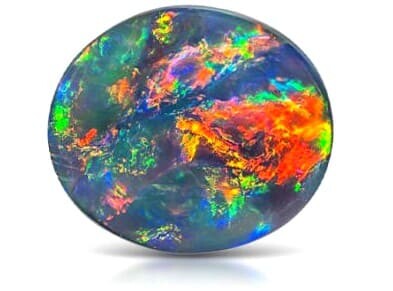
Australian opals are some of the most sought-after and unique gems on the market for jewelry.
White and black Australian stones attract miners from around the world and become objects of admiration for millions of women.
Let's explore some key facts about Australian opals to understand why they captivate us.
The Mystical Beginnings of Australian Opals
Before Australia's opal discoveries, opal was primarily mined in Europe and South America. The first official discovery of opal in Australia was in 1849 near Angledool Creek in New South Wales
Turning Points of Major Opal Fields Discovery
- 1870s: Precious opal found in Queensland.
- 1890s:
- Opal found at White Cliffs and Lightning Ridge in New South Wales
- Miners flock to these remote outback areas, sparking an opal rush.
- 1903-1905: Opal was opened up in South Australia at places like Coober Pedy and Andamooka, and more rushes ensued.
Development of Unique Australian Opal
Right after the Australian opal was found, it was distinguished from other sources by its vivid play of color. Rumors circulated by jealous European miners that it was not real opal but their doubts were refuted.
Now Australia produces 95% of the world's opal and is the top exporter
Notable Australian Opal Finds
|
Year |
Location |
Details |
|
1915 |
Lightning Ridge, NSW |
The first black opal |
|
1956 |
Coober Pedy, SA |
Largest opal "Olympic Australis" at 17,000 carats |
|
1974 |
Lightning Ridge, NSW |
"Kokomo" opal at 9890 carats |
Color Varieties of Australian Opal
Australian opals wow gem enthusiasts with a kaleidoscope of colors. From dark backgrounds to fiery reds, these rare stones have an incredible spectrum.
Famous Black Opal
A captivating black opal was discovered in the Lightning Ridge area of New South Wales. This opal was formed on the ancient seabed more than 30 million years ago, allowing it to retain a dark body tone that allows bright colors to shine through.
This is the most valuable and rarest variety of Australian opals, fetching over $2,500 per carat for high-quality specimens.
Fiery Multicolored Opals
Fiery multicolored opals come from the Light Opal mines in South Australia, and the Mintabie field. Their translucent to opaque body color ranges from white to a range of colors, including flashes of red, green, blue, and violet. Prices for these gems range from $30 per carat to $100.
Unique Boulder Opal
This unique opal was found in Western Queensland Boulder opals are formed in ironstone boulders within ancient underground waterways. The ironstone bodies are embedded with colorful seams of opal, creating a stunning visual effect that is highly prized.
Alluring Crystal Opals
Crystal opals are clear and transparent, found sporadically throughout Australia. They flash colors, ranging from green, red, blue, or orange, resembling the vibrant fire opals found in Mexico.
From the dark seducer to the flame-haired siren, Australian opals offer a spellbinding range of beauty to dazzle and delight. Their variety contributes to their incomparable appeal as the world's most brilliant opals.
Value Factors and Prices Per Carat in New York City
The vibrant flashes of color in Australian opal command premium pricing, but exact values depend on several factors.
Key Value Factors
- Body Tone- Black opal with a dark tone is the most rare and costly
- Brightness- Vibrancy of fire color flashes
- Pattern- Unique shapes, and formations in fire pattern
- Carat Weight- Price per carat increases for larger stones
- Opal Type- Black opal is priciest, then white, crystal, boulder
- Location- Lightning Ridge black opal oversells over types of this mineral
Price Per Carat Ranges
Black Opal
- $30 to $100 per half-carat for lower grade
- $100 to $1,500 per carat for small, good stones
- Over $10,000 per carat for gems over 5 carats
Crystal and White Opals
- $70 to $250 per half carat
- $250 to $2,000 per carat
Boulder Opal
- $150 per half carat
- $300 to $3,000 per carat
The Most Expensive Australian Opal Examples
Olympic Australis is considered the world's most valuable opal
This precious mineral was discovered in 1956 in the Eight Mile Opal Field. It weighs 17,000 carats and is valued at over USD 1.7 million.
So while Australian opal is expensive, prices can vary over 100-fold depending on the individual gemstone's characteristics. The vibrant fire commands a premium for these one-of-a-kind natural treasures.
Mining Australian Opal
Australia produces over 95% of the world's opal from mines scattered across the Outback. Conditions in these remote bush mines pose dangers but also offer the promise of uncovering the next brilliant gem.
Key Opal Mining Locations
- Lightning Ridge, NSW – Famous black opal location, underground mines using shafts and tunnels
- Coober Pedy, SA – Opal capital of the world, underground "noodling" method common
- Andamooka, SA – Matrix opal in sandstone, mined through surface digging and underground tunnels
- Mintabie, SA – Transitional opal field from Coober Pedy, a mix of digging and underground mining
- Queensland- Prominent boulder opal fields, mined with pickaxes, jackhammers
Evolution of Mining Methods
In the early days of mining, basic tools such as picks and shovels were used to extract minerals from the ground. Noodling, which involves following opal veins through dugout tunnels, has been a technique used for centuries.
Modern mining operations use advanced equipment such as Caldwell drills, tunneling machines, excavators, and loaders. The creation of vertical shafts is also widely used, with horizontal digging to reach deeper levels of the Earth.
Dangers and Challenges When Mining Opals
When working in the mining industry, several challenges must be faced. The most significant ones include:
- Temperatures: In the summer, the temperatures can be extremely hot, while in the winter, they can be freezing.
- Cave-ins: There is a risk of tunnel collapse, which can have serious consequences.
- Dusts and fumes: Working in mines can lead to exposure to hazardous silica dust and diesel fumes.
- Remote locations: Mining takes place in remote areas, with extreme isolation. These challenges make mining opals a dangerous occupation that requires careful planning and preparation.
So while opal mining has evolved, it retains its frontier flavor – grueling yet addictively exciting, with fortunes and failures decided in the harsh Australian outback.
Composition, Treatments, and Analysis
Understanding the chemical makeup and potential treatments of Australian opals empowers buyers to make informed purchasing decisions.
Chemical Composition
Australian opal is predominantly composed of silicon dioxide and water. Also contains minor traces of other elements like iron, aluminum, calcium
The play of color results from the orderly array of silica spheres diffracting light
Opal Treatments
- Oiling- Enhances play of color, makes opal less prone to crazing
- Waxing- Improves body tone color
- Impregnation- Hardens and stabilizes opal by filling pores with resin or plastic
Most collectors seek untreated, natural opals and are ready to pay for them a tidy sum.
Gemological Certification
Having a qualified gem lab provides detailed scientific documentation of an opal's characteristics, origin, flaws, and enhancement providing invaluable assurance and proof of quality. Seeking certified opals gives buyers confidence in the integrity of their investment.
Benefits of Certification
- Verifies natural untreated state
- Grading of factors impacting value
- Confirms source location
- Documents physical condition
Trustworthy sellers provide all necessary documentation for loose gemstones and jewelry they offer. Our jewelry store, located in New York City, gives fair data about treatments to ensure you pay a fair price.
An Alternative Investment in Australian Opals
While often overlooked, Australian opal offers investors an opportunity to diversify into a rare tangible asset with unique beauty and growing demand.
Factors Driving Opal Investing
- Scarcity- Depleting supply from aging Australian mines
- Increasing Affluence- More wealth to spend on exotic luxury items
- Limited Production- Slow output fails to meet expanding interest
- Proven Price Growth- High-quality opal values increase over decades
Tips for Lucrative Opal Investing
- Buy Untreated- Natural opal appreciates the best
- Certify Gems- Proves quality and provenance
- Focus on Black Opal- The most rare and valuable variety
- Favor Fine Gems- Flawless opals with strong play of color
- Diversify Colors- Different hues may come into vogue
Outlook Going Forward
There are several reasons why you should consider buying opals as an investment:
- Output Declining- Peak production may already be past
- Prices Firming- Recovery from 2014 crash, growth stabilizing
- New Markets- Expanding interest in Asia markets
- Cultured Interest- Increased appreciation as an art treasure
While any natural gem has risks, the scintillating colors flashing from the dark backgrounds of fine black opals will likely entice investors and collectors forever. As mines slowly fade, choice specimens seem assured of providing solid portfolio growth.
Takeaway Tips Before Purchasing Opals
- Consider opal as part of a balanced portfolio (if you're an investor)
- Do thorough research before purchasing
- Certification builds value credibility
- Enjoy these mesmerizing gems beyond mere investment
- Buy opals from reputable sellers
If Australian opals are beyond your budget, you may want to consider other types of opals, such as Mexican, Ethiopian, or other precious gemstones, like alexandrite, ruby, or emerald. Our jewelry store has a wide selection of jewelry and loose gemstones that will suit everyone's preferences. Check out the entire section of gemstones available in stock on vividcarat.com and choose the one you need. We work in New York City.