


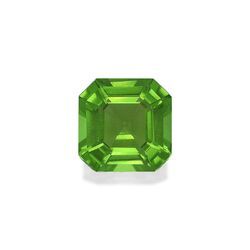


Peridot has a long and storied history. The luminous green stones have been used in jewelry and valued for their beauty and mystical properties since ancient times.
Let's explore some key facts about peridots that are important for future purchases.
Natural Peridot — Burma & Pakistan Origin, Always Unheated
Peridot is the only gemstone in this catalog that did not form in the Earth's crust. It forms in the mantle — the layer of partially molten rock beneath the crust, at depths of 20 to 55 miles, under pressures and temperatures that no other gem-forming process reaches from the surface. Volcanic activity brings it up. So do meteorites: genuine peridot crystals have been recovered from pallasite meteorites — stony-iron meteorites that represent the core-mantle boundary of ancient asteroids. When you buy a piece of peridot, you are buying a mineral that formed deeper in the Earth than almost anything else you can hold in your hand.
This is worth knowing not as a selling point but as geology that explains why the stone looks the way it does. Peridot has no color variety — it is always green, colored by iron within its olivine crystal structure. No other hue exists in natural peridot. What varies is saturation: from pale yellowish-green at the commercial end to vivid pure green at the fine end. The catalog carries fine end material from Burma and Pakistan.
What You'll Actually Pay
| Origin | Color | Carat | Price Range (USD/ct) | Notes |
|---|---|---|---|---|
| Pakistan (Sapat) | Light–medium green | 4–15 ct | $80–200 | Commercial, accessible |
| Pakistan (Sapat) | Vivid green | 4–15 ct | $150–350 | Fine quality |
| Burma (Mogok region) | Vivid pure green | 4–20 ct | $200–450 | Richer saturation |
| Burma | Exceptional vivid | 15–30 ct | $350–700 | Collector grade |
| Any origin | Museum-scale 50+ ct | 50+ ct | $500–1,000+ | Rare, per stone pricing |
All peridot in the catalog is unheated — there is no heat treatment applied to peridot commercially. The color you see is the color the geology produced.
Burma vs Pakistan — Two Different Stones
The catalog carries material from two sources. They are not interchangeable.
Burmese peridot comes from the Mogok Valley — the same geological belt that produces Burma's rubies and spinel. Mogok peridot is known for a richer, more saturated green with less yellow modifier than most Pakistani material. Smaller crystals on average, higher color quality. This is the collector tier in the catalog.
Pakistani peridot from the Sapat Valley in Kohistan produces large crystals — the largest commercial peridot crystals in the world come from here. Color tends toward medium green with slight yellow modifier in commercial material; fine Pakistani stones reach vivid green comparable to Burmese. The size availability is better — 20, 30-carat stones are more accessible from Pakistan than from Burma.
The price comparison strip above the catalog references both origins. When you see a Burmese stone at a higher price than a Pakistani stone of similar size, the difference is color saturation and origin premium, not arbitrary markup.
The One Thing Most Buyers Don't Know About Peridot Care
Peridot has a Mohs hardness of 6.5–7. Quartz — which makes up common dust and sand particles — sits at 7. This means ordinary household dust can scratch peridot over time if the stone is worn daily and not cleaned regularly.
This is not a reason to avoid peridot. It is a reason to understand what you're buying. Peridot worn in a protective setting and cleaned after each use maintains its polish for decades. Peridot stored loose in a drawer with other stones will show surface wear within months.
Practical guidance: peridot works well in earrings, pendants, and occasional-wear rings. For daily-wear engagement rings without protective settings — the honest answer is that sapphire or spinel will hold up better. The choice depends on what you're buying for.
Ultrasonic cleaning is generally safe. Avoid steam cleaning and avoid exposure to acids — including some perfumes applied directly to the stone.
The Extraterrestrial Footnote
Peridot has been found in pallasite meteorites — a rare class of stony-iron meteorites that represent fragments of differentiated asteroid interiors. The peridot in pallasites formed in the mantle of asteroids that no longer exist, billions of years ago, then traveled through space and arrived on Earth.
This material is not in the commercial gem catalog — pallasite peridot is primarily a collector mineral specimen category. But it confirms something important about the stone's geological identity: the same olivine mineral that forms in Earth's mantle forms in asteroid mantles. Peridot is not a surface stone. It comes from depth, whether terrestrial or extraterrestrial.
What to Look for on a Certificate
Peridot is one of the simpler categories for certification. Three things matter:
Species confirmation. Should say "peridot" or "olivine var. peridot." Not glass, not synthetic, not simulant.
Origin. Burma vs Pakistan is commercially relevant — the price premium for Burmese material is real and should be documented. Without origin on the certificate, a Burmese origin claim from the seller is unverifiable.
Treatment. Should say "no indications of treatment" or equivalent. If a peridot certificate shows any treatment language, that is unusual and warrants a direct question — commercial peridot is not treated.
Common Questions
"Why is all peridot in the catalog so large — 10, 15, 20 carats?" Peridot grows in large crystals naturally. A 15-carat peridot is commercially normal. This is part of why the stone offers good visual value — you can get a large, clean, vivid stone at prices that would buy a tiny ruby or alexandrite. The catalog skews large because that's where the visual impact-to-price ratio is strongest.
"Is peridot always green? Are there other colors?" Always green. Unlike sapphire which comes in every color, or garnet which spans red to green to orange — peridot has no other natural color. Iron in the olivine structure produces green and nothing else. The variation is only in saturation: pale yellowish-green to vivid pure green.
"Can peridot scratch easily?" Yes, more easily than harder stones. Mohs 6.5–7 means ordinary dust can scratch it over time. For daily-wear rings without protective settings, this is a real consideration. For pendants, earrings, and occasional-wear pieces in a bezel or closed setting — not a practical issue.
"Can I return it?" Yes — 14 days from delivery, full refund on unmodified stones. Contact us first for an RMA number. Refunds within 5–7 business days of receiving and approving the return.
Browse current peridot inventory above — 58 stones, Burma and Pakistan origin, 4 to 97 carats. Or book a free Zoom consultation to discuss what's available at your budget.