US Office +1(602)610-1709
Sri Lanka +94 74 078 8548

Messengers
Phoenix Office 2415 E Camelback Rd, Suite 700, Phoenix, AZ 85016
Vivid Weekly 5 →
0 Vivid Weekly 5 →

Beruwala, Sri Lanka · China Fort Market

Star Rubies

Natural asterism. No diffusion treatment. Hand-selected at China Fort market in Beruwala. 40–55% below US retail.

See More Photos & Video Vivid Weekly → 174 stones in stock
AIGS & GIA Certified
100% Unheated Available
Insured Worldwide Shipping
Direct from Source — Zero Middlemen

Category

Cost (usd.)

Weight (carat)

Faceting

Quantity

Shape

Processing

Laboratory

Country of origin

Cleanliness

Color

10 in stock
2.20 carat pink star ruby (SR0058GBS)
$ 3 080
2.82 carat pink star ruby (SR0061GBS)
$ 3 948
3.33 carat pink star ruby (SR0063GBS)
$ 5 361
Pink star ruby 2.85 carat (SR0059GBS)
$ 3 990
Red Star Ruby 3.71 carats (SR0070GBS)
$ 5 973
Red Star Ruby 4.13 carat (SR0069GBS)
$ 7 228
Red Star Ruby 4.45 carat (SR0066GBS)
$ 7 788
Red Star Ruby 4.76 carat (SR0068GBS)
$ 8 330
Red Star Ruby 5.50 carat (SR0067GBS)
$ 10 780
Red Star Ruby 7.15 carat (SR0055GBS)
$ 19 019

Star Rubies · 5 new stones every Friday

Photos now. Five new stones every Friday.

HD macros and 4K video of Star Rubies currently in stock — sent to your inbox today. Plus every Friday, 5 hand-picked stones at insider pricing — not listed on the site, first to reply, first to choose.

Real clients · Real stones

Trusted by collectors worldwide

4.70ct Cornflower Blue · Unheated · AIGS
$8,190 US retail$5,640 ✓
6.10ct Cornflower Blue · Unheated · AIGS
$10,660 US retail$7,320 ✓
2.00ct Blue Sapphire · Unheated · AIGS
$2,840 US retail$1,960 ✓
1.10ct Colombian Emerald · GRS No Oil
$3,480 US retail$2,400 ✓
2.48ct Royal Blue Tanzanite
$3,050 US retail$2,100 ✓
2.04ct Padparadscha · Unheated · GRS
$4,320 US retail$2,978 ✓
1.52ct Paraiba Tourmaline · GIT Neon
$6,090 US retail$4,200 ✓
0.82ct Colombian Emerald · Vivid · GRS
$2,440 US retail$1,680 ✓
4.02ct Royal Blue Sapphire · Unheated
$7,540 US retail$5,200 ✓
M
Markella R.
United States · Apr 2025
★★★★★

"This cornflower blue sapphire literally glows. 4.7 carats, untreated, and the blue is so saturated my friends thought it was enhanced. Seller was super patient with my endless questions. Obsessed!"

4.70ct Cornflower Blue · Unheated
$8,190 US retail$5,640 ✓
S
Sergey K.
United States · Apr 2025
★★★★★

"Picked up a stunning unheated cornflower sapphire — 6.1 carats. Color is so rich it almost looks unreal. My jeweler in LA was shocked at the price for this quality. 100% legit."

6.10ct Cornflower Blue · Unheated
$10,660 US retail$7,320 ✓
B
Boleslaw
Poland · Apr 2025
★★★★★

"Bought a beautiful natural blue sapphire for my wife's ring. Deep color, certified, great cut and fair price. My jeweller in Warsaw complimented the precision immediately. Highly recommend!"

2.00ct Blue Sapphire · Burma · AIGS
$2,840 US retail$1,960 ✓
M
Mike
United States · Mar 2025
★★★★★

"Colombian emerald. Medium tone, lively. No heavy oil. Better than anything I saw at Tucson last year, for half the price. This is where serious buyers should be shopping."

1.10ct Colombian Emerald · GRS
$3,480 US retail$2,400 ✓
A
Arthur J.
· Mar 2025
★★★★★

"Tanzanite solitaire. Deep blue-purple magic. Fast delivery. 10/10 would buy again and again. Russell recommended this stone over a cheaper option — completely right. The colour shift is extraordinary."

2.48ct Royal Blue Tanzanite
$3,050 US retail$2,100 ✓
J
Jeff R.
Germany · Mar 2025
★★★★★

"Perfect peach-orange padparadscha! Exactly like the pics. Fast delivery to Germany. The stone photographs even better than it looks in person — and it looks stunning."

2.04ct Padparadscha · Unheated · GRS
$4,320 US retail$2,978 ✓
A
Aleksander
Germany · Feb 2025
★★★★★

"Paraiba tourmaline was the goal. Got it. Neon madness! The copper content in this stone is something else — GIT certified neon grade and it shows every single time I look at it."

1.52ct Paraiba Tourmaline · GIT Neon
$6,090 US retail$4,200 ✓
D
Diana
Great Britain · Mar 2025
★★★★★

"First loose stone ever — an emerald because green is my birthstone. Vivid, sparkly, gorgeous. Packaging was thoughtful and cute. I was nervous buying this way but Russell made it easy."

0.82ct Colombian Emerald · Vivid
$2,440 US retail$1,680 ✓
I
Irina
Netherlands · Mar 2025
★★★★★

"Big blue sapphire for my collection. Rich royal blue, absolutely no green shift. Russell sent extra sunlight videos which made all the difference trusting the colour remotely. Stone is a beast."

4.02ct Royal Blue · Unheated · AIGS
$7,540 US retail$5,200 ✓
A
Alex Rivera
United States · 3 weeks ago
★★★★★

"Bought a 5.5 carat unheated cornflower blue sapphire. The color is pure magic — that deep velvety blue with zero green. Came with full cert and extra videos in sunlight. Exactly what I wanted."

5.50ct Cornflower Blue · Unheated · AIGS
$9,570 US retail$6,600 ✓
M
Marcus Hale
United States · 1 month ago
★★★★★

"Finally got my big 4.2 carat royal blue sapphire. Vivid, clean, and the cut makes it pop like crazy under lights. No heat treatment, just perfect. Shipping was crazy fast too."

4.20ct Royal Blue · Unheated · GRS
$7,310 US retail$5,040 ✓
R
Ryan Patel
Great Britain · 2 weeks ago
★★★★★

"Cornflower blue sapphire for my wife's pendant. 3.8 carats, unheated, insane depth of color. Seller answered every question I had at 2 a.m. and even sent a short video in natural light. She hasn't taken it off since."

3.80ct Cornflower Blue · Unheated · AIGS
$6,610 US retail$4,560 ✓
D
Derek Nguyen
United States · 5 weeks ago
★★★★★

"Picked up a stunning unheated cornflower sapphire — 6.1 carats. Color is so rich it almost looks unreal. My jeweler in LA was shocked at the price for this quality. 100% legit."

6.10ct Cornflower Blue · Unheated · AIGS
$10,660 US retail$7,320 ✓
S
Sophie Laurent
France · 4 days ago
★★★★★

"Just received my 2.9 carat vivid blue sapphire. Super clean, beautiful cut, and the blue is that perfect 'electric' shade. First time buying loose gems and I'm already hooked. Thank you!"

2.90ct Vivid Blue · Unheated · AIGS
$5,050 US retail$3,480 ✓
J
James Torres
United States · 2 months ago
★★★★★

"Huge 7 carat blue sapphire for my collection. Rich royal blue with no windowing at all. They sent three different lighting videos and the stone looks even better in person. Worth every penny."

7.00ct Royal Blue · Unheated · GRS
$12,180 US retail$8,400 ✓
L
Liam Chen
Singapore · 3 weeks ago
★★★★★

"Bought a 5.5 carat unheated cornflower blue sapphire as an investment piece. Color is crazy vivid and the clarity is next level. Fast tracked shipping, perfect packaging. Already planning my next buy."

5.50ct Cornflower Blue · Unheated · AIGS
$9,570 US retail$6,600 ✓
E
Emma Dubois
France · 1 week ago
★★★★★

"This cornflower blue sapphire literally glows. 4.7 carats, untreated, and the blue is so saturated my friends thought it was enhanced. Seller was super patient with my endless questions. Obsessed."

4.70ct Cornflower Blue · Unheated · AIGS
$8,190 US retail$5,640 ✓
N
Noah Eriksson
Sweden · 6 weeks ago
★★★★★

"Got a beautiful 3.3 carat vivid blue sapphire. Unheated, excellent cut, color shifts perfectly in different lights. Came faster than expected and the cert looks professional. Super happy."

3.30ct Vivid Blue · Unheated · AIGS
$5,750 US retail$3,960 ✓
I
Isabella Costa
Brazil · 10 days ago
★★★★★

"My first big sapphire purchase — 5.8 carat cornflower blue, untreated. The depth of color is insane, no inclusions visible even under magnification. Seller sent extra macro videos. Best decision ever."

5.80ct Cornflower Blue · Unheated · AIGS
$10,090 US retail$6,960 ✓
T
Tyler Brooks
United States · 1 month ago
★★★★★

"Unheated cornflower blue sapphire ring stone. 2.4 carats but looks way bigger. The blue is so pure and lively. My girlfriend cried when she saw it — exactly the shade she wanted."

2.40ct Cornflower Blue · Unheated · AIGS
$4,180 US retail$2,880 ✓
C
Chris Müller
Germany · 3 days ago
★★★★★

"5 carat royal blue sapphire. Clean as hell, beautiful brilliance, and the color is that classic 'Kashmir' look without the price tag. Quick delivery and zero hassle. Buying again soon."

5.00ct Royal Blue · Unheated · GRS
$8,700 US retail$6,000 ✓
Cornflower Blue
8.05ct Cornflower Blue · Sri Lanka · AIGS
M
Markella R.
United States · Apr 2025
★★★★★

"The blue is so saturated my friends thought it was enhanced. It literally glows from inside."

4.70ct Cornflower Blue · Unheated
$8,190 US retail$5,640 ✓
Blue Burma
2.00ct Blue Sapphire · Burma · Unheated
S
Sergey K.
United States · Apr 2025
★★★★★

"My jeweler in LA was shocked at the price for this quality. Color so rich it almost looks unreal."

6.10ct Cornflower Blue
$10,660 US retail$7,320 ✓
Padparadscha
2.04ct Padparadscha · Sri Lanka · GRS
J
Jeff R.
Germany · Mar 2025
★★★★★

"Perfect peach-orange. GRS 'orangey-pink' on paper undersells what the stone does in person."

2.04ct Padparadscha · Unheated
$4,320 US retail$2,978 ✓
Pink Sapphire
1.70ct Pink Sapphire · Madagascar · AIGS
D
Diana
Great Britain · Mar 2025
★★★★★

"First loose stone ever — vivid, sparkly. Packaging thoughtful and cute. Completely addicted now."

0.82ct Colombian Emerald
$2,440 US retail$1,680 ✓
Blue Thailand
2.16ct Blue Sapphire · Thailand · GRS
B
Boleslaw
Poland · Apr 2025
★★★★★

"My wife saw it and cried. Deep blue even under cloud. The jeweller said the cut is very precise."

2.00ct Blue · Burma · AIGS
$2,840 US retail$1,960 ✓
Purple Sapphire
2.29ct Purple Sapphire · Burma · AIGS
A
Arthur J.
· Mar 2025
★★★★★

"Deep blue-purple magic. The colour shift is extraordinary. 10/10 would buy again and again."

2.48ct Tanzanite · Royal Blue
$3,050 US retail$2,100 ✓
Padparadscha orange
2.31ct Padparadscha · Sri Lanka · AIGS
A
Aleksander
Germany · Feb 2025
★★★★★

"Paraiba tourmaline: neon madness. GIT neon grade and it shows. Cannot stop looking at it."

1.52ct Paraiba Tourmaline
$6,090 US retail$4,200 ✓
Pink Madagascar
2.12ct Pink Sapphire · Madagascar · GRS
I
Irina
Netherlands · Mar 2025
★★★★★

"Royal blue, zero green shift. Extra sunlight videos made all the difference. Stone is a beast."

4.02ct Royal Blue · Unheated
$7,540 US retail$5,200 ✓
Star Sapphire
14.47ct Star Sapphire · Sri Lanka · GRS
M
Mike
United States · Mar 2025
★★★★★

"Better than Tucson for half the price. No heavy oil. You've got a repeat customer."

1.10ct Colombian Emerald · GRS
$3,480 US retail$2,400 ✓

Can't find what you're looking for?

We have access to over 5,000,000 carats at China Fort. Only 10% is shown online. Tell us what you need — we'll find it.

See More Photos & Video Vivid Weekly →

30-minute Zoom call · See stones live on camera · No obligation

Star Rubies: The Stone That Sells Itself With a Flashlight

By Russell, VividCarat — China Fort Market, Beruwala, Sri Lanka

Mogok in March 2026. If Montepuez in Mozambique is a high-tech factory, Mogok is a mystical jewelry box that still runs on the laws of spirits and middlemen in dusty markets. I'm sitting in a semi-basement shop in the center of the valley, looking at a batch of stones under a directed flashlight beam. Outside, somewhere in the hills, the political situation is what it is. Inside, the only thing that matters is what happens when light hits rutile silk at the right angle.

A star ruby in rough looks like an unremarkable worn pebble. Nothing announces it. Then the cutter shapes it into a cabochon, orients it correctly along the crystal axis, and something happens that no faceted stone can replicate.

The Thing Most Buyers Don't Understand About Star Rubies

In faceted rubies, silk — the fine rutile needle inclusions — is a problem. It reduces transparency, diffuses color, and lowers the price. Gemological reports flag it. Dealers discount for it.

In star rubies, silk is the product.

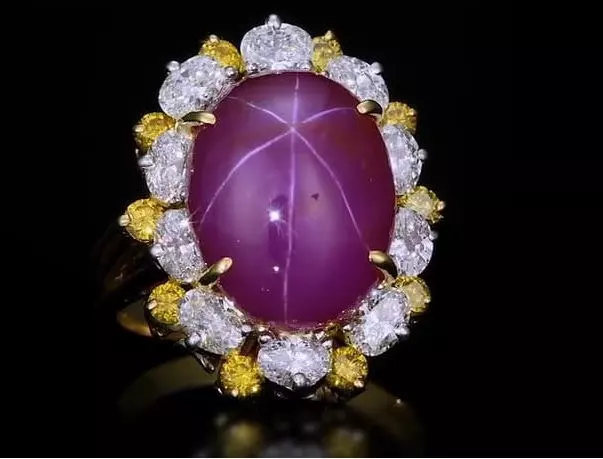
The star exists because rutile needles have grown in three directions at 60-degree angles inside the corundum crystal. When the stone is cut as a cabochon and oriented so light hits the needles perpendicularly, they reflect simultaneously — and the six-ray star appears. No silk, no star. Sparse silk, weak star. The right density of correctly oriented silk produces the sharp, mobile star that collectors pay for.

This inverts the standard gemological logic completely. The "flaw" that destroys a faceted ruby's value is exactly what creates a star ruby's value. Burmese silk — the specific rutile growth pattern from Mogok's marble geology — is a quality mark in this category, not a defect.

The Tradeoff Every Buyer Must Understand Before Purchasing

Star rubies carry a structural compromise that no seller explains clearly enough.

The same silk that creates the star also whitens the stone. Dense rutile diffuses the body color, pulling deep red toward pink or even grayish-rose. The more silk, the sharper the star — and the less saturated the red.

The stones I'm selecting in Mogok this week are chosen against this tradeoff. A stone with thin silk gives a deep, burning red — but the star is weak, the rays don't reach the edge, they dissolve before they arrive. A stone with dense silk gives a sharp six-ray pattern with rays that travel all the way to the base — but the red becomes pink, the commercial value drops.

The lottery win — a stone above 5 carats that holds both deep red and dense silk simultaneously — is genuinely rare in 2026. When I find one, I document it immediately. These are the stones I source for private collectors who understand what they're looking at.

The quality indicator I use in the shop: the sliding effect. When you rotate the stone under a single light source, the star should move smoothly across the surface without breaking apart. A star that jumps, fractures into segments, or disappears during rotation indicates improper rutile orientation or uneven silk distribution. A star that glides — maintaining its six-ray geometry as it travels — reflects ideal internal structure. This is the test I run on every stone before anything else. Before the price, before the certificate.


Mogok vs Mozambique for Star Rubies

This is the one category where the comparison runs in an unexpected direction.

For faceted pigeon blood rubies, Mozambique has closed the gap with Burma significantly since 2015. FURA produces exceptional material with remarkable clarity.

For star rubies, that clarity is the problem.

Mozambique rubies are often too clean. The geological conditions at Montepuez — the amphibolite host rock, the specific mineralization — don't produce the volume of rutile inclusions needed for ideal star geometry. You can find star rubies from Mozambique, but the asterism tends to be weaker, the rays less defined, the sliding effect less fluid.

Burmese silk from Mogok's marble deposits is a different material. The rutile grows in the specific density and orientation that creates sharp six-ray geometry. This is why, in 2026, Burma remains the dominant source for collector-grade star rubies — not because of brand history, but because of geology.

Bangkok, February 2026: How Star Rubies Actually Sell

I closed a deal on an 8-carat Burmese star ruby in Bangkok last month. The buyer was a serious Chinese collector — the kind of buyer who has done this before.

He didn't look at the certificate for the first ten minutes. He held the stone under a flashlight and rotated it. Slowly. Then faster. Then from different angles, watching how the star moved. He wasn't checking for the star's presence — he was assessing its character. Whether it glided or jumped. Whether the rays were equal in length. Whether the color held under the light or washed toward pink.

After ten minutes of this, he looked at the certificate. Origin confirmed Burma. No indications of heating. He made a decision in thirty seconds.

Star rubies don't sell the way faceted stones sell. There's no Rapaport price list, no standardized grading scale that a buyer can consult before the call. The value is in the stone's performance under a single light source, and that performance is something a buyer has to see. This is why every star ruby consultation I do involves the stone on video — I hold it under natural window light and a directed LED so the client sees the star move before any decision is made.

What You'll Actually Pay

Current market ranges for certified material:

Grade Origin Carat Market Range (USD/ct)
Weak star, pink-red Sri Lanka / Tanzania 1–5 ct $150–$800/ct
Medium star, pinkish red Sri Lanka / Burma 2–5 ct $800–$3,000/ct
Sharp star, red, heated Burma 3–8 ct $3,000–$8,000/ct
Sharp star, deep red, unheated Burma 3–5 ct $8,000–$15,000/ct
Sharp star, deep red + dense silk, unheated Burma 5ct+ $15,000–$40,000/ct

Prices based on current dealer market. Top Burma 5ct+ deep red with sharp asterism: +20% YoY in 2026 due to supply deficit.

The price jump at 5 carats is structural. Large star rubies with both strong color and sharp asterism simply don't appear with frequency. When they do, the collector market absorbs them quickly.


When Star Ruby Is the Wrong Choice

Don't buy a star ruby if you want faceted ruby color. These are different products. A fine faceted ruby in deep vivid red will always outperform a star ruby on pure color intensity. If the goal is color, buy a faceted stone. If the goal is the optical phenomenon — the moving star, the glow, the thing that makes people stop — buy a star ruby.

Don't buy without seeing the star move on video. A static photograph of a star ruby tells you almost nothing about quality. The sliding effect only reveals itself when the stone is in motion under a moving light source. Any seller who cannot show you the stone on video under a flashlight is selling you a photograph.

Don't accept a weak or fractured star at strong-star prices. The asterism should be sharp, the rays should reach the edge of the stone, the star should move without breaking. If the rays dissolve before they reach the girdle, the stone is lower grade regardless of what the certificate says about color.

Don't assume unheated is always better for star rubies. Unlike faceted rubies where unheated commands a strong premium in all cases, star ruby heat treatment is nuanced. Careful low-temperature heating can improve color without destroying the silk structure. The certificate should specify what type of treatment, if any, was applied.

FAQ

How is a star ruby different from a regular ruby? The same mineral — corundum — but a completely different optical experience. A faceted ruby is cut to maximize light return through the crown facets. A star ruby is cut as a cabochon specifically to display asterism: the silk inclusions that would reduce a faceted ruby's value instead create the star. They are optimized for different things. A collector who wants both needs two different stones.

Can I assess star quality in an online purchase? Yes — but only through video, never through photographs. The test is simple: the stone must be shown rotating slowly under a single directed light source. The star should glide smoothly across the dome without breaking. You should be able to see the rays extend to the base of the stone. If a seller shows you only static images, you cannot assess the quality you're paying for. On every star ruby consultation I do, I show the stone on Zoom under both window light and flashlight before the client makes any decision.

How to Buy From Me

I was in Mogok in March 2026 specifically to select star rubies. I brought back three stones. They are not perfect by clarity standards — star rubies never are. Each of them has the six-ray geometry and the sliding effect that takes the category from decorative to exceptional.

If you're looking for something specific — a particular carat range, a color depth, a star character — book a Zoom call. I'll show you what I have and what I can source.

→ Book a Zoom consultation | No deposit, no commitment