_72x72_bd5_72x72_bd5.jpg)
_72x72_bd5.jpg)


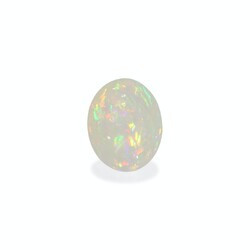
Opal has been treasured for centuries for its mesmerizing play of color. While Australia has long been the dominant force in the opal market, a new contender emerged in the 1990s that would shake up the gemstone world: Ethiopian opal.
Turning Points of Ethiopian Opal History
In 1994, the first Ethiopian opal was discovered in the Wollo province. In the early 1990s, small-scale mining began when locals sold rough opal to foreign buyers.
In the middle of the 1990s, commercial mining and export began to ramp up as the global market took notice.
Unique Characteristics
What makes Ethiopian opals so special:
- Vibrant play-of-color
- A diverse palette of greens, reds, oranges, purples, and blues
- Natural patina coating that enhances durability
- Thin, wondrous seams of color
Compared to Australian opals, Ethiopian opals tend to display:
|
Type of Opal |
Vibrancy |
Stability |
|
Ethiopian |
Extremely High |
Stable |
|
Australian |
High |
Requires stabilization |
Surging Global Demand
Since the discovery, Ethiopian opals have seen rapidly rising demand. They represent a more affordable option for Australian opals.
In just 30 years, Ethiopian opals have earned a reputation for their breathtaking beauty. A unique look combined with supply reliability makes Ethiopian opals a staple in jewelry today.
In our jewelry store, vividcarat.com, we offer a wide range of Ethiopian opals, as well as other types of gemstones. Our staff can assist you in finding the perfect loose opal or helping you purchase a piece of jewelry that perfectly matches your aims and preferences. Our jewelry store works in New York City.
Color Varieties of Ethiopian Opal
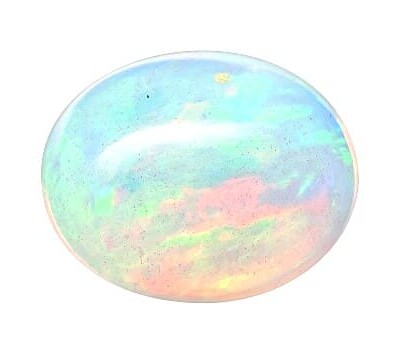
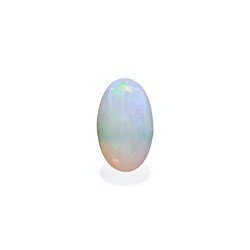
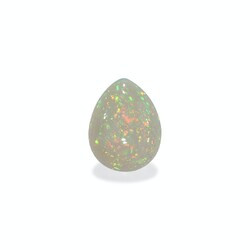
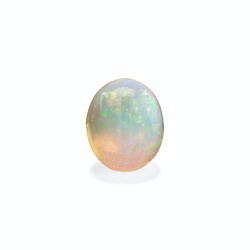
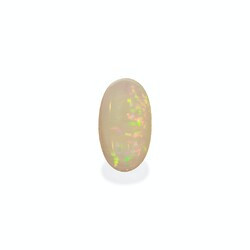
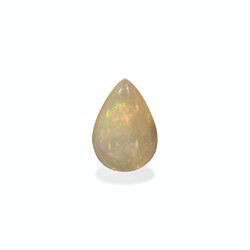
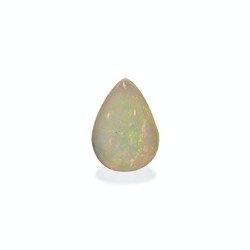
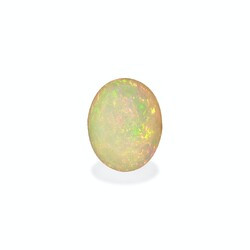
One of the signatures of fine Ethiopian opal is its kaleidoscopic play of color. These gemstones display color in their fullest splendor, ranging from eye-catching neon shades to vibrant primary hues.
Base Body Tone
The base tone underlying the flashes of color can vary dramatically:
- Crystal or Jelly Opal- Transparent to translucent base that resembles glass
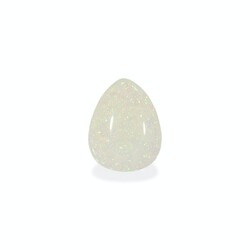
- White or Light Opal- Whitish or very light base tone
- Black Opal- Dark gray to jet black background, often created through the smoking process
The unique characteristics of each stone are highlighted by the way the base tone and color flashes interact with one another.
Play-of-Color
The types of colors exhibited by Ethiopian opals include:
- Reds- From pink and orange to deep crimson
- Greens- Ranging from lime to forest green
- Blues- Aqua blue, violet-blue, and indigo shades
- Multicolor Flashes- Mixes and blends of various hues
Rare Specialties: Opals with dominant red flashes or visible honeycomb-like patterns are scarce and secure higher costs.
What Determines Color
An opal's play-of-color is caused by silica spheres and voids in its structure that diffract light. The size, shape, alignment, and density of these spheres create the color palette seen. No two opals exhibit color in the same way.
So whether it's a searing crimson flash or a swirling rainbow, the uniqueness of each Ethiopian opal's color is part of its intrigue.
Ethiopian Opal Price Factors in New York City
For gemstone collectors and jewelry lovers alike, Ethiopian opals offer mesmerizing beauty at accessible price points compared to their Australian counterparts.
Valuation depends on several aspects.
Play-of-Color
The most critical price factor is the vibrancy of color flash patterns:
- Potch or Common Opal- No play-of-color, $50 per carat or less
- Faint Color Flashes- Murky tones, $100-150 per carat
- Moderate Intensity- Visible patterns, $150-250 per carat
- High Intensity- Dynamic, bold flashes, $250+ per carat
Rare Specialties: Opals with pure red flashes or visible honeycomb breakthrough patterns claim escalated price tags – from $500 to 1,000+ per carat.
Treatments
Some Ethiopian opals undergo treatments to enhance appearance and stability:
- Smoked- Darkened base to intensify color, adds ~20% premium
- Sugar Acid Treated- Improves play-of-color, adds ~50% premium
Size and Cut
Larger-sized, rough, or cut, opals have a higher potential for displaying prized visual characteristics. Taking into account the quality of the cut, size adds the following benefits:
- 5 carats+ – Adds ~30%
- 10 carats+ – Adds ~50%
- 20 carats+ – Adds ~100%
So while Ethiopian opals offer bang for the buck, stunning specimens still command prices per carat reflecting their rarity and beauty. Proper evaluation by a gemologist is key before purchase.
Ethiopian Opal Mining
The vibrant flashes of color in Ethiopian opal are awe-inspiring, but extracting these gemstones involves intense manual labor. The remote terrain and lack of modern equipment make traditional mining methods a necessity.
Primary Deposit Regions
The principal opal mining areas in Ethiopia are:
- Wollo Province- The first deposits discovered here in the 1990s sparked the trade
- Shewa Province- This deposit is becoming an increasingly vital source of opals
- Mezezo is an emerging and prolific region. The competition over the claims is growing.
These volcanic regions contain precious seams filled with silica spheres that create the magical play of color.
Mine Types
There are two main types of Ethiopian opal mines: open pits and underground tunnels.
Open pits are shallow surface pits dug using picks and shovels.
Underground tunnels are narrow shafts and digs that are accessed by ropes and basic tools. Safety standards are often lacking, but opal yield can be abundant if the miners locate the right underground veins.
Mining Process
A typical small-scale Ethiopian opal mining operation involves:
- Surveying and selecting the digging site
- Excavating vertical shafts or lateral tunnels
- Extracting opal-bearing rock and transporting it to the sorting area
- Breaking apart rock manually looking for precious opal seams
- Sorting and classifying findings based on quality characteristics
It is intense physical labor, but it brings these hidden gems into the light. Despite the challenges, Ethiopian opals shine thanks to the determined miners who are willing to endure the demanding conditions.
Composition and Authentication of Ethiopian Opals
The play-of-color that dances across fine Ethiopian opals is a natural phenomenon, but chemistry and treatments can significantly impact their appearance and durability. As with any precious gem, proper certification builds trust for connoisseurs.
Chemical Composition
- Primarily composed of silica- Specifically amorphous hydrous silicon dioxide
- Trace elements can include water, iron oxides, aluminum
- Hydrophane properties– Can absorb and release water, affecting stability
This chemistry gives Ethiopian opals their hardness yet also makes them prone to fracturing and crazing without proper care.
Treatments
To enhance gem quality, some miners utilize:
- Smoking- Exposure to smoke blackens the opal base to intensify color flashes
- Sugar Acid- Bleaching agent to improve play-of-color
- Dye– Introduces or alters hues
Treatments can negatively impact value if not disclosed.
Certification
To verify authenticity and properties, investigation by independent gemology labs is essential:
- Gemological Institute of America (GIA)
- American Gemological Laboratories (AGL)
- International Gemological Institute (IGI)
Detailed grading reports assess factors like transparency, body tone, type of play-of-color, treatments, country of origin, and more.
So while Ethiopian opals wow with natural splendor, science, enhancements, and certification provide clarity around exactly what lies beneath the surface.
The Investment Potential of Ethiopian Opals
With stunning flashes of color rivaling works of art, some gem enthusiasts view high-quality Ethiopian opals as prime investment possibilities. For the informed collector, they have an enticing opportunity.
Market Factors to Consider When Buying Opals in New York City
Several dynamics make Ethiopian opals potentially lucrative holdings:
- Soaring Demand- Prices have risen rapidly in recent years as the gems gained popularity
- Supply Constraints- Mining challenges and resource access limits place pressures
- Rarity- Truly top-tier gems with pure red flashes or honeycombs are scarce
Our jewelry store, located in New York City, has a wide selection of loose opals as well as jewelry that is suitable for investment purposes, as well as personal use jewelry. Browse a whole range of gemstones available in stock on vividcarat.com.
Critical Considerations
When evaluating Ethiopian opals as investments:
- Require Certification- Ensures authenticity and documents important quality traits
- Focus on high-clarity gemstones- The most precious pieces with dynamic play-of-color
- Consider rare specialties- Unique colors and optical phenomena fetch premiums
- Account for delicacy- Durability limitations can hamper value if damaged
Investment Outlook
While investing in gemstones carries risk, Ethiopian opals have a vibrant hue and an artisanal history that makes them highly appealing to investors. The scarcity of high-quality specimens suggests that there is a strong upside potential for these gems.
It's essential to know about quality factors and how to take good care of opals to fully appreciate their value. If you choose carefully and take proper care of Ethiopian opal, you can get financial returns that are just as impressive as its vibrant colors.