

_72x72_bd5_72x72_bd5.jpg)
_72x72_bd5.jpg)


Star Sapphire — The Three Things That Determine Whether the Star Is Real
By Russell, VividCarat — China Fort Market, Beruwala, Sri Lanka
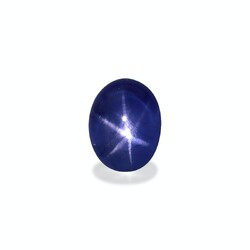
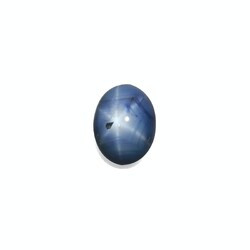
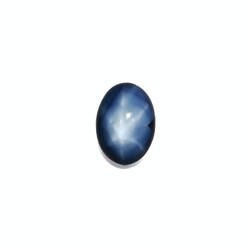
Most people who search for star sapphire have never seen a genuinely fine one. They've seen photographs — static images that show a star, but can't show whether that star moves, sharpens under direct light, or dies the moment the stone leaves a spotlight. The photograph is where most bad purchases begin.
A star sapphire is evaluated on three criteria that matter more than color, more than clarity, more than carat weight:
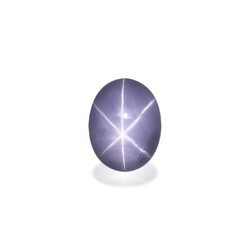
Sharpness. Each of the six rays should have clean, defined edges — not a diffuse glow that suggests a star rather than showing one. Under a point light source, the rays should be narrow and bright.
Centrality. The star should sit at the center of the dome. An off-center star drops value significantly and looks wrong on the hand.
Mobility. As you tilt the stone, the star should move smoothly across the surface, tracking the light source. A star that jumps or disappears at certain angles is a weak star.
A stone that passes all three is exceptional. Most don't.
Why the Star Exists — and Why It Disappears
The asterism in a star sapphire comes from rutile silk — microscopic needles of the mineral rutile, arranged in three intersecting directions following the crystal's hexagonal structure. When a point of light hits the dome of a cabochon cut along the correct orientation, each set of needles reflects a ray. Six directions, six rays.
Two things kill the star. Heat treatment partially or fully dissolves the rutile silk — the stone clarifies and the star weakens or vanishes entirely. This is why star sapphires are almost always unheated: the treatment that improves color destroys the phenomenon. The second is diffusion treatment, which creates an artificial star by depositing titanium at the surface. Under magnification, a diffusion star shows uneven color concentration near the surface that stops abruptly. Under a loupe, the distinction is visible to a trained eye in under a minute.
What the certificate must show: "natural asterism" or equivalent language — confirming the star formed during crystal growth, not through surface treatment. GIA and GBS are reliable for this determination. If the certificate doesn't address asterism origin explicitly, ask the lab directly before purchase.
My First Star Sapphires — Thailand
I came across star sapphires for the first time in Thailand, early in my time in the trade. There's something about the star under direct light that reads like a special effect — the kind of optical phenomenon that doesn't look real until you understand the geology behind it.
I bought a lot of eleven stones. Three were brown — standard commercial grade, the body color most of the market produces. The remaining eight were blue and deep blue, and those are the ones that stopped me. The color was genuine, the stars were sharp and centered, and on two of the stones there were two stars — a phenomenon called double star asterism, where a second six-rayed star appears on the back of the stone. Two stars in the same crystal. I've rarely seen it since.
The clients who bought those stones didn't hesitate. It was one of the best lots I've worked with.
What's in the Catalog Now
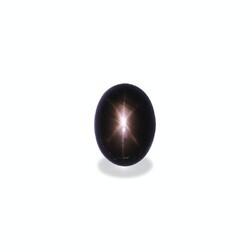
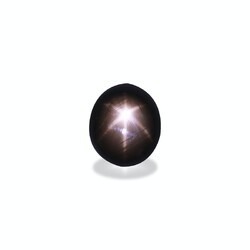
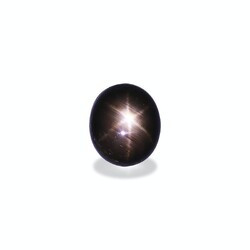
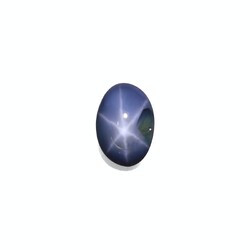
The star sapphires currently listed are the result of years of selective accumulation — some cut personally in Bangkok, some sourced from Thai and Sri Lankan traders I've worked with over time. Each stone was evaluated for all three star criteria before it was added. A weak or off-center star didn't make it regardless of color.
Star sapphires wait for the right buyer longer than most stones. They're not for everyone — the cabochon format, the opacity, the phenomenon that only appears under direct light. When the right buyer appears, it's usually immediate.
Prices
| Color | Star quality | Carat | Price (USD/ct) | Source |
|---|---|---|---|---|
| Blue — commercial | Moderate | 3–8 ct | $80–300 | Market avg |
| Blue — fine Ceylon | Strong, centered | 8–15 ct | $300–1,000 | Market / gemstock |
| Blue — Royal Blue Ceylon, GRS | Strong | 15–25 ct | $1,500–5,500 | Gemstock verified |
| Blue — Burma, unheated | Strong | 5–10 ct | $1,200–1,800 | Gemstock verified |
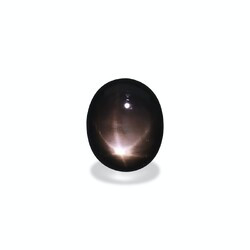
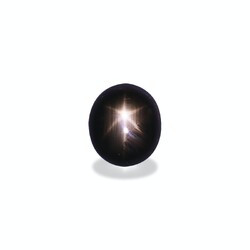
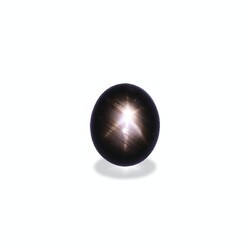
| Black (Thailand/India) | Strong | 5–20 ct | $50–300 | Market avg |
| Double star | Any | Any | +50–100% | Premium |
Unheated status is standard for star sapphires — heating destroys the silk and the star with it. Treatment disclosure on a star sapphire certificate should be "no indications of heating." If it says otherwise, the asterism may be compromised or artificial.
Three Famous Stones
The Star of India — 563 carats, Sri Lanka origin, now at the American Museum of Natural History in New York. One of the few large star sapphires with a visible star on both faces.
The Star of Adam — 1,404 carats, Sri Lanka, privately held. The largest known blue star sapphire, with an estimated value between $100–300 million.
The Black Star of Queensland — 733 carats, Australia, the largest gem-quality black star sapphire known.
These stones set the ceiling. Everything else in the market is priced relative to how close it comes to that benchmark in star quality, color, and size.
Browse current star sapphire inventory — stones selected for star quality first, everything else second. Or book a Zoom call: point light source, star demonstration on camera, certificate open on screen. No deposit, no commitment.