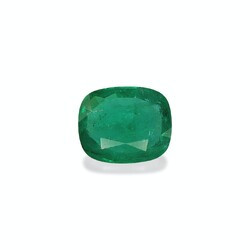
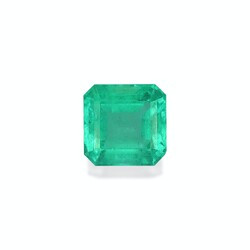
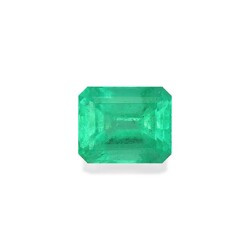
_72x72_bd5_72x72_bd5.jpg)
_72x72_bd5.jpg)


Colombian Emeralds: What the Market Looks Like in 2026
By Russell, VividCarat — China Fort Market, Beruwala, Sri Lanka | April 2026
Most buyers come to me asking for Muzo. That's what the internet told them. I've been to Colombia. I've been inside the mine. And I came back with a different view.
In 2026 I completed a sourcing run I'd been planning for two years: Bogotá → Muzo → back to Beruwala for cutting → sale to a dealer in Geneva. Here's what that route actually looks like — and what it means for the price you pay.
Inside Muzo: what nobody writes about
The Muzo mine isn't an open pit. It's vertical shafts and narrow horizontal tunnels called socavones. You're not looking for green rock — you're looking for caliche, a white limestone vein running through black shale. Emeralds form in voids inside that vein. When the drill breaks into a pocket, the air fills with hydrogen sulfide. That smell means you're close to a nest.
Colombian rough is what miners call "nervous" — tectonic stress means a crystal can literally split in your hands during extraction, or later under the cutting wheel. I lost two stones that way. It's priced into the rough rate.
I bought rough at $2,000/ct by mass weight. At that price point, maybe 30% of what you buy is actually cuttable. The rest is matrix, fractures, or stress casualties.
Why I cut in Sri Lanka, not Bogotá
Bogotá cutters cut for weight. They leave thick pavilions to save carats. The result is a stone that looks dark in a setting because light can't pass through.
My cutter in Bangkok — trained in Beruwala — cuts for the light window. He finds the angle where both tones of the rough (yellow and blue) converge into Colombian green. The yield drops to around 25% of rough weight, but the finished stone performs optically.
After cutting, I oil in cedar oil under vacuum for 48 hours. No polymers. Cedar oil is reversible, stable, and what Gübelin and SSEF want to see on a certificate.
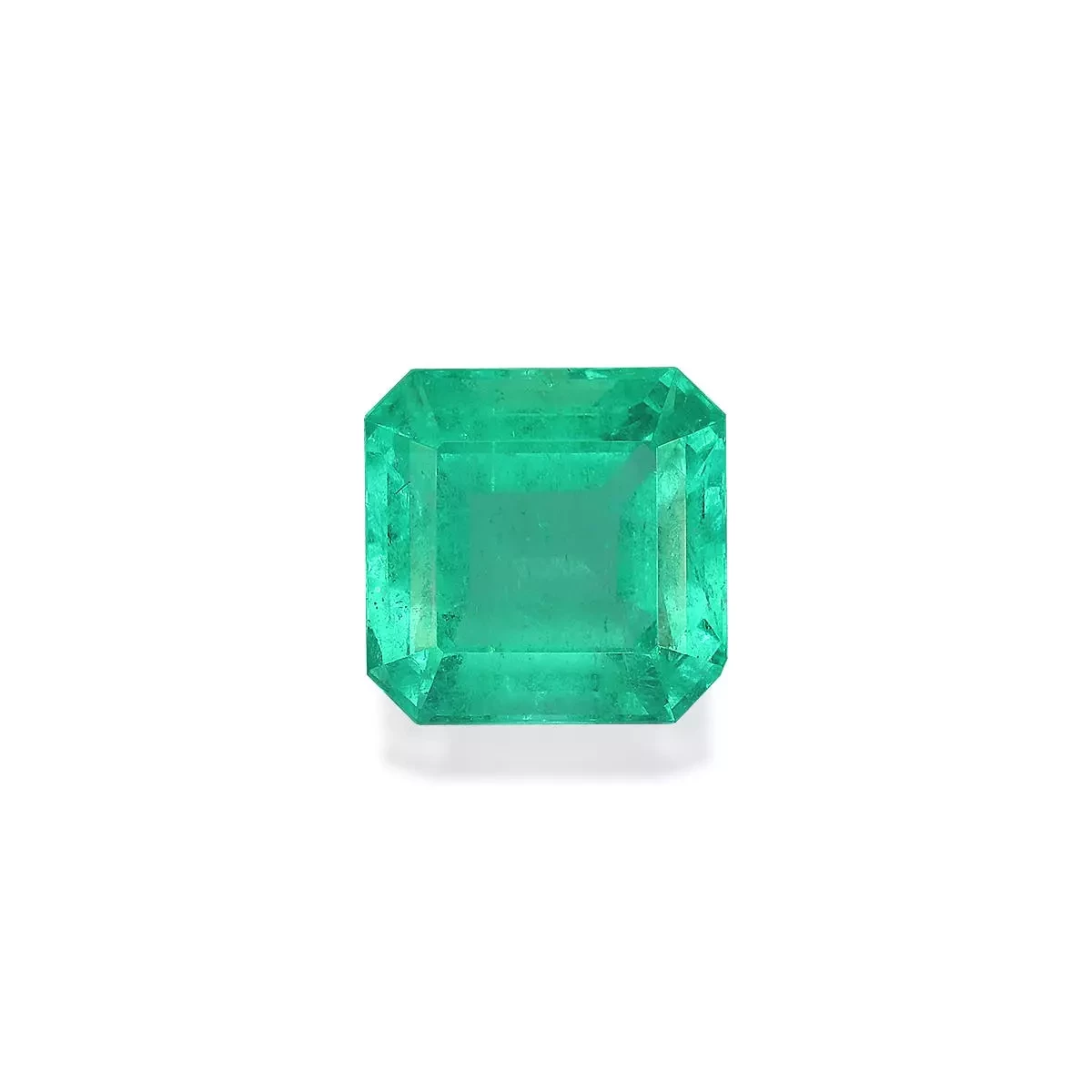
The finished cost on a clean 4 ct Vivid Green: roughly $9,000/ct. I sold that stone to a Geneva dealer for $18,000/ct. The certificate read: Origin — Colombia, Cut — Sri Lanka bespoke. That combination is what the European market pays for.
What you pay buying direct
Same quality, without the Geneva dealer margin:
| Grade | Treatment | 1 ct | 2–3 ct | 5+ ct |
|---|---|---|---|---|
| Commercial (visible jardin) | Oiled | $300–$900 | $900–$1,800 | on request |
| Fine Vivid Green | Minor Oil | $2,650–$4,500 | $4,000–$8,000 | $8,000–$16,000 |
| Muzo / Chivor Vivid Green | Minor Oil | $5,000–$7,500 | $7,000–$12,000 | $16,000–$55,000+ |
VividCarat direct pricing runs 35–50% below retail because the stone moves from the cutting bench straight to your Zoom call.
Muzo or Chivor?
In 2026 Chivor is where serious collectors are moving. Lower inclusion density, higher transparency, and a distinctive bluish-green tone from three-phase inclusions unique to that deposit. European dealers are requesting it by name. For resale value, Chivor with minor oil and a Gübelin report is the stronger position right now.
The treatment problem
Cedar oil = investment grade. Resin = 40–60% value loss at resale, no exceptions. How I verify before buying: FTIR spectroscopy (cedar shows 2800–3000 cm⁻¹, resin adds a peak at 1600 cm⁻¹), UV lamp (resin fluoresces bright white or chemical yellow), and Raman for borderline cases. Colombia introduced blockchain Miner's ID certificates in 2026 — Gübelin and SSEF now cross-reference these for origin verification.
When NOT to buy Colombian
- Certificate says "Artificial Resin" or "Significant Enhancement" — not investment grade, period
- No origin report from GIA, AGL, Gübelin, or SSEF — "Colombian" without lab verification is just a claim
- Heavy pavilion cut (Bogotá-style) — stone will look dark in any setting
- Daily wear without a protective bezel — emeralds are brittle, inclusions propagate under impact
FAQ
What does F2 mean on a GIA certificate? Fatio scale for treatment grade. F1 = none/insignificant, F2 = minor, F3 = moderate, F4 = significant. For investment stones: F1–F2 only. Treatment grade dominates origin in resale pricing.
Why does your stone say "cut: Sri Lanka" if origin is Colombian? Because I buy Colombian rough and cut in Sri Lanka. That combination — Colombian origin + Beruwala light-window cut — is what Geneva and Munich dealers pay a premium for. You get it at source price.
Can I verify oil treatment before buying? Under UV you can catch obvious resin fluorescence. But distinguishing minor cedar oil from a new synthetic blend requires FTIR. Every stone I bring you has been lab-tested before the Zoom call.
How do I know the Colombian origin is real, not just a claim? Since 2026 Colombia issues blockchain Miner's ID certificates at the point of extraction. Labs like Gübelin and SSEF now cross-reference these alongside their standard origin testing. If a stone has no Miner's ID trail and no lab origin report — the "Colombian" label is unverifiable. Every stone I source comes with a traceable chain from mine to certificate.
Book a Zoom consultation — I show the stone under daylight and UV, walk through the certificate line by line, and answer every question before you decide. No deposit, no commitment.