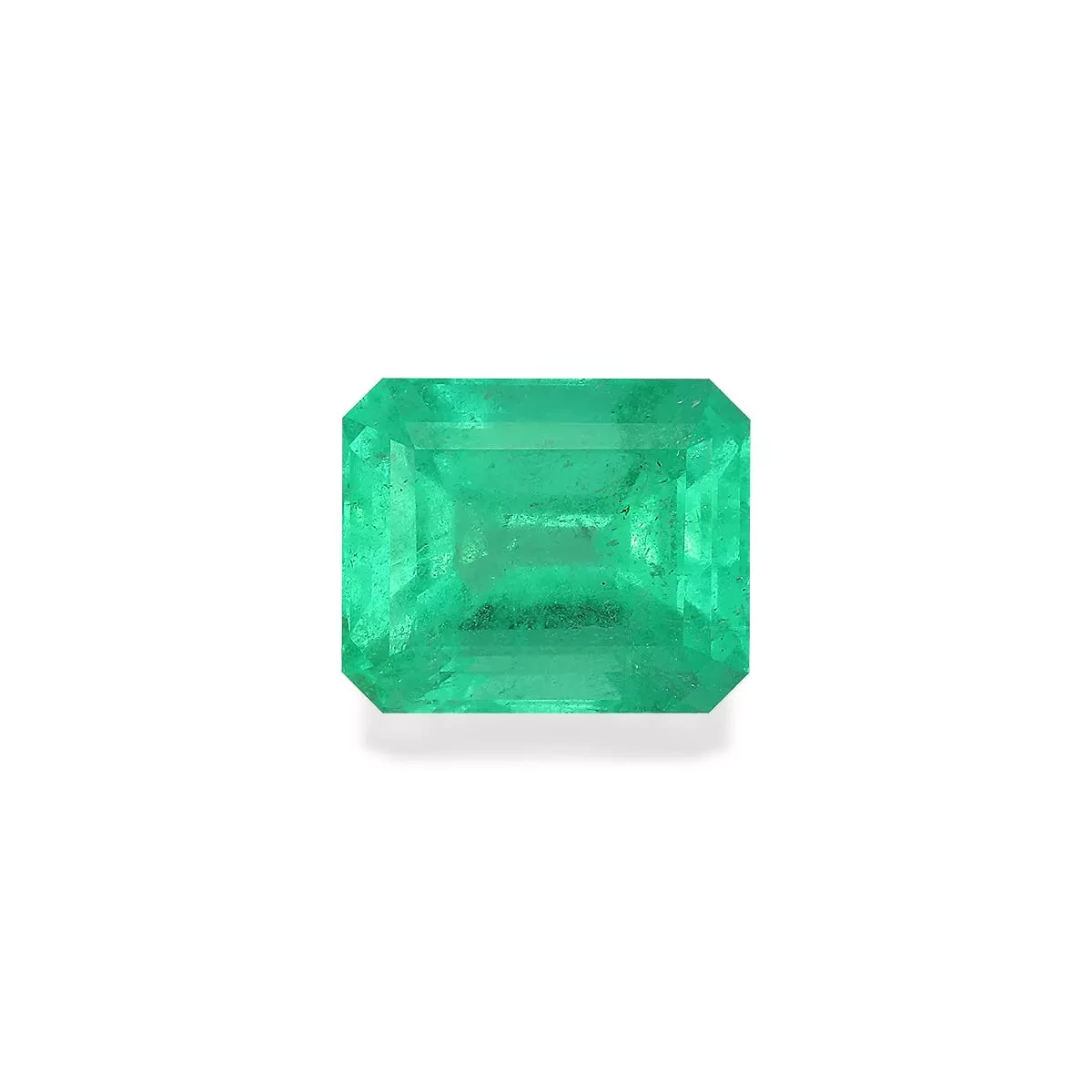
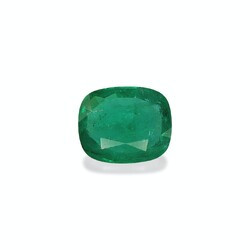
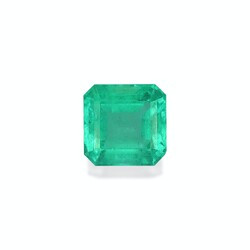
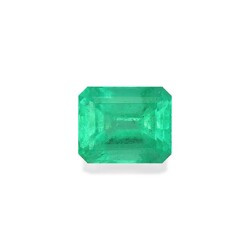
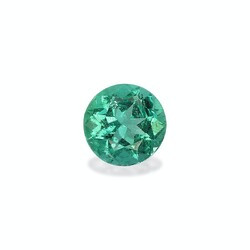

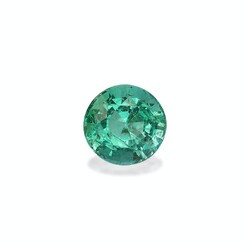
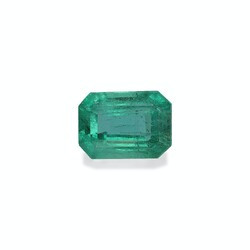
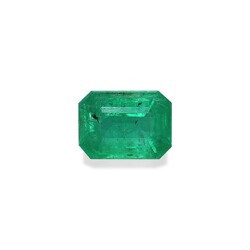
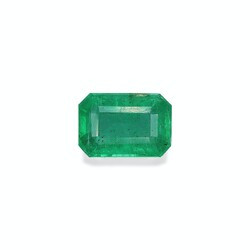
Natural Emerald Gemstones — Colombia & Zambia, Treatment Disclosed, Lab Certified
I've made the trip to both. Colombia and Zambia. The stone is the same word in the catalog. In your hand, under daylight, they are not the same stone.
Most buyers find this out after they've already decided what they want. A client calls wanting a Colombian emerald — specifically Colombian, origin matters, they've done research. I ask what drew them to Colombia. Usually the answer is "Muzo green" or some version of it — that warm, slightly yellow-shifted color that appears in every serious piece of emerald writing. Fair enough. Muzo green is real and it's worth wanting.
Then I show them a fine Zambian. Cooler, more blue, different behavior in different lights. Some of them immediately prefer it. Some don't — and that's fine too. But the conversation changes once you've seen both. Origin stops being a prestige category and starts being a genuine description of what you're looking at.
That's where I try to start. But before origin, there's something more important.
The One Thing Most Emerald Buyers Don't Know Before They Buy
In rubies and sapphires, treatment is binary: heated or not heated. The price difference is significant but the question is simple.
Emeralds don't work that way.
Almost every emerald on the market has been treated with oil or resin to improve clarity. This is not fraud — it's a practice centuries old, accepted across the trade, disclosed on every reputable certificate. The problem is not that treatment exists. The problem is that most sellers don't make the degree of treatment a feature of the conversation.
There is a formal scale. GRS, GIA, and Gübelin all use slightly different language but map to the same spectrum:
| Grade | Certificate Language | What It Means | Price vs F1 Equivalent |
|---|---|---|---|
| F1 — No treatment | "No indications of clarity enhancement" | Natural inclusions unmodified | Baseline |
| F2 — Minor oil | "Minor clarity enhancement" | Small amounts of oil in surface fractures | −20–35% |
| F3 — Moderate oil | "Moderate clarity enhancement" | Meaningful improvement to transparency | −40–60% |
| F4 — Significant | "Significant clarity enhancement" | Heavily treated, often resin not oil | −65–80% |
The visual difference between F1 and F2 is often invisible to the naked eye. The price difference is 20–35% on the same stone. The difference between F1 and F4 can be the difference between a collectible asset and a decorative object.
A dealer in La Candelaria told me directly, when I asked what percentage of what he sells is untreated: Minor oil. Everyone does minor oil. He was being honest. Most aren't that direct.
How to find this on a certificate: On a GRS report, look for the field labeled "Clarity Enhancement." On GIA, it appears under "Comments" or "Additional Information." The exact phrase will be one of: "No indications of clarity enhancement" / "Minor clarity enhancement" / "Moderate clarity enhancement" / "Significant clarity enhancement." That line is the first thing to find before discussing price.
Muzo, Colombia
Getting to Muzo from Bogotá takes about four hours. The highway out of the city, then the road narrows as you climb, then drops into a valley where the air changes. Miners follow calcite veins through black shale with hand tools, looking for the pockets where crystals formed over millions of years.
Muzo green is the color the trade has argued about since the Spanish arrived in the sixteenth century. Warm, slightly yellowish, the color appearing to come from inside the stone rather than sitting on the surface. I've looked at a lot of emeralds. I've never confused a Muzo stone with anything else once I knew what I was looking at.
The emerald market in Bogotá operates out of La Candelaria. Opaque, relationship-driven, unwelcoming to strangers — accurate on all three counts. The first two days I was shown politely inferior material by dealers who were perfectly pleasant and had no intention of showing me anything interesting. On the third day a contact made a call. That call led to an introduction. The introduction led to a back table where stones came out of a drawer rather than a display case, wrapped in tissue rather than set in trays.
Colombian dealers don't explain prices. They show you the stone and wait. The negotiation is almost entirely non-verbal until it isn't. I came back from Bogotá knowing exactly what questions to ask and why the certificate is the only answer that counts.
Kafubu, Zambia
Zambia looks nothing like Colombia. Where Muzo is vertical and intimate — narrow shafts, hand tools, a few dozen people working a single hillside — the Kafubu emerald field is wide, flat, and industrial. Kagem Mining runs open-pit operations across hundreds of hectares. Heavy equipment in the distance, dust in dry season hanging over everything, the logistics of a serious operation rather than the improvised intensity of a family working a pocket in the Andes.
The stones that come out of Kafubu are genuinely exceptional. Cooler in color than Colombian material — more blue, higher saturation in some cases, with better average clarity because the host geology produces fewer of the inclusions that define the jardin in most Colombian stones. A clean Zambian emerald under daylight is a different experience from a Muzo stone. Not lesser. Different.
The first time I held a Kafubu stone next to a Muzo stone in the same light I understood something the market had been trying to tell me through prices for years. Colombian emerald commands a premium — real, persistent, justified by history and the specific character of that color. Zambian emerald is not a substitute for it. It's a separate category that happens to share a name.
Colombian vs Zambian: A Buying Decision, Not a Quality Ranking
Most emerald content presents this as a hierarchy. It isn't. It's two different stones for two different buyers.
| Factor | Colombian | Zambian |
|---|---|---|
| Color character | Warm, slightly yellow-shifted, "Muzo green" | Cool, more blue, higher saturation possible |
| Average clarity | Lower — jardin is expected and accepted | Higher — cleaner on average |
| F1 availability | Rare, commands significant premium | More accessible at fine quality |
| Treatment rate | ~90%+ treated to some degree | Similar, but cleaner F1 material more available |
| Price premium | 30–60% above comparable Zambian | Better visual value per dollar |
| Investment / resale | Stronger — Colombian name holds across markets | Growing recognition, not yet equal |
| Best for | Origin-conscious collectors, long-term investment | Jewelry buyers, those prioritizing clarity and color |
Buyers who treat Zambian as second choice are leaving money on the table. A 2-carat Kafubu stone with F1 documentation and strong color is a better purchase for many use cases than a 2-carat Colombian F3 at the same price point. The Colombian name adds value — but only when the treatment grade doesn't subtract it back.
What to Look for on an Emerald Certificate
Three fields matter. Everything else is secondary.
Origin. Should state "Colombia" or "Zambia" explicitly, with the laboratory's confidence assessment. "Colombia" on a GRS report is a determination — not a seller's claim. If origin isn't on the certificate, it's a seller's claim.
Clarity Enhancement. The treatment grade field. Find it, read it exactly. Do not accept a verbal summary from the seller — the certificate language is the only thing that counts legally and commercially. "Minor" and "moderate" are different products at different prices.
Color description. GRS uses specific terms — "vivid green," "strong green," "medium green" — that have commercial implications. A GRS "vivid green" Colombian F1 is a documentable asset. "Green" with no qualifier is a description.
Which laboratories to trust for emeralds: GRS, GIA, Gübelin, and AGL (American Gemological Laboratories) are the four laboratories whose emerald reports carry full credibility with collectors and dealers worldwide. Gübelin in particular is considered the reference standard for Colombian material. Reports from lesser-known labs are not equivalent — treatment determinations require specific equipment and expertise that not every lab has.
Price Ranges by Treatment Grade
This is what emerald pricing actually looks like at the direct-source level, before retail markup.
| Origin | Treatment | Carat | Price Range (USD/ct) | Certificate |
|---|---|---|---|---|
| Zambian | F2–F3 | 0.5–2 ct | $200–600 | Optional |
| Colombian | F3 | 0.5–1 ct | $400–900 | GIA recommended |
| Zambian | F1–F2 | 1–3 ct | $600–2,000 | GRS or GIA |
| Colombian | F2 | 1–2 ct | $900–3,000 | GRS or GIA required |
| Colombian | F1 | 1–2 ct | $2,500–7,000 | GRS required |
| Colombian | F1, vivid | 2 ct+ | $6,000–20,000+ | GRS + Gübelin |
Treatment grade is the dominant price variable — more than carat weight, more than origin for mid-range stones. A Colombian F1 at 1.5 ct and a Colombian F3 at 1.5 ct are not the same product.
Is an Oiled Emerald Worth Buying?
Yes — with conditions. This question deserves a direct answer because the market around it is deliberately vague.
F2 (minor oil) is a legitimate purchase for jewelry buyers who are not focused on resale. The visual quality is typically excellent, the price reflects the treatment, and with proper care the stone will remain stable for decades. Avoid ultrasonic cleaners — they remove oil and can expose fractures. Steam cleaning is also a risk. Warm water and a soft brush is the correct method.
F3 (moderate oil) requires honest assessment. The treatment has materially improved the stone's appearance. That's not wrong — but it needs to be priced accordingly and the buyer needs to know. We show F3 material only when the price is clearly calibrated to the grade.
F4 (significant treatment) is a different product category. Often involves resin rather than oil, which is less stable and cannot be refreshed. We don't carry F4 material.
F1 (no treatment) is the only grade that holds and appreciates value reliably for investment purposes. A GRS "No indications of clarity enhancement" finding on a Colombian emerald is what separates a collectible from a jewelry stone — not in beauty, but in commercial trajectory.
What happens to oil over time: Cedar oil and synthetic resins used in emerald treatment are not permanent. Exposure to heat, harsh chemicals, or ultrasonic cleaning degrades them. An F2 stone that becomes less transparent over years has not been damaged — it needs re-oiling, a standard trade service available from any reputable gemologist. F1 stones have no treatment to degrade.
How the Orders Work
A collector I've worked with in Europe spent two years asking specifically for Colombian material — not Zambian, Colombian. When I asked why, he said he wanted to hold something from Muzo. I understood that. I'd been there. When I finally found him the right stone — a 3.2-carat F1, GRS certified, Muzo origin confirmed, the color exactly what he'd described in our first conversation — he didn't ask about price until after he'd seen the video three times.
A jeweler in Dubai needed something different. Three matched Zambian stones for a suite commission, consistent color temperature, specific cut geometry, four weeks. Two came from Kafubu contacts. The third I sourced through a dealer in Bogotá holding Zambian material from a recent buying trip — closer in color to what I needed than anything I could find through the Zambian chain at that point. Sometimes the supply chain folds back on itself in ways that don't follow the logic of the map.
These are different problems. Both require knowing the source, knowing the material, and being willing to tell a client honestly when what they've asked for isn't available at their budget right now — and what is.
To start a consultation: Tell me origin preference (Colombian, Zambian, or open), treatment tolerance (F1 only, or F2 acceptable), budget, and intended use. That's enough to pull the right options. The call is 20–30 minutes on Zoom. You see the stones and the certificates on screen before any decision.
Common Questions
"Why is there no Colombian emerald under $500 in your catalog?" Because they don't exist with honest documentation. What sells as "Colombian emerald" at $50–150 online is either uncertified, F4, or both. Certified Colombian material with meaningful color and F1–F2 treatment starts around $700–900 total for smaller stones. We don't carry uncertified material.
"Can I verify the treatment grade myself?" Only through a laboratory. No visual inspection — yours or the seller's — can determine treatment grade reliably. The certificate from GRS, GIA, Gübelin, or AGL is the only verification that counts. We can walk you through reading the exact fields on a Zoom call before you commit.
"Is a Zambian emerald a good investment?" It depends on treatment grade and timing. Zambian F1 material with strong color has appreciated meaningfully since Kafubu production scaled up around 2010. It is not yet at parity with Colombian for collector demand, but the gap is narrowing. For jewelry buyers not focused on resale, Zambian F2 fine quality is an excellent value purchase. For investment, F1 from either origin — with GRS or Gübelin documentation — is the only category we'd recommend.
"What if the oil dries out after I receive the stone?" Contact us. Re-oiling is a standard gemological service, typically $50–150 depending on the stone size and the gemologist. It restores the appearance to its original state. It doesn't change the treatment grade on the certificate — the certificate reflects the stone's natural characteristics, not the current condition of the treatment.
"Do you carry no-oil emeralds?" Yes — see the No Oil Emeralds category in the catalog. These are F1 stones with laboratory confirmation. The selection is smaller because the material is rarer. If you need a specific size or color in F1, tell us on the consultation — we source to brief when inventory doesn't cover it.
Browse current emerald inventory above, or book a free Zoom consultation to discuss what's available at your budget and treatment preference right now.