

_72x72_bd5_72x72_bd5.jpg)
_72x72_bd5.jpg)


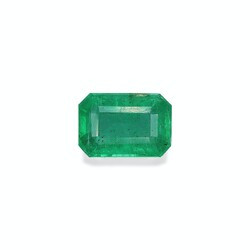
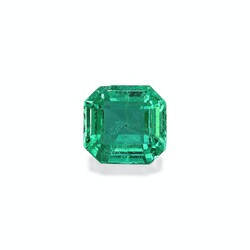
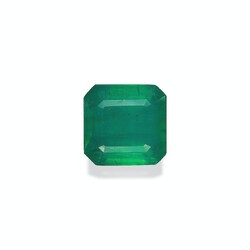
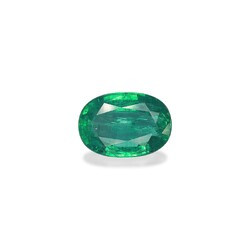
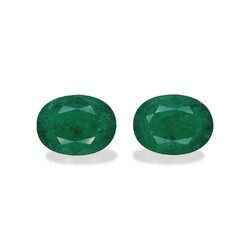
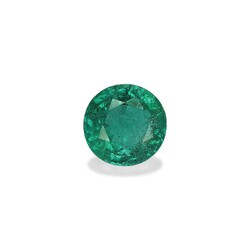
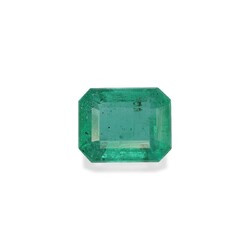
Emeralds from Zambia have a long and storied history. First discovered in 1928, these lush green gems stepped on the market with fanfare. However, commercial mining did not begin in earnest until the 1970s. Since then, Zambia has become one of the world's major sources of fine emerald crystals.
Zambian Emeralds: The Stone That Outperforms Colombia After Dark
By Russell, VividCarat — China Fort Market, Beruwala, Sri Lanka | October 2025
Every article you'll find online sells Zambian emeralds the same way: "almost as good as Colombian, but cheaper." I spent a month at Kagem and Grizzly in October 2025, and I want to retire that framing permanently.
Zambia doesn't lose to Colombia. It wins in different conditions — and for a certain buyer, those conditions matter more than origin prestige.
A month in Luanshya
After Colombia, Zambia felt like a different planet. Muzo is vertical shafts and narrow tunnels. Kagem is an open pit the size of a small town, worked by excavators that move entire hillsides. In 2025 they installed AI sorting at the pit edge — neural networks scanning rough as it comes off the conveyor, flagging high-value material before it reaches human hands. I'd never seen that at a gemstone mine before.
Kagem is 75% owned by Gemfields. It runs like a corporation: traceability, auction records, institutional buyers. When you buy a Kagem stone with a Gübelin certificate, you're buying a brand as much as a gemstone. That's not a criticism — for certain clients, provenance transparency is exactly what they're paying for.
Grizzly is different. Smaller, privately run, more unpredictable. In 2025 they produced a run of stones with exceptional transparency that caught the attention of European dealers. The chromium profile on the best Grizzly material is sometimes cleaner than Kagem — less iron interference, more pure green. If Kagem is where you buy the brand, Grizzly is where you find the soul of the stone. The risk is consistency: Grizzly lots vary more, which means you need to be there, or have someone there who knows what they're looking at.
One thing both mines share: Zambian rough is physically tougher than Colombian. Iron content strengthens the crystal structure. I lost two Colombian stones to stress fractures during extraction. In Zambia, breakage at the cutting wheel is significantly rarer. That matters when you're buying rough by the gram and calculating yield.
The ink-spot problem
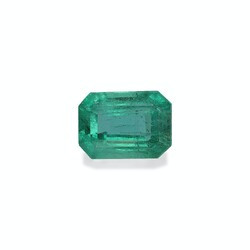
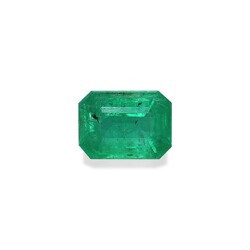
Kagem stones frequently contain magnetite inclusions — small black specks the trade calls ink-spots. Under the loupe they look like tiny dark crystals scattered through the stone. They're not automatically disqualifying, but they need to be dealt with at the cutting stage.
The solution is orientation. A competent cutter maps the inclusions before touching the wheel and positions the table facet to either exclude them from the face-up view or push them to the girdle where they disappear in the setting. A lazy cutter — one cutting for weight, not optics — leaves them where they land. When you buy a Zambian stone from a dealer who sourced it from a Bangkok trading house that bought it at auction in Lusaka, nobody along that chain had your viewing angle in mind. That's the risk of buying blind.
Sri Lanka: fighting the pleochroism
I brought a parcel of Grizzly rough to Ratnapura. My cutter's first reaction was concern. Zambian emerald is strongly pleochroic — rotate the crystal 90 degrees and it shifts from green to blue-green. In a finished stone, if the table is oriented along the wrong axis, you end up with a stone that reads blue rather than green in certain lighting.
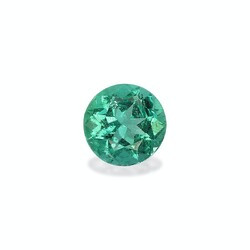
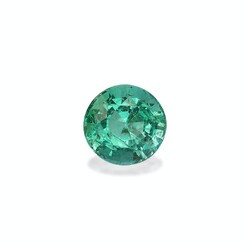
The solution my cutter developed: High-Crown orientation. By raising the crown angle and aligning the table perpendicular to the strong absorption axis, we suppress the blue tone and pull through clean emerald green. It costs carat weight — yield on this parcel was around 22%. But the finished stones looked like glass. Zambian rough absorbs less oil than Colombian because the crystal structure is denser. Minor Oil treatment was sufficient on every stone; the polish came out with a surface brilliance I don't normally see on emeralds.
What the margin actually looks like
I sold this parcel through Dubai into private collections in London. A Kagem stone, 5 carats, eye-clean, vivid green with GIA certificate: $12,000 per carat. A comparable Colombian would have been $25,000.
The London buyer didn't choose Zambia because it was cheaper. He chose it because he tried both under the restaurant lighting at the viewing — warm incandescent, the kind of light most fine jewelry actually lives in — and the Colombian went flat. The Zambia glowed. Colombian green is optimized for daylight. The iron in Zambian emeralds does something unexpected under warm artificial light: it holds saturation where Colombian loses it.
That's the argument nobody is making in the market. And it's the reason I think Zambian prices have more room to run in 2026 than Colombian at comparable quality.
What you pay buying direct
| Grade | Treatment | 1–2 ct | 2–5 ct | 5+ ct |
|---|---|---|---|---|
| Commercial (visible jardin) | Oiled | $500–$1,500 | $1,500–$2,500 | on request |
| Fine Vivid Green | Minor Oil | $2,600–$4,800 | $5,000–$8,000 | $10,000–$15,000 |
| No Oil / Insignificant | None | $8,000–$12,000 | $12,000–$20,000 | $50,000+ |
VividCarat direct runs 35–50% below these retail benchmarks. No Bangkok intermediary, no auction house margin. The stone moves from Ratnapura to your Zoom call.
When NOT to buy Zambian
- You need Colombian warm green for daytime wear — Zambia's cooler tone reads differently in sunlight, and some buyers simply prefer it
- The stone has visible ink-spots the cutter didn't address — means it was cut for weight, not for your eye
- No origin certificate from GIA, Gübelin, or SSEF — "Zambian" without lab verification is a claim
- You're buying purely for auction resale — Colombian with a Gübelin report still commands higher liquidity at the major houses
FAQ
Zambian or Colombian for an everyday ring? Zambian. The denser crystal structure means fewer stress fractures under impact. Colombian rough is more "nervous" — inclusions propagate more easily. For a ring worn daily, Zambia is physically the better choice.
Is the blue undertone a defect? No — but it needs to be managed at the cutting stage. Properly oriented, a Zambian emerald reads pure green. Poorly oriented, it reads blue-green in certain lights. This is why cutting provenance matters. Every stone I bring has been oriented by a cutter who understands pleochroism.
What is Kagem and why does it matter? Kagem is the world's largest emerald mine by volume, 75% owned by Gemfields. Stones from Kagem carry institutional traceability — auction records, consistent supply, and lab certification that major buyers recognize. For clients who need provenance documentation for insurance or estate purposes, Kagem origin adds a verifiable layer.
Can I find No Oil Zambian under $8,000/ct? Rarely, at this quality level. No-treatment Zambian with strong color and GIA or Gübelin certification is genuinely scarce. The stones exist — Grizzly produced some exceptional no-oil material in 2025 — but they move quickly and not through retail channels.
Why does Sri Lanka cutting cost more? Because it costs carat weight. A Ratnapura cutter working for light return and pleochroism correction will sacrifice 5–8% more rough than a cutter working for maximum yield. That loss is priced into the finished stone. What you get in return is a stone that performs optically rather than just weighing correctly.