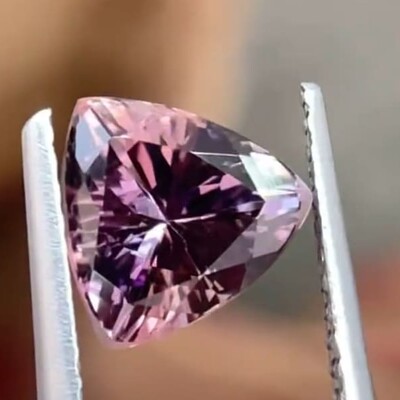
Tanzanite is a rare precious mineral lauded for its ability to display different colors from different viewing angles, a property known as pleochroism. This unique stone can exhibit beautiful shades of blue, purple, and red within a single gem.
Unique Color Varieties
The most sought-after tanzanite displays a lush lavender or violetish-blue hue. Stones with these pastel purple tones command higher values and are considered more beautiful by many gem collectors.
While lavender is the most famous, tanzanite also naturally occurs in other stunning shades:
- Deep Blue – ranges from royal blue to midnight blue. Rare and desirable.
- Violet – light to vivid purple shades. Softer and more feminine than the signature lavender.
- Red – from light pinkish-orange to rich cranberry red. The extremely rare color is seen in a small percentage of stones. Rarely sold at jewelers in New York City.
Additionally, some rare tanzanites display dramatic color-shifting abilities, changing between blue, violet, and red when viewed from different angles. These multicolored trichroic gems are gaining popularity with modern buyers looking for a unique stone.
What Impacts Color
Tanzanite color depends on the presence and ratio of trace elements like vanadium, chromium, and iron within the mineral composition. Small fluctuations create striking differences in color between gemstones.
|
Trace Element |
Impact on Color |
|
Vanadium |
Blue tones |
|
Chromium |
Violet/purple tones |
|
Iron |
Yellow and orange-red colors |
The vibrant color spectrum seen in natural tanzanite is part of what makes this precious gem so treasured.
Look through a wide range of tanzanites available in stock in our jewelry store, vividcarat.com. We have a collection of various tanzanite shades – from lavender to deep blue and even rare color-changing varieties.
Tanzanite Valuation: Prices Per Carat
Tanzanite is one of the most rare and valuable colored gemstones on the market. Pricing factors for these treasured purple-blue stones include carat weight, color grade, clarity, and cut quality.
Current Market Values in New York City
The price of tanzanite has risen steadily over the past decade. In 2022, the average price reached $550 per carat for stones of commercial quality.
Top-quality stones over 5 carats can fetch over $2,000 per carat. Rare trichroic tanzanites showing distinct color change can sell for up to $10,000 per carat at fine jewelers and estate sales.
Factors Influencing Value
Understanding how color, clarity, cut, and carat impact valuation can help buyers make informed purchasing decisions when investing in rare lavender tanzanite.
Color The lavender-blue to violet hue is what makes tanzanite so desirable. Stones displaying rich vibrant purple tones achieve much higher valuations. Red and blue secondary colors also increase value.
Clarity Clean transparent stones are the most valued. Inclusions negatively impact appearance and dwindle costs.
Cut Proportion and cutting style play a major role. Well-cut cushions and oval shapes maximize color display. Fancy cuts like the emerald cut raise the value of larger stones.
Carat As size increases, the tanzanite value jumps exponentially due to rarity.
Price thresholds based on carat weight:
|
Carat |
Price Threshold |
|
1 carat |
Over $500 per carat |
|
3 carat |
Over $1,000 per carat |
|
5+ carat |
Over $2,000 per carat |
Certification and Investing in Tanzanite
Purchasing a rare gemstone like tanzanite for investment or an estate piece requires confirming the stone's authenticity and quality through credible third-party certification. Reputable grading reports are essential for safeguarding investments and identifying enhanced gems.
Authentication
Natural unenhanced tanzanite is rare and valuable. Some sellers illegally market glass, synthetic gems, or low-value treated stones as natural tanzanite. To confirm legitimacy, an accredited gemological lab should evaluate and issue identification documents for each stone.
The Gemological Institute of America (GIA) provides the most universally accepted analysis. Reports detail a gem's specific characteristics and confirm if it is untreated with no evidence of artificial modifications – the benchmark for an investment-grade stone.
Treatment Detection
Many tanzanites undergo heat treatment to improve color, which lowers value. GIA grading designates if a stone is "natural" or "heated" after scientific analysis. Screening out treated gems protects those investing thousands per carat in this precious blue-violet gem.
Quality Scores
GIA and other gem labs assign overall scores for factors impacting quality and cost:
- Color grade – Considers hue, tone, and saturation
- Clarity grade – Internal flawlessness
- Cut grade – Proportions, polish, symmetry
- Carat weight – Size
Investing with full visibility into these value markers through trusted 3rd party scoring enables selecting ideal tanzanites that will retain or increase in valuation over time.
Our jewelry store, vividcarat.com, is based in New York City and offers loose tanzanite, as well as other shades of this beautiful gemstone. We offer both natural stones and pieces of jewelry with encrusted gems, so you can choose exactly what you want. Our team is here to assist you every step of the way, helping you find the perfect option or piece of jewelry to suit your needs.