


_72x72_bd5_72x72_bd5.jpg)
_72x72_bd5.jpg)


Blue Sapphires: What the Market Knows and Most Buyers Don't
By Russell, VividCarat — China Fort Market, Beruwala, Sri Lanka
Why Beruwala
Sri Lanka has sapphires everywhere. That's both the opportunity and the problem.
The moment you walk into China Fort market, dealers and agents materialise from every direction. "You need blue sapphire?" It happens within the first thirty seconds, every time. I've stopped counting. What I've learned is that the word "blue" in their heads isn't a simple colour description — it's a mix of genuine product and the very human need to feed a family. I can't be angry at them for it. But it makes the work significantly harder.
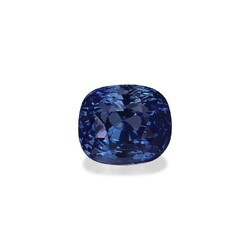
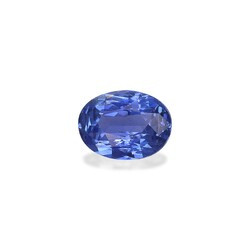
Even among established dealers — people I've worked with for months, people with certificates that look impeccable — the reality on the table is rarely straightforward. Two stones can carry identical lab reports: same origin, same treatment status, same colour grade. Put them side by side and they are completely different objects. One is blue. It might even be Royal Blue by the certificate's standards. But the other one is something the earth spent millions of years getting exactly right. A small beam of light hits a facet and the stone ignites. Not reflects. Ignites. Like a blue torch switched on from inside.
That's what I'm hunting for. And that's why this market works: Beruwala lets me examine a thousand stones in a day. The sorting has already happened across the entire supply chain. What reaches China Fort is concentrated. The prize is there — if you can recognise it when it's in front of you.
The market floor is genuinely international. American buyers, European collectors, Chinese traders, Australian dealers. Every nationality, every language. The dealers here know the word for "money" in all of them.
The Certificate Tells You What. Your Eyes Tell You Whether.
This is the distinction most online sapphire content never addresses, because most online sapphire content is written by people who haven't held a thousand sapphires.
A GRS or AIGS certificate confirms origin, treatment status, and colour grade. What it cannot confirm is the specific combination of trace elements, crystal growth patterns, and inclusion geometry that makes one Royal Blue Ceylon sapphire a commodity and another a work of art.
Here's what the certificate doesn't capture: ideal corundum is colourless. Everything we call sapphire is contamination in the crystal lattice — iron and titanium atoms in positions they were never meant to fill. Blue happens specifically when Fe²⁺ and Ti⁴⁺ sit close enough for electrons to jump between them under light. Remove either element and the blue disappears. What a client is buying is the energy of electrons moving between metal atoms inside a crystal. I find that more compelling to explain than "vivid royal blue on the certificate."
Silk inclusions — fine rutile needles — scatter light in ways that can either muddy a stone or give it the soft interior glow that collectors call "velvet." Two stones, same certificate, opposite visual experience.
I've walked away from certified stones I couldn't justify to myself. I've also paid above the expected range for certified stones that justified themselves the moment I held them under light. The certificate is necessary. It's not sufficient.
How I Source: The 5-Step Process
Step 1 — The brief (Day 1). You tell me colour, origin preference, carat range, treatment requirement, and budget. The more specific, the better. If the budget and grade target don't match what the market is producing, I say so here — not after a month of searching.
Step 2 — Market assessment (Days 1–5). I assess what's currently moving through Beruwala and Bangkok contacts.
Step 3 — Stone selection (Days 5–21). I pull candidates from dealers I've worked with over time, examine them under consistent lighting, and shortlist based on visual performance — not just certificate grade. This is where two identical certificates diverge into two completely different stones.
Step 4 — Zoom presentation. You see the stone on video before anything moves. Direct light, diffuse light, multiple angles. Certificate reviewed together. No deposit, no commitment until you've decided.
Step 5 — Certification, payment, and delivery (1–2 weeks). Independent lab re-check available before purchase if needed. Stone ships fully insured with original documentation, tracked from Beruwala to your door.
Which Color Is Right for You
The sapphire family covers more ground than most buyers realise. The right color depends on what the stone is for.
For an engagement ring with maximum recognition — blue sapphire, cornflower or royal blue grade. The most universally understood choice, with the deepest resale market. Ceylon unheated in the 2–3ct range is the sweet spot for budget and visual impact.
For a collector's investment — unheated Ceylon blue above 2ct with GRS or AIGS certification, or padparadscha if the budget reaches $7,000+/ct. These two categories have shown the strongest sustained appreciation over the past decade. Fine unheated padparadscha appears at China Fort maybe once every six months at vivid grade.
For something visually distinctive — teal, purple, or orange sapphire. Teal in particular has seen strong demand growth from Australian and New Zealand buyers. Prices remain reasonable relative to visual quality.
For a large stone on a tighter budget — yellow or pink sapphire at medium saturation. Both offer gem-quality corundum at significantly lower per-carat prices than blue, with the same Mohs 9 durability.
On Kashmir specifically: the deposits are exhausted — what trades now is estate material. The velvet cornflower blue is caused by fine rutile silk scattering light internally and microscopic zircon inclusions creating diffused glow. One diagnostic detail almost nobody mentions: Kashmir sapphires frequently contain tourmaline crystal inclusions. Under magnification, a tourmaline crystal inside a sapphire is near-100% confirmation of Kashmir origin — independent of any certificate. Under $50,000/ct with a credible certificate, something is wrong with the stone or the paper.
If you're unsure which direction fits your brief, that's exactly what the Zoom call is for — 20 minutes, no commitment.
Color Variety and Price Per Carat
Blue remains the icon. Kashmir cornflower blue ranks highest in value, followed by Burma and Ceylon. Pink sapphires stretch from pale blush to neon magenta. Yellow stones trade from soft lemon to strong gold. Padparadscha — an orange-pink combination that GRS defines within a specific hue range — sits among the rarest in the trade. Teal, purple, and color-change stones add collector depth.
Unheated stones command a significant premium over heated material — typically 20–50% at comparable grades, and substantially more at the top end. An unheated Vivid blue over 5 carats is no longer simply a piece of jewellery — it's an asset that has historically kept pace with and in fine examples exceeded inflation over decade-long holding periods.
Price Ranges — Unheated Sapphires (Heated: subtract 20–50%)
| Colour / Origin | Intensity | Clarity | 1 ct | 2 ct | 5 ct |
|---|---|---|---|---|---|
| Blue (Ceylon) | Vivid | VVS | $3,000–5,000 | $6,000–10,000 | $15,000–25,000 |
| Blue (Ceylon) | Vivid | VS | $2,000–4,000 | $4,000–8,000 | $10,000–20,000 |
| Blue (Ceylon) | Medium | VVS | $1,500–3,000 | $3,000–6,000 | $7,500–15,000 |
| Blue (Kashmir) | Vivid | VVS | $15,000–20,000 | $30,000–40,000 | $75,000–100,000+ |
| Blue (Burma) | Vivid | VVS | $8,000–12,000 | $16,000–24,000 | $40,000–60,000 |
| Blue (Burma) | Vivid | VS | $6,000–9,000 | $12,000–18,000 | $30,000–45,000 |
| Pink | Vivid | VVS | $2,000–3,500 | $4,000–7,000 | $10,000–17,500 |
| Pink | Medium | VS | $1,000–2,000 | $2,000–4,000 | $5,000–10,000 |
| Yellow | Vivid | VVS | $1,000–2,000 | $2,000–4,000 | $5,000–10,000 |
| Padparadscha | Vivid | VVS | $7,000–12,000 | $14,000–24,000 | $35,000–60,000 |
| Padparadscha | Medium | VS | $4,000–7,000 | $8,000–14,000 | $20,000–35,000 |
| Star Sapphire | Strong star | — | $1,000–2,500 | $2,000–5,000 | $5,000–12,500 |
VividCarat direct pricing runs 40–60% below retail. No Bangkok or New York markup.
Optical Phenomena
Color-change stones shift between blue and violet, or green and grey, depending on lighting. The finest examples show a complete, clean shift with no residual hue. Collectors pay multiples for strong color-change compared to equivalent non-phenomenal examples.
Star sapphires display six-ray asterism from intersecting silk inclusions oriented along the crystal axes. The star must be sharp, centred, and continuous across the dome. These phenomena cannot be induced by treatment.
Treatments: What the Market Runs On and What Collectors Avoid
Heating at temperatures above 1,800°C deepens colour and dissolves clarity-reducing inclusions. The majority of commercial sapphires are heated — disclosed, accepted, not the same as unheated for serious buyers.
How I verify unheated status beyond the certificate: I look for silk. Natural blue sapphires contain fine rutile needle inclusions crossing at 60 and 120 degrees. When intact, you're looking at a stone never heated — heating above 1,200°C dissolves rutile silk. A perfectly clean sapphire with no silk makes me suspicious, not impressed. Intact silk is a 100% indicator of no heat treatment.
Field test for natural vs synthetic: I rotate the stone under a directional light source. Natural sapphire is doubly refractive and shifts from cornflower to greenish-blue as you change the viewing angle. A stone that looks perfectly uniform blue from every direction is either synthetic or glass — natural sapphire always resists uniformity. I show this with a dichroscope at every Zoom consultation. The moment a client sees the same stone flash two different blues simultaneously, the conversation changes completely.
Beryllium diffusion infuses colour at a lattice level — detectable only by labs with the right equipment. Two forms: internal diffusion, where rutile inclusions dissolve during heating and titanium migrates into the lattice (enhancement, not fraud); and surface diffusion, where titanium is introduced from outside — recut the stone and it goes colourless. My field test: immerse the stone in methylene iodide on a white background and examine facet edges under magnification. Surface-diffused stones show a darker outline at the edges. Natural sapphire glows evenly from within.
Fracture filling with glass or flux improves apparent clarity but compromises structural integrity and long-term value. A reputable certificate from GIA, GRS, SSEF, or Gübelin eliminates guesswork on all of these.
A Note on Certification: AIGS vs GIA
Most US buyers know GIA. AIGS — the Asian Institute of Gemological Sciences, Bangkok — is built specifically around colored gemstones from the Asian and Sri Lankan trade. AIGS origin determinations for Ceylon and Burmese sapphires are accepted by the international wholesale and auction trade. For a Beruwala-origin Ceylon, AIGS is not a lesser document — it's a more specialized one. GIA report available alongside on request.
Buyer FAQ
What does "unheated" actually mean on a certificate? The lab found no evidence of high-temperature heat treatment. "No indications of heating" is the standard GRS and AIGS phrase. It does not mean zero geological heat — it means no treatment beyond natural formation.
Is Ceylon always better than Madagascar? No. A fine unheated Madagascar blue with Kashmir-like milky velvety structure — caused by microscopic clouds scattering light internally — can be equally compelling at 30–40% below Ceylon prices. I evaluate stones on what they are, not just where they're from.
How do I know the colour grade is accurate for the price? You see the stone on video before buying. A stone that doesn't perform visually at its grade isn't worth the grade's price. I won't sell you one.
What's the minimum budget for a fine unheated Ceylon blue? $3,000–5,000 for a clean 1ct with genuine visual performance. Below that: heated material, lower clarity, or pale colour.
Do you source Kashmir? Occasionally, through Bangkok estate contacts. Genuine Kashmir with current GRS or AGL certification is rare and expensive. Tell me if Kashmir is the requirement and I'll tell you what's realistic at your number.
When a Sapphire Isn't the Right Choice
You want Kashmir quality at Ceylon prices — the premium exists for documented reasons. There is no workaround.
You need the stone in under two weeks — fine unheated material at specific grades isn't always available on demand. Tell me upfront.
You're expecting liquid returns within 12 months — the resale market for colored stones is thin at speed. Plan 6–18 months for fair value.
You want a large stone at very low per-carat pricing — if the price seems too low for the grade and size, something in the certificate or the stone isn't what it appears.
The Stones in Stock
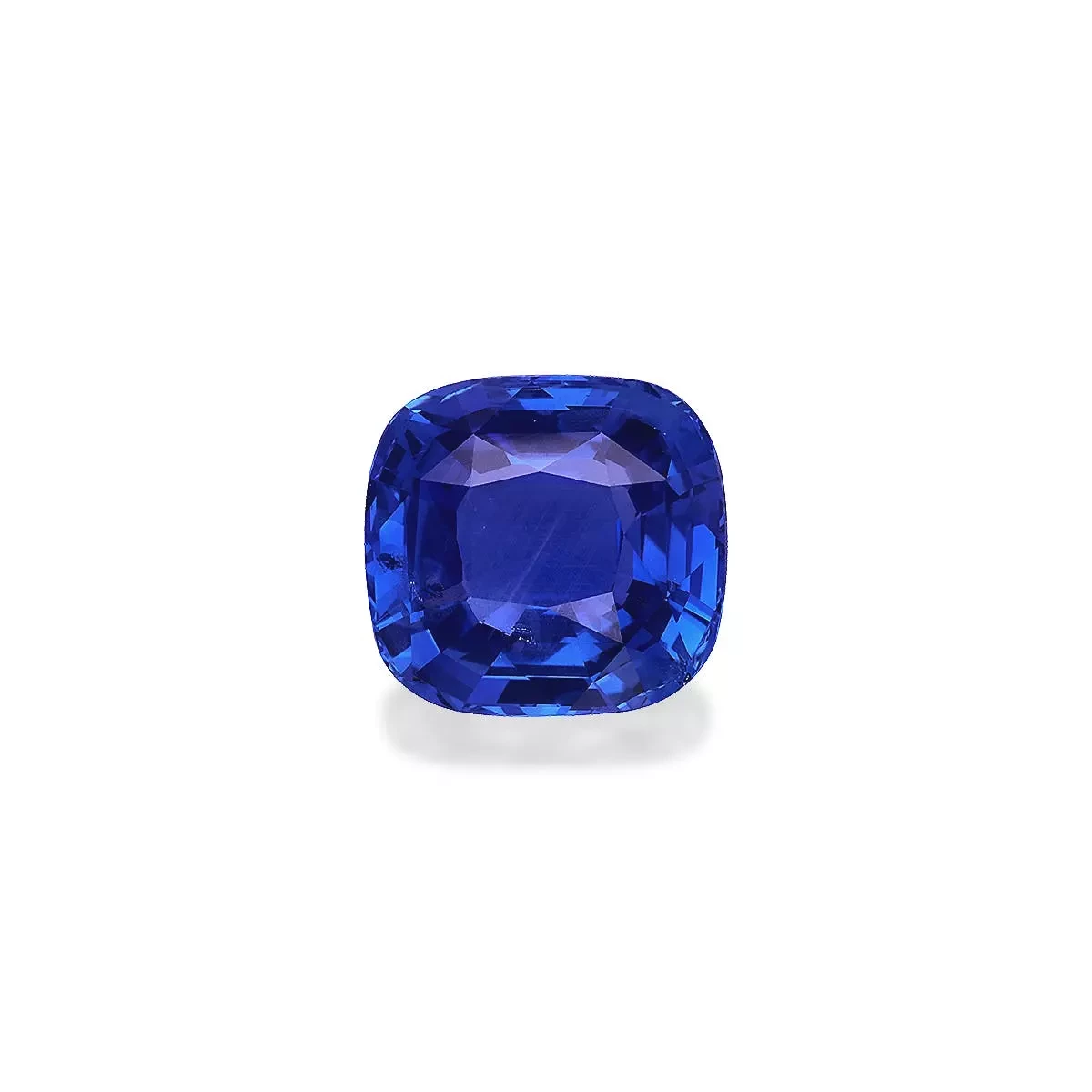
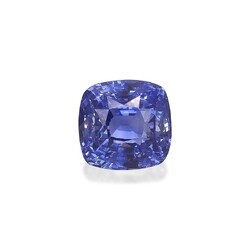
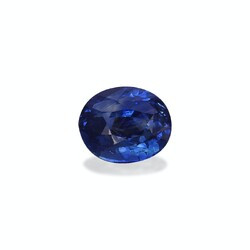
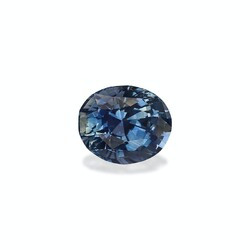
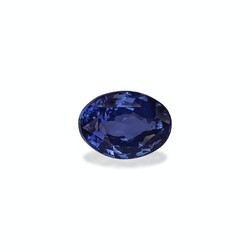
What's in the catalog is what I've selected personally — pieces where visual performance matched or exceeded the certificate. Browse by colour subcategory for the best starting point.
If you're looking for something specific not shown — book a Zoom call. Thirty minutes, no deposit. I'll tell you what's in the market right now and what it would take to find it.