_72x72_bd5_72x72_bd5.jpg)
_72x72_bd5.jpg)


Red Spinel: The Stone That Stopped Pretending to Be a Ruby
-
By Russell, VividCarat — China Fort Market, Beruwala, Sri Lanka | March 2026
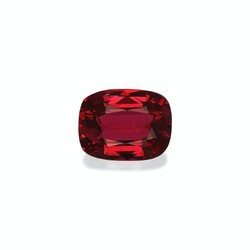
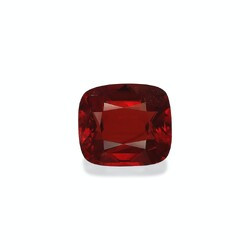
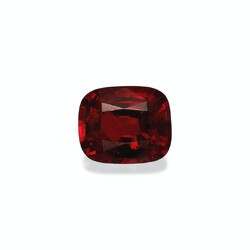
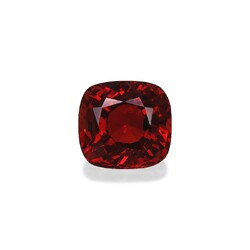
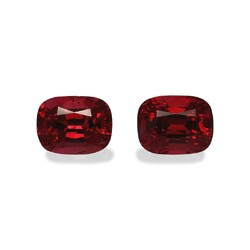
For years the market sold red spinel as "the ruby you can actually afford." That framing is dead. In March 2026 I sold a 4-carat Mahenge spinel in Paris for $25,000 per carat. The ruby sitting next to it — same size, comparable color — was asking the same price. My client chose the spinel. Not because it was cheaper. Because it was better.
Let me explain what I mean by that.
Luc Yen, Vietnam: a bamboo floor and a handful of red
I sat on the floor of a local dealer's hut in Luc Yen with a cloth spread between us. On that cloth was maybe fifteen stones. Most were pink. Three were something else entirely.
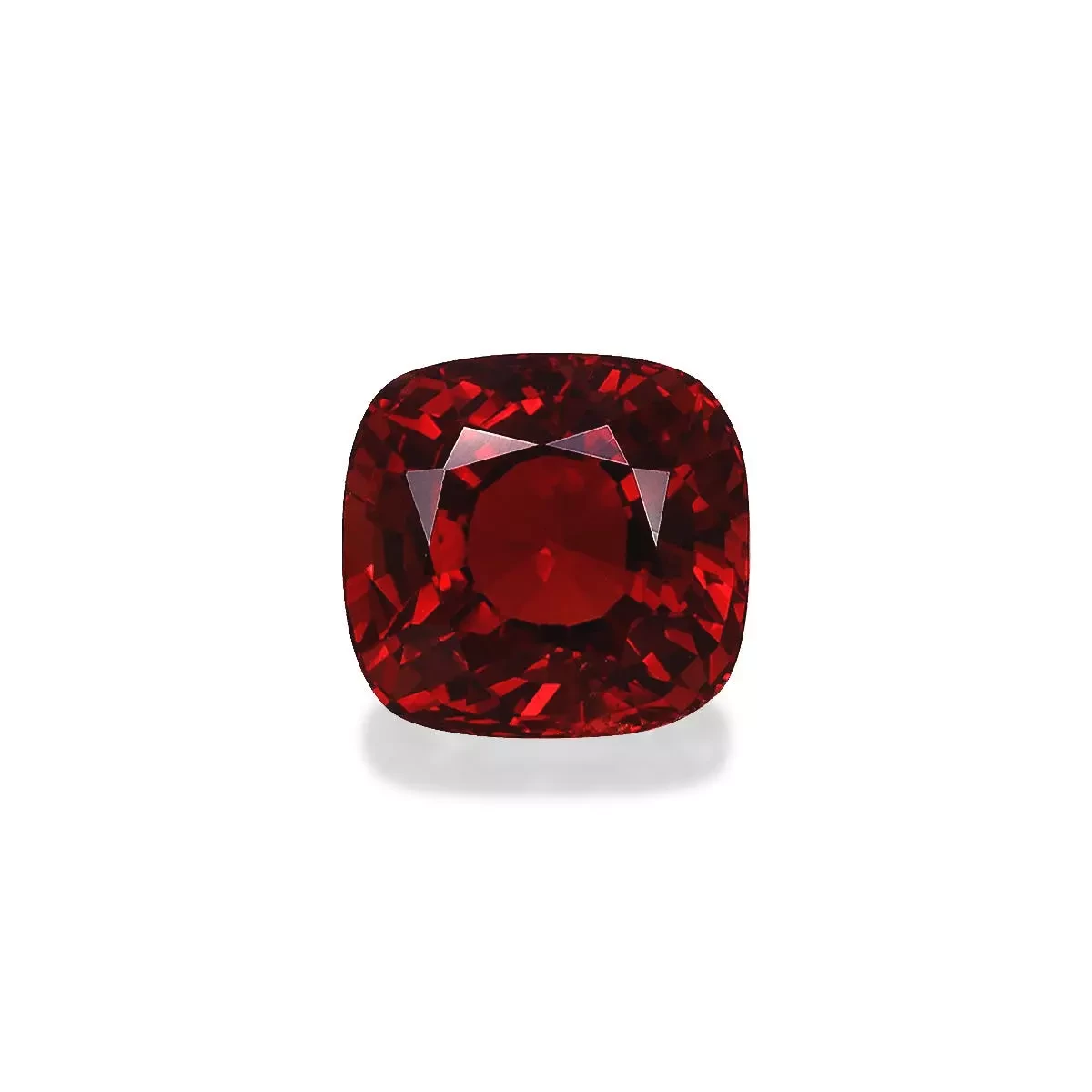
Vietnamese spinel from Luc Yen has anomalous fluorescence. I'm not talking about UV-lamp behavior — I mean the stone glows in ordinary daylight. The chromium content is extraordinarily high, iron is almost absent, and the result is a color that doesn't sit in the stone, it radiates out of it. The trade calls this "Jedi" — a term coined by gemmologist Vincent Pardieu. It's not just red. It's neon pink-red, the kind of color that visually jumps out of any setting.
Here's what no website tells you: genuine Jedi spinel almost never comes clean above 2 carats. The Luc Yen deposit produces intense color precisely because of the geological stress that also creates fractures. Clean, untreated Jedi at 1.5 ct is extraordinary. At 2 ct it's rare. At 3 ct clean it essentially doesn't exist.
So when someone offers you a 5-carat "Jedi" spinel — that's your signal. It's either synthetic, or it's Tanzania being sold as Vietnam. Both happen regularly. A GRS certificate explicitly stating origin Vietnam and color grade "Vivid Red" or "Jedi" is non-negotiable for this material.
I bought three stones in Luc Yen that day. Under 2 carats each. All three went to European collectors within six weeks.
Mahenge, Tanzania: investment standard
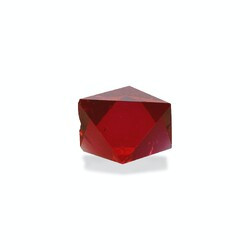
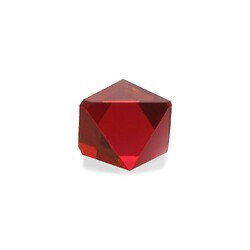
Mahenge is a different proposition entirely. Where Vietnam produces intensity, Mahenge produces mass. The crystals here grow large — I handled rough that looked like car tail-lights, deep red with an orange undertone the trade calls Vibrant Orange-Red.
In 2025 I noticed something on the Mahenge deposits that I haven't seen written anywhere: the finest material consistently comes from seams bordering graphite layers. The graphite appears to create ideal pressure conditions during crystal growth — the result is exceptional clarity in stones that would normally be heavily included at that size. When a dealer in Mahenge shows you a 5-carat stone with VS clarity, ask which seam it came from. If he knows, he's the real thing.
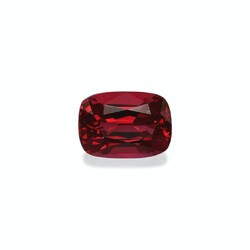
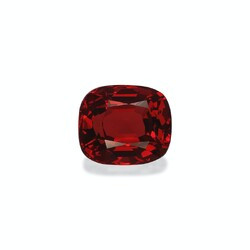
Mahenge 5+ carats with strong color and GIA or Gübelin certification is the investment standard of 2026. The supply from this deposit is genuinely contracting. I saw fewer top-quality large stones available in 2025 than in 2023, at the same price points. That gap is not closing.
Paris: the argument that closed the deal
Back to that Paris sale. My client was a collector, not a first-time buyer. He'd been looking at a heated Burmese ruby — fine color, GIA certified, glass-filled fractures disclosed on the report. The price was identical to my Mahenge spinel.
My argument was simple: "That ruby was heated to 1800 degrees and its fractures are filled with lead glass. This spinel came out of the ground exactly as you see it. It hasn't been touched. It's the same stone it was sixty million years ago."
He asked me why the color looked different — calmer somehow, less aggressive than the ruby. That question let me explain the one technical fact that closes every sale:
Spinel is isotropic. Like a diamond, it has a single refractive index. Ruby is doubly refractive — light splits inside the stone, and the color you see is a composite of two slightly different rays. In spinel, light passes through cleanly. The eye reads the color as pure, undivided, settled. The trade doesn't have a standard term for this. I call it still water. The ruby burns. The spinel glows.
He bought the spinel.
Three things professionals know that buyers don't
First: the suntan test. Red spinel doesn't fade in sunlight — it intensifies. The fluorescence that makes Jedi material extraordinary in daylight becomes even more pronounced in direct sun. When I'm selling a fine spinel indoors and the client is hesitating, I walk outside. The stone does the rest. I've never had a client walk back in undecided.
Second: the silk question. Every gemstone guide tells you inclusions are bad. In red spinel, the finest stones often carry microscopic rutile silk — the same type of inclusion that creates asterism in star sapphires, just too fine to produce a star. When silk is correctly oriented, it creates a soft internal luminosity that makes the red color appear velvet rather than glassy. A stone with perfect silk in the right position is not compromised — it has a fingerprint. Dealers who know this buy those stones first.
Third: the treatment reality. Approximately 95% of rubies on the market have been heated. Some have fractures filled with glass or resin. Spinel is never heated. The industry has no established protocol for heating spinel because it doesn't need it — the color is already there. When you buy a certified natural spinel, you're buying exactly what the earth produced. In 2026, with buyers increasingly focused on provenance and naturality, that matters in ways it didn't five years ago.
What you pay buying direct
Current market prices, verified April 2026:
| Origin | Grade | 1–2 ct | 2–5 ct | 5+ ct |
|---|---|---|---|---|
| Vietnam Luc Yen | Jedi / Vibrant Red | $5,000–$10,000 | $10,000–$18,000 | rare, POA |
| Tanzania Mahenge | Vivid / Orange-Red | $1,300–$3,000 | $3,000–$7,000 | $7,000–$18,000 |
| Burma | Vivid Red | $1,200–$4,000 | $4,000–$10,000 | $10,000–$25,000 |
| Commercial | Red / Pink-Red | $300–$1,200 | $1,000–$2,500 | on request |
VividCarat direct pricing runs 35–50% below these benchmarks. No auction house, no Bangkok trading floor markup.
When NOT to buy red spinel
- The stone is offered as "Jedi" at 3+ carats without a GRS certificate stating Vietnam origin — walk away
- You need maximum auction liquidity — Burma with GRS certification is still the most recognized at the major houses
- You want deep red for low-light settings — Mahenge's orange undertone can read brick-red under warm incandescent, which some buyers dislike
- You're comparing price per carat to commercial ruby without comparing treatment status — an untreated spinel and a glass-filled ruby are not the same product
FAQ
What makes Jedi different from regular red spinel? Origin and chromium profile. Luc Yen material has near-zero iron and extreme chromium concentration — the combination that produces neon fluorescence in daylight. Other origins can produce vivid red, but the visual quality of the color is different. GRS is the lab that grades Jedi color most consistently; their "Vivid Red" designation on a Vietnam stone is the benchmark.
Spinel is never treated — is that actually a market advantage? Yes, increasingly. Five years ago buyers accepted treatment as standard. In 2026 the European and US collector market is specifically seeking no-treatment stones with full provenance. Spinel has always been this — the market is just catching up to what the stone already was.
How do I verify Vietnam origin without a lab? You can't, reliably. Fluorescence under UV is suggestive but not conclusive. Tanzania also produces fluorescent material. The only verification is a GRS, GIA, or Gübelin origin report. Any dealer selling "Vietnam Jedi" without one is selling a story, not a fact.
Is silk in spinel a defect? No. Correctly oriented rutile silk creates internal luminosity that enhances the color rather than diminishing it. The key word is correctly oriented — silk running parallel to the table in a well-cut stone is a quality marker. Silk running chaotically through the stone is a different situation. I show clients both under magnification so they can see the difference before deciding.
Is Mahenge a brand or a place? A place — specifically a district in southeastern Tanzania, Morogoro region. It's not a quality grade or a trade label. When a certificate says "Tanzania, Mahenge" it means the stone was tested and origin-confirmed to that specific deposit. Not all Tanzanian spinel is Mahenge, and not all Mahenge material is investment grade — size, color saturation, and clarity still determine value. The name matters because Mahenge geology produces the graphite-adjacent seams where the finest large crystals form.
Book a Zoom consultation — I show the stone under daylight, direct sun, and warm indoor light, walk through the certificate, and answer every question before you commit. No deposit, no commitment.