
_72x72_851_72x72_851.webp)
_72x72_851.webp)




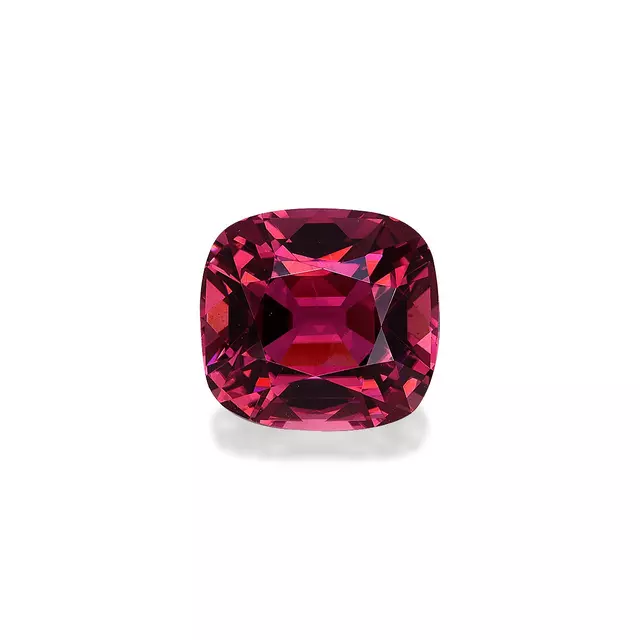
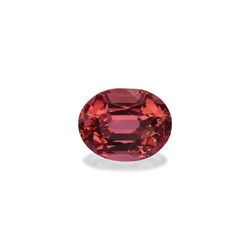
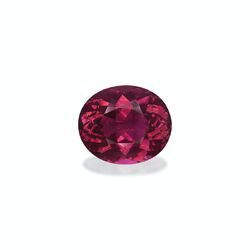
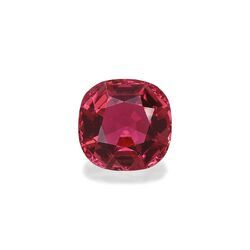
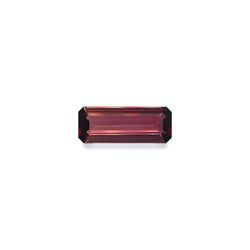
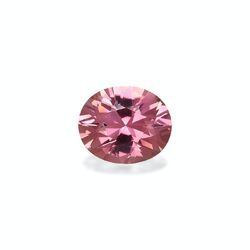
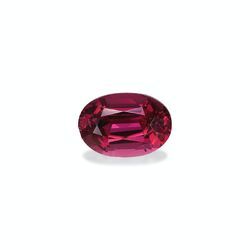
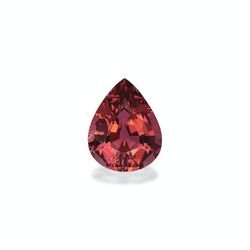
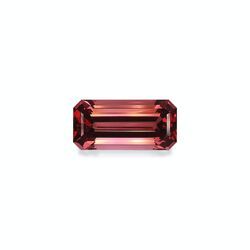
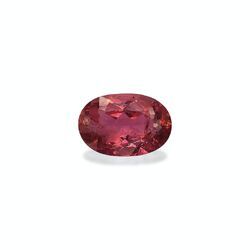
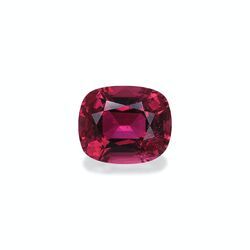
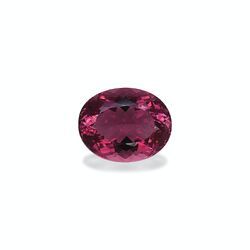
Pink tourmaline is a gorgeous gemstone beloved for its vibrant pink hue. But where does this stone originate from and how is its unique color formed? Let’s observe some key facts about pink tourmaline that are important when purchasing this precious gemstone.
How Pink Tourmaline is Created
Pink tourmaline belongs to the broader tourmaline group of minerals. Its distinct pink color is the result of its chemical composition and the specific geological conditions in which it is formed.
- Tourmaline forms through the cooling and solidification of granitic melt and magma within the Earth's crust.
- The pink hue arises when manganese and iron impurities become part of the tourmaline crystal structure.
- Ideal conditions for pink tourmaline formation exist where granite deposits have high manganese with little iron.
Major Pink Tourmaline Mining Locations
The major sources of quality pink tourmaline gemstones globally are:
- Brazil- Minas Gerais pegmatite mines
- United States- Maine and California pegmatites
- Africa- Mozambique, Nigeria, and Madagascar mines
- Afghanistan- Panjshir Valley mines
Brazil produces the highest quality and quantity of pink tourmaline crystals. The vibrant "rubellite" tourmalines from Minas Gerais pegmatites are prized in jewelry worldwide.
The table below summarizes key mining locations and their tourmaline characteristics:
|
Location |
Color Variations |
Clarity Levels |
|
Brazil |
Intense pink to red hues |
High clarity Rubellite |
|
United States |
Light pink to darker pink/red |
Good clarity in Maine |
|
Africa |
Light pink is common |
Lower clarity stones |
|
Afghanistan |
Dark pink, almost red |
Low clarity, some etched areas |
Applications of Pink Tourmaline
Adored for its eye-catching color, pink tourmaline is valued both for its beauty and healing properties.
Pink tourmaline stands out for its vibrant pink to red hues that range from light pastel to deeply saturated, depending on its mineral composition.
- Its color remains remarkably stable, unlike similarly colored gems like kunzite or morganite.
- Good clarity and luster make fine pink tourmaline ideal for cutting.
- The hue has symbolic ties to love, compassion, and self-care.
In jewelry, pink tourmaline brings a pop of color and flair. Jewelry designers often use it in:
- Statement rings displaying large pink tourmaline center stones
- Elegant necklaces mixed with diamonds or pearls
- Everyday fashion earrings and tennis bracelets
- Bridal jewelry as colorful engagement rings
Our jewelry store in New York City offers a wide selection of pink tourmaline gems. You can check the entire list of gems available in stock on our website, vividcarat.com. We have a variety of loose gemstones and jewelry items, including rings, necklaces, and earrings, that are encrusted with tourmaline stones. You can also order unique designs of custom jewelry with your choice of gemstone.
Metaphysical and Spiritual Uses
Healing crystal practitioners value pink tourmaline for its energetic properties. It is seen as ideal for:
- Promoting emotional well-being- relieving stress and destructive feelings.
- Encouraging self-love- building confidence and compassion.
- Strengthening relationships- enhancing intimacy and heart connections.
A Gemologist's Guide to Pink Tourmaline Properties
Examining the key physical and optical properties of pink tourmaline reveals why it captivates gem lovers and designers alike.
Hardness and Durability
Pink tourmaline registers 7 to 7.5 on the Mohs hardness scale, with 10 being diamond. This makes it:
- Durable for setting in jewelry
- Resilient to chipping or cleavage
- Not easily scratched
These qualities enable jewelry longevity and retain value.
Crystal Structure
Tourmaline is a mineral that belongs to the trigonal crystal system, which means that it has a specific crystal structure.
Trigonal crystals have a triangular shape, and trigonal prisms exhibit triangle symmetry. This helps ensure that the mineral cuts consistently and accurately, making it easier for jewelers to work with. Well-formed terminations on tourmaline help improve cutting precision, and complex structures and patterns can be appealing aesthetically. The trigonal shape of tourmaline allows for consistent and calibrated cuts, making it a popular choice for jewelers
Optical Properties
Optically, pink tourmaline has:
- High refractive index bending light dynamically
- Moderate to high dispersion scattering spectral colors
- Vitreous to resinous luster at polished surfaces
These optical traits intensify its color saturation and brilliance – especially in premium rubellite gemstones.
Chemical Composition and Color Variations
The kaleidoscopic array of pink tones exhibited by tourmaline gemstones originates from their intricate chemical formula and blending of various elemental ingredients.
Tourmaline's Complex Chemistry
Pink tourmaline crystals have the general chemical formula:
(Na,Ca,K,▢)3(Al,Li,Mg,Mn,Fe,Cr,V)6(Si6O18)(BO3)3(OH,O)3(OH,F)
This complex arrangement of cations across three sites enables extensive ion exchange. Key variables are the abundances of manganese (Mn) and iron (Fe) within the structure.
Influence on Color
Higher manganese concentration produces deeper pinks due to its oxidation states. Meanwhile, increasing iron mutes and dulls the pinkness.
- Pale pinktourmalines have lower Mn and higher Fe. Large iron content gives almost purplish secondary hues.
- Rubelliteis the premium deep red-pink tourmaline with high Mn and negligible Fe. Intensely saturated fiery reds also occur.
Shades like purple-reds and violet-pink arise when both Mn and Fe are present.
Trace elements like titanium, chromium, and vanadium can also impact smaller color nuances.
Understanding tourmaline's unique chemistry and color modifiers allows gemologists to predict the range of shades possible within a specific deposit based on its geochemistry.
This guides mining operations and enables supply consistency for jewelry design.
Valuation and Market Insights: Pink Tourmaline Pricing in New York City
The value placed on pink tourmaline varies widely depending on the quality of an individual gemstone's cut, clarity, color, and carat weight.
Supply and Demand Dynamics
The high demand for fine pink tourmaline is met by limited mining volumes, especially from Brazil. This scarcity drives costs up for:
- Clean, untreated gems over 5 carats
- Vivid purplish-red rubellite tourmaline
Lower-grade commercial qualities remain abundantly available in stock.
The 4Cs: Cut, Clarity, Color and Carat
Jewelry-grade pink tourmaline is assessed by gemologists using the 4Cs grading approach.
- Cut quality affects the brilliance
- Clarity ranges from eye clean (Type II) to included (Type III)
- Color values strong red and purple secondary hues
- Large untreated stones above 5 carats fetch premium pricing
Fine gems with excellent color, and clarity, and cut in larger sizes reach record-breaking costs at auction.
Price Per Carat Ranges
The per-carat price for untreated pink tourmaline generally lies between:
- $50 to $300 for commercial-quality smaller gems
- $300 to $600 for precision-cut eye-clean stones
Over $1000 per carat for exceptional specimens
Enhancements and Certifications: Ensuring Authenticity
As consumer demand for pink tourmaline has increased, so have enhancements to improve clarity and intensify color. Knowing about these treatments and obtaining quality certifications are key to guaranteeing genuine gems.
Common Enhancements
Many commercial-grade pink tourmalines sold in New York City undergo treatments that include:
- Heat treatment to boost color saturation
- Oil and resin filling surface-reaching breaks
- Dye diffusion to produce desirable hues
While these are stable and widely accepted practices, they should be disclosed and their impact on value should be considered. Our jewelry store (vividcarat.com) carefully monitors the treatments that gems go through and provides fair data about enhancements.
Detection Techniques
Advanced gemological testing can identify these enhancements:
- Microscopy reveals fractures with fillers
- Spectrometry and refractive index gauge dye infusions
- LAT imaging maps heat-altered tracts
Separating natural and treated stones remains challenging without laboratory credentials.
Gem Certification
To demonstrate quality and build consumer trust, reputable grading laboratories issue certificates documenting the natural and enhanced states of a gem.
These certificates include details about the specific enhancement process, the country of origin, cut, weight, clarity, and color grades. For those who buy pink tourmalines as investment assets, certification is mandatory.
Due to certification, pink tourmaline buyers can confidently invest in and cherish their stones, assuring them of quality and authenticity.